Compare the whole shape before choosing a name. Rounded, separate heaps suggest cumulus; a low, even sheet suggests stratus. High, delicate strands suggest cirrus. A tall tower with a flattened anvil suggests cumulonimbus. Look for structure rather than relying only on colour.
Weather and climate · Discover & try
What can a cloud's shape tell us?
Reading level 3 of 5 · IndependentChange
Word help
cumulus
A cloud with distinct rounded heaps or puffs.
stratus
A low cloud spread in a fairly even layer.
cirrus
A high cloud with thin, icy strands.
cumulonimbus
A tall thunderstorm cloud, often topped by an anvil.
Learn four cloud shapes
Study these labelled examples first. The activity below uses different photographs of the same four cloud types.

Cumulus
Separate puffs with rounded tops.
NOAA Photo Library.
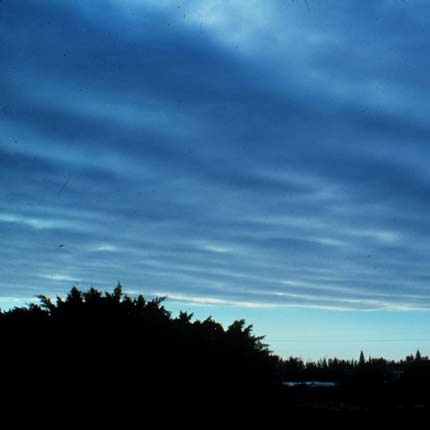
Stratus
A broad, low blanket or sheet.
NOAA Photo Library, National Weather Service Collection. Photograph: Ralph F. Kresge.
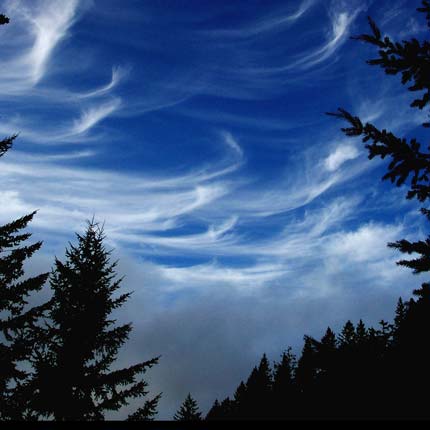
Cirrus
Thin, feather-like wisps high in the sky.
NOAA Photo Library, National Weather Service Collection. Photograph: Captain Albert E. Theberge Jr., NOAA Corps (ret.).
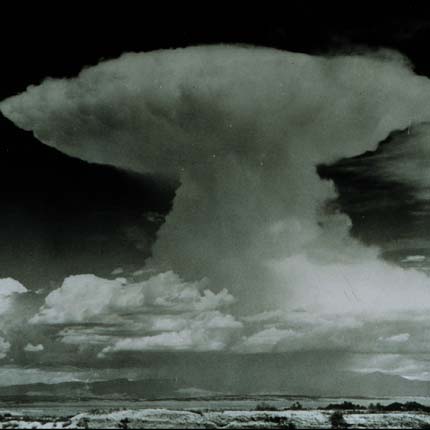
Cumulonimbus
A tall tower with a wide, flat top called an anvil.
NOAA Photo Library.
Four examples, not every cloud type. Photo sources and credits · NOAA image-use information.
Watch · Try · Explain
Try a different photograph
The interactive activity is loading.
Real NOAA cloud photographs; shape clues do not provide a local forecast.
What to look for
- Separate puffs or a broad layer
- Fine wisps or a tower
- The labelled picture matching your clue
Explain what you noticed
Which clue best matches cirrus?
Keep this idea: Compare cloud shapes; a photograph is not a local forecast.
Follow the sources
- NOAA — Ten Basic Clouds
- NOAA — The Four Core Types of Clouds
- NASA Space Place / NOAA Photo Library — Weather Slyder: photographs, captions and credits
Source material checked 2026-10-28. Explanations and activities by Nepedia. Source links do not imply endorsement.
Keep following the idea
Next discovery →