All Bubbles
🔢

Algebra

math Ages 11-13+ Vital Level 2

Algebra is like a math puzzle! We use letters to stand for numbers we do not know yet. You can use a balance scale to find the answer.

Balance scale.svg
Balance scale.svg
If you add something to one side, you must add it to the other side too.
Algebraic equation notation.svg
It helps us solve problems about shapes and counting.

58 words

Algebra is a special kind of math that uses letters like 'x' and 'y' to stand for unknown numbers. It is like being a math detective! If you know that a number plus 4 equals 9, you can use algebra to find out that the number is 5.

Balance scale.svg
Balance scale.svg
One cool way to think about algebra is using a balance scale. To keep the scale even, whatever you do to one side, you must do to the other.
Algebraic equation notation.svg
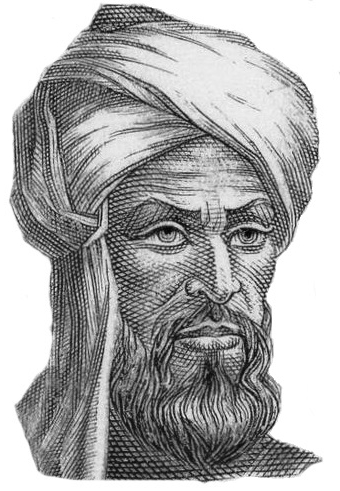
Algebra was named by a famous mathematician named Al-Khwarizmi a long time ago. Today, we use it to solve puzzles and even to understand how a Rubik's Cube works!
Rubik's cube.svg
Rubik's cube.svg

113 words

Algebra is a branch of mathematics that goes beyond basic arithmetic. While arithmetic uses specific numbers, algebra uses variables (letters like x or y) to represent unknown values. This allows us to write general laws, like the commutative property: a + b = b + a.

Algebraic equation notation.svg
Elementary algebra is what most students learn first. It involves solving equations by isolating the variable. For example, if x - 7 = 4, you add 7 to both sides to find that x = 11. You can also turn these equations into graphs. A linear equation creates a straight line on a graph, showing all the possible answers.
Linear Function Graph.svg
Graph (y = 0.5x - 1).svg
The word "algebra" comes from the Arabic word "al-jabr," which means "completion." It was popularized by the mathematician Al-Khwarizmi in the 9th century.
Al-Khwarizmi portrait.jpg
Algebra is used in many ways today. It helps scientists describe how things move, helps engineers build bridges, and is even used in computer programming and games like Sudoku.

171 words

Algebra is a fundamental branch of mathematics that generalizes arithmetic by using variables to represent numbers. In elementary algebra, we use symbols to describe relationships and solve for unknown values. For instance, instead of just saying 2 + 3 = 5, we can use the expression 5x + 3 to represent a value that changes depending on what 'x' is.

Algebraic equation notation.svg
One of the most important parts of algebra is solving equations. To do this, you must keep the equation balanced. If you add, subtract, multiply, or divide one side, you must do the same to the other. This process helps isolate the variable. Algebra also involves polynomials, which are expressions like x² + 3x - 10. These can be simplified through factorization, which helps find the values that make the expression equal to zero.
Polynomial2.svg
Polynomial2.svg
Balance scale.svg
Balance scale.svg
Linear algebra is another major branch. It focuses on systems of linear equations and uses matrices—rectangular arrays of numbers—to solve them. These equations can be visualized as lines or planes in space. If two lines on a graph intersect, that point is the solution to the system.
Linear Function Graph.svg
Graph (y = 0.5x - 1).svg
The history of algebra is very long. Ancient Egyptians and Babylonians solved simple algebraic problems as far back as 1650 BCE. However, it was the Persian mathematician Al-Khwarizmi in the 9th century who turned it into its own discipline. His book, "The Compendious Book on Calculation by Completion and Balancing," gave algebra its name. Later, in the 16th and 17th centuries, mathematicians like François Viète and René Descartes introduced the symbolic notation we use today, replacing long word descriptions with letters.
Al-Khwarizmi portrait.jpg
Frans Hals - Portret van René Descartes (cropped).jpg
Algebra is essential for many fields. It is used in physics to describe the laws of nature, in chemistry to balance reactions, and in computer science for artificial intelligence. It even helps us understand complex shapes in geometry and patterns in number theory.

330 words

Algebra is a sophisticated branch of mathematics centered on the study of algebraic structures and the manipulation of expressions within those systems. While arithmetic focuses on specific numerical operations, algebra introduces a higher level of abstraction through the use of variables and generalized operations. This allows for the formulation of universal laws and the exploration of mathematical patterns that apply across various domains.

Algebraic equation notation.svg
The most familiar form is elementary algebra, which introduces variables to represent unspecified quantities. This branch focuses on solving equations by isolating variables using systematic transformations. A core concept here is the polynomial—an expression consisting of variables and coefficients. Mathematicians use techniques like factorization and the quadratic formula to find the roots of these equations. The Fundamental Theorem of Algebra, proved in the 19th century, states that every univariate polynomial equation has at least one complex solution.
Polynomial2.svg
Polynomial2.svg
Linear algebra expands these concepts to systems of linear equations. It utilizes matrices—rectangular arrays of values—to represent and solve multiple equations simultaneously. This field is deeply connected to geometry; for instance, a system of two linear equations with two variables can be visualized as two lines on a coordinate plane, where their intersection represents the solution. Linear algebra is the backbone of modern technology, including machine learning and data analysis.
Linear Function Graph.svg
Graph (y = 0.5x - 1).svg
Abstract algebra, or modern algebra, moves beyond numbers to study structures like groups, rings, and fields. A group is a set with a single operation (like addition) that follows specific rules, such as associativity and the existence of an identity element. Rings and fields involve two operations, similar to addition and multiplication. For example, the set of integers forms a ring, while the set of real numbers forms a field. These abstract concepts are used to study everything from the symmetries of a Rubik's Cube to the behavior of particles in quantum mechanics.
Ring of integers2.svg
Rubik's cube.svg
Rubik's cube.svg
The historical evolution of algebra is a journey from concrete problem-solving to high-level abstraction. Ancient civilizations like the Babylonians and Egyptians used algebraic methods for practical tasks. The Rhind Mathematical Papyrus (c. 1650 BCE) contains some of the earliest known linear equation problems.
Rhind Mathematical Papyrus.jpg
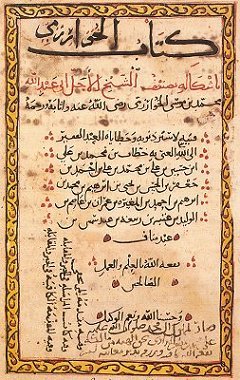
However, the discipline was systematized in the 9th century by the Persian mathematician Muhammad ibn Musa al-Khwarizmi. His treatise, "al-Kitāb al-Mukhtaṣar fī Ḥisāb al-Jabr wal-Muqābalah," provided the first analytical theory for solving equations and gave the field its name (from "al-jabr").
Al-Khwarizmi portrait.jpg
Image-Al-Kitāb al-muḫtaṣar fī ḥisāb al-ğabr wa-l-muqābala.jpg
The transition to modern symbolic algebra occurred in the 16th and 17th centuries through the work of François Viète and René Descartes, who introduced the use of letters for variables.
Francois Viete.jpeg
Francois Viete.jpeg
Frans Hals - Portret van René Descartes (cropped).jpg
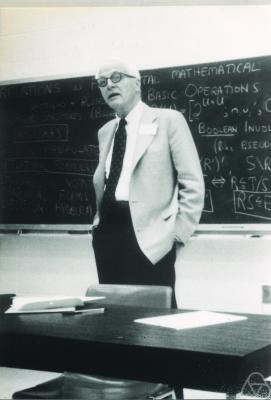
In the 19th century, the focus shifted again. Mathematicians like Évariste Galois and Niels Henrik Abel proved that general solutions do not exist for polynomials of degree five or higher, leading to the birth of group theory and abstract algebra. This period also saw the work of Emmy Noether and David Hilbert, who categorized algebraic structures based on axioms.
Garrett Birkhoff.jpeg
Today, algebra is indispensable. It is applied in the natural sciences to model physical laws, in cryptography to secure data, and in economics to analyze markets. Within mathematics, it has "algebraized" other fields like geometry (algebraic geometry) and topology (algebraic topology), providing a unifying language to describe the structure of the universe.

569 words

🖼️ Images & Media (22)

File:Algebraic equation notation.svg
Algebraic equation notation.svg
File:Linear Function Graph.svg
Linear Function Graph.svg
File:Balance scale.svg
Balance scale.svg
File:Graph (y = 0.5x - 1).svg
Graph (y = 0.5x - 1).svg
File:Polynomial2.svg
Polynomial2.svg
File:Ring of integers2.svg
Ring of integers2.svg
File:Semi-protection-shackle.svg
Semi-protection-shackle.svg
File:Rubik's cube.svg
Rubik's cube.svg
File:Cscr-featured.svg
Cscr-featured.svg
File:Magma to group2.svg
Magma to group2.svg
File:Symbol category class.svg
Symbol category class.svg
File:Venn A subset B.svg
Venn A subset B.svg

+ 10 more

🔗 What's this?

Concepts mentioned in this article

🪜 Step back

Simpler topics to build understanding