Algebra is like a math puzzle! Instead of just using numbers, we use letters like 'x' to stand for a secret number. You can add or subtract these letters to find the answer. It helps us solve problems about shapes and sizes. 
Algebra is a step up from basic math. In arithmetic, you only use numbers. In algebra, we use letters called variables to represent numbers we do not know yet. For example, if you know a child’s age plus four equals twelve, you can write it as x + 4 = 12. 

Elementary algebra is the foundation for high school math. While arithmetic uses specific numbers, algebra introduces variables—letters that represent quantities without fixed values. This allows us to write general rules for science and math. 

Elementary algebra, often called high school algebra, builds on your understanding of arithmetic by introducing numerical variables. While arithmetic deals with fixed numbers, algebra uses letters to represent quantities that can change or are unknown. This allows us to express general relationships concisely.
Algebraic notation has specific rules. A coefficient is a number that multiplies a variable, like the 3 in 3x. A term is a group of numbers and variables separated by plus or minus signs. Interestingly, we often omit the multiplication sign; instead of writing 3 times x, we just write 3x. We also don't write the number 1 if it is a coefficient or an exponent. For example, 1x^1 is simply written as x.
Solving equations is a core part of algebra. A linear equation with one variable describes a straight line when graphed. To solve it, you perform the same operation on both sides of the equals sign to isolate the variable. For instance, if doubling a child's age (x) and adding 4 equals 12 (2x + 4 = 12), you subtract 4 from both sides to get 2x = 8, then divide by 2 to find x = 4. 
When you have two variables, you need two related equations to find a solution. This is called a system of equations. You can solve these using the elimination method or the substitution method. However, some systems are "inconsistent," meaning the lines are parallel and never touch, so there is no solution. 
Algebra also covers quadratic equations, which include a variable squared (x^2). These equations usually have two solutions and form a curve called a parabola when plotted. 
Elementary algebra is the branch of mathematics that extends the concepts of arithmetic by introducing variables—symbols, usually letters, that represent numbers without fixed values. Unlike arithmetic, where operations are performed only on specified numbers, algebra allows operations on variables and terms. This enables the formal expression of general relationships, which is essential for science and advanced mathematics.
Algebraic notation follows strict conventions. Letters at the beginning of the alphabet (a, b, c) typically represent constants, while letters at the end (x, y, z) represent variables. In written expressions, multiplication symbols are usually omitted; for example, 3 times x is written as 3x. Furthermore, coefficients of 1 and exponents of 1 are implied rather than written. When formatting is limited, such as in computer programming, alternative notations are used. For example, while a mathematician writes x squared as x², a programmer in Python or Fortran might write it as x**2, or x^2 in TeX. 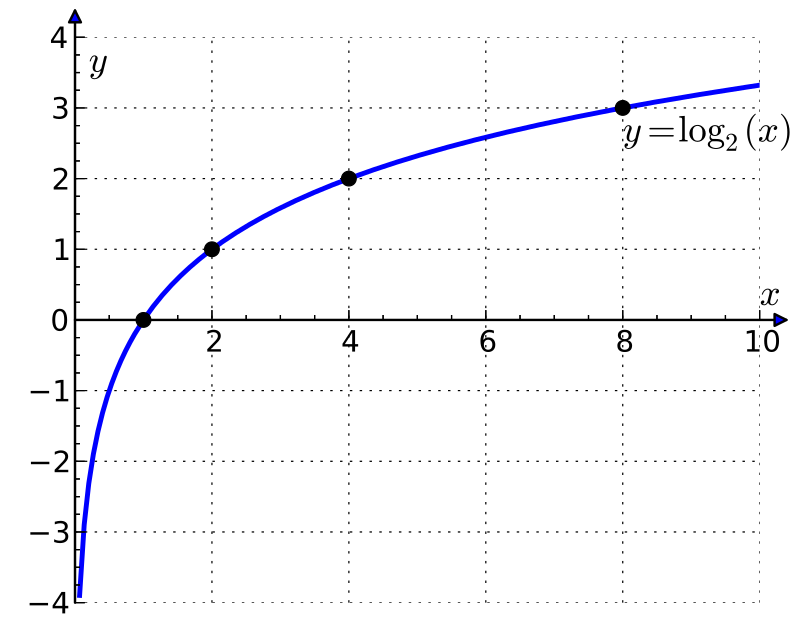
One of the most important concepts in algebra is the equation, which states that two expressions are equal. Some equations, called identities, are true for all values (like a + b = b + a). Others are conditional, meaning they are only true for specific values. Solving an equation involves finding these values, known as the solutions. For linear equations with one variable, the goal is to isolate the variable using inverse operations. For example, in the equation 2x + 4 = 12, subtracting 4 and dividing by 2 reveals the solution x = 4.
Systems of linear equations involve two or more variables and require multiple equations to solve. For instance, if a father is 22 years older than his son (f = s + 22) and in 10 years he will be twice as old as his son (f + 10 = 2(s + 10)), we can use the elimination or substitution method to find their ages. By substituting (s + 22) for f in the second equation, we can solve for s.
Quadratic equations introduce a new level of complexity, featuring a variable raised to the second power (ax² + bx + c = 0). These can be solved by factoring, completing the square, or using the quadratic formula. A quadratic equation always has two solutions in the complex number system. Complex numbers, which include imaginary numbers, are necessary when an equation requires the square root of a negative number, such as x² + 1 = 0. 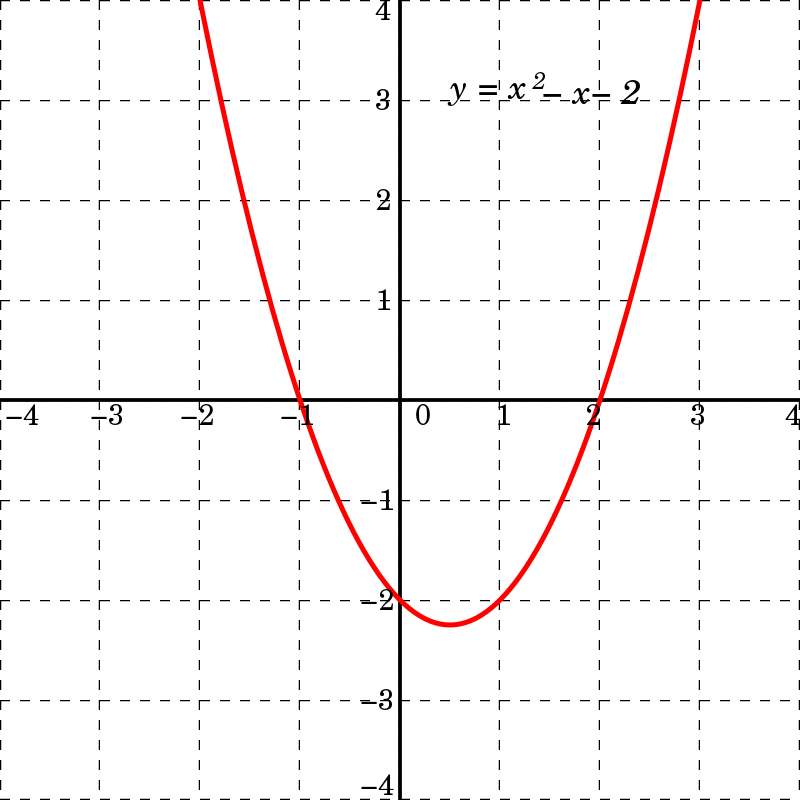
Finally, elementary algebra encompasses exponential, logarithmic, and radical equations. Exponential equations have variables in the exponent (a^x = b), while logarithmic equations are their inverse. Radical equations involve roots, such as square roots or cube roots. Understanding these relationships allows mathematicians to model everything from population growth to the physical laws of the universe. 
🖼️ Images & Media (12)

✨ What else?
Related topics you might enjoy
🔬 Go deeper
More advanced topics to explore
🪜 Step back
Simpler topics to build understanding