Nepedia

Rye bread

A compact pan loaf made with two-thirds wholemeal rye flour and a little treacle. Rest the baked bread overnight before cutting thin slices.

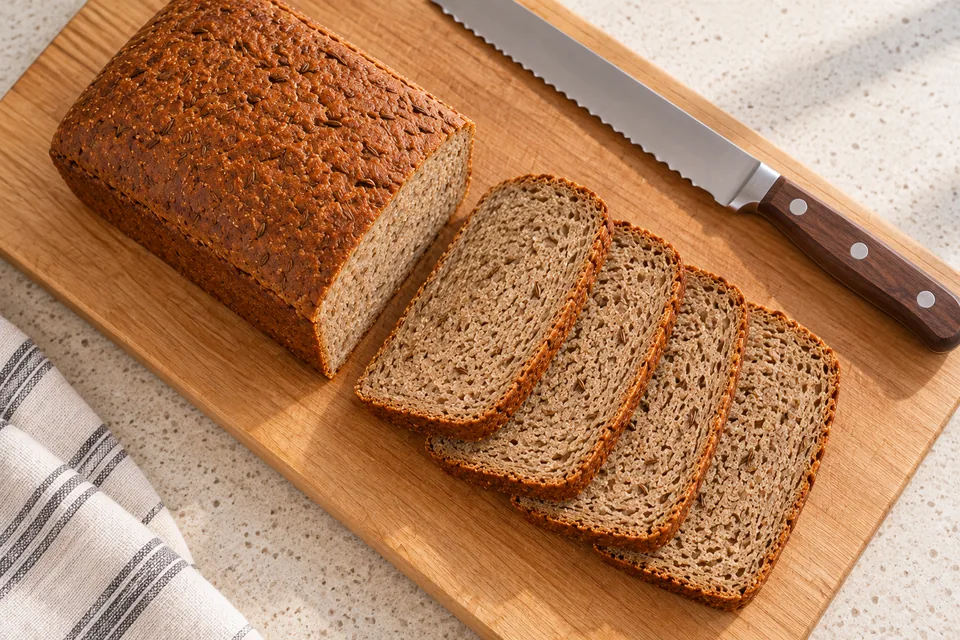
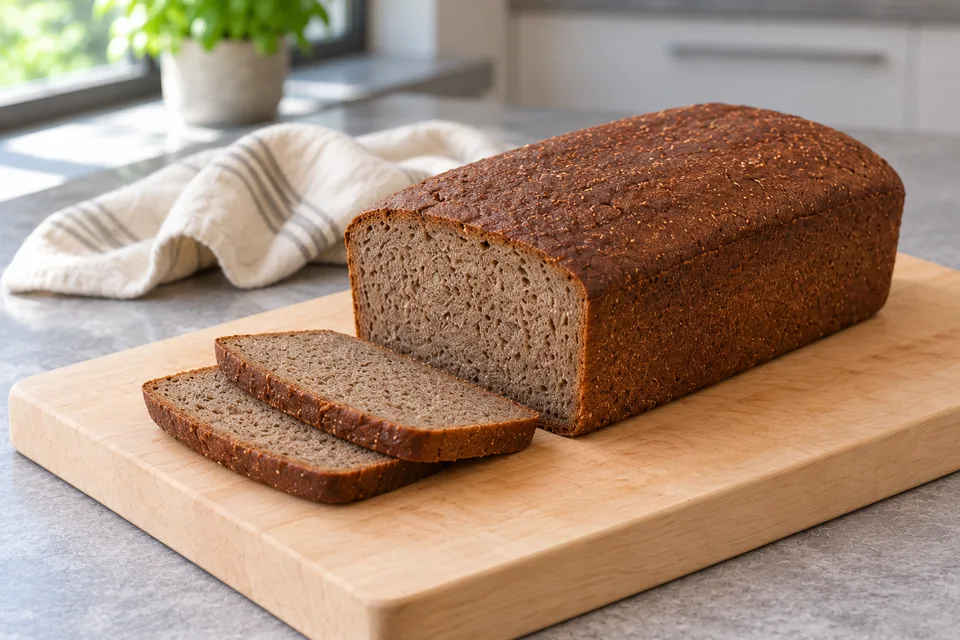
Dark-brown rectangular rye loaf and two thin slices on a wooden board, showing the close brown crumb.
Makes
1 large loaf, about 16 thin slices
Heat
220°C conventional
Baking time
45–55 min
Cuisine / style
International

Includes up to 5 additional minutes out of the tin when the sides need firming.

View

Dark rye bread

Makes
1 large loaf, about 16 thin slices
Heat
220°C conventional
Baking time
45–55 min
Cuisine / style
International

Includes up to 5 additional minutes out of the tin when the sides need firming.

International · Rye bread

Dark rye bread

A compact pan loaf made with two-thirds wholemeal rye flour and a little treacle. Rest the baked bread overnight before cutting thin slices.

Method

  1. 01 · Dissolve the treacle

    3–10 min

    Use: Black treacle; Hot water; Cold water

    Stir the treacle into the hot water until it dissolves. Add all the cold water, then leave the liquid until it feels lukewarm, about 25–30°C.

    Ready when: No thick treacle remains at the bottom, and the liquid is comfortably warm rather than hot.

    Cook stirs translucent amber-brown treacle liquid in a clear measuring jug.
    01 Dark rye bread — step 1Dissolve the treacle, then add the cold water.
  2. 02 · Mix the rye dough

    3–5 min

    Use: Wholemeal rye flour; Strong white bread flour; Instant dried yeast; Granulated sugar; Fine salt; Sunflower oil

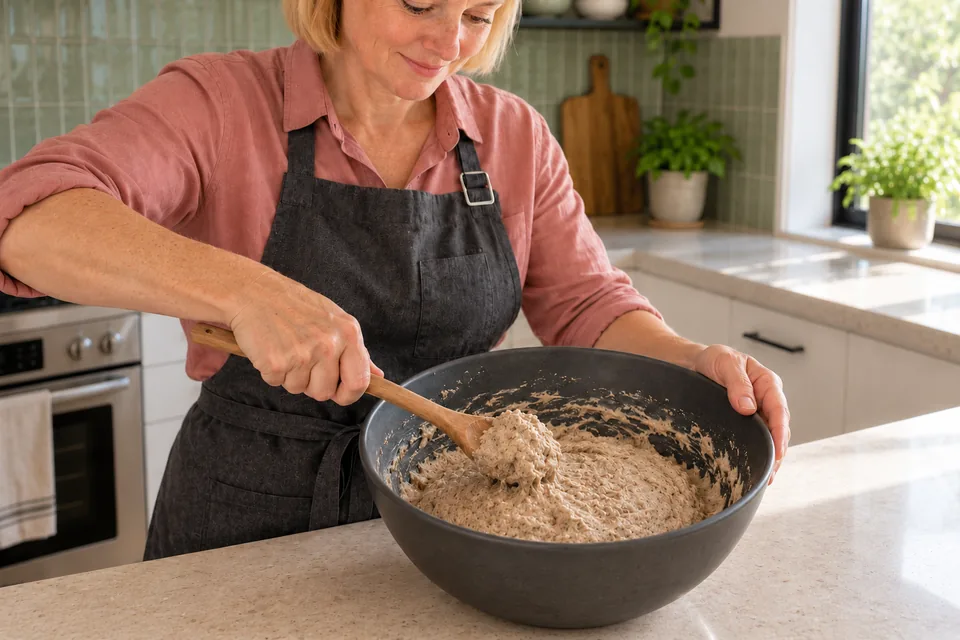
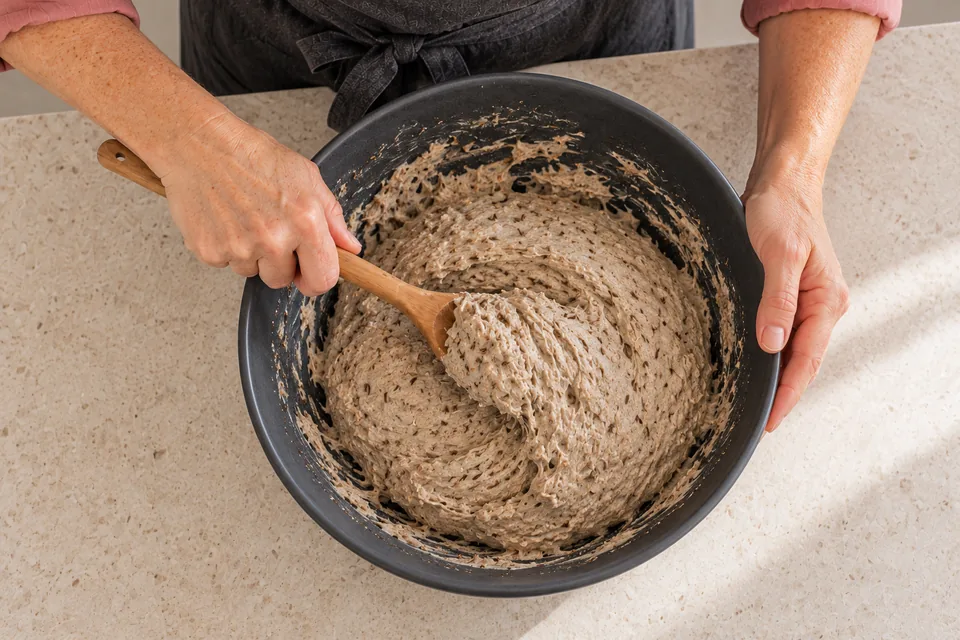
    Combine both flours, the yeast, sugar and salt in a large bowl. Stir in the treacle liquid with a sturdy spoon, then work in the dough oil. Mix and press the mass together for 3–5 minutes, scraping the bowl, until all the flour is damp.

    Ready when: The dough is sticky and heavy, with no dry pockets. It will not become smooth and stretchy like white bread dough.
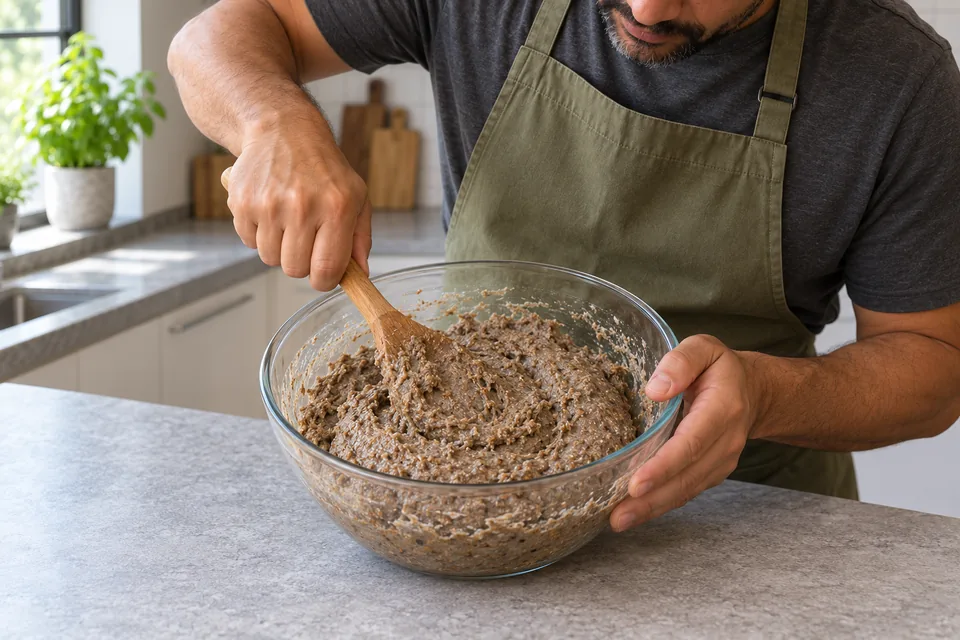
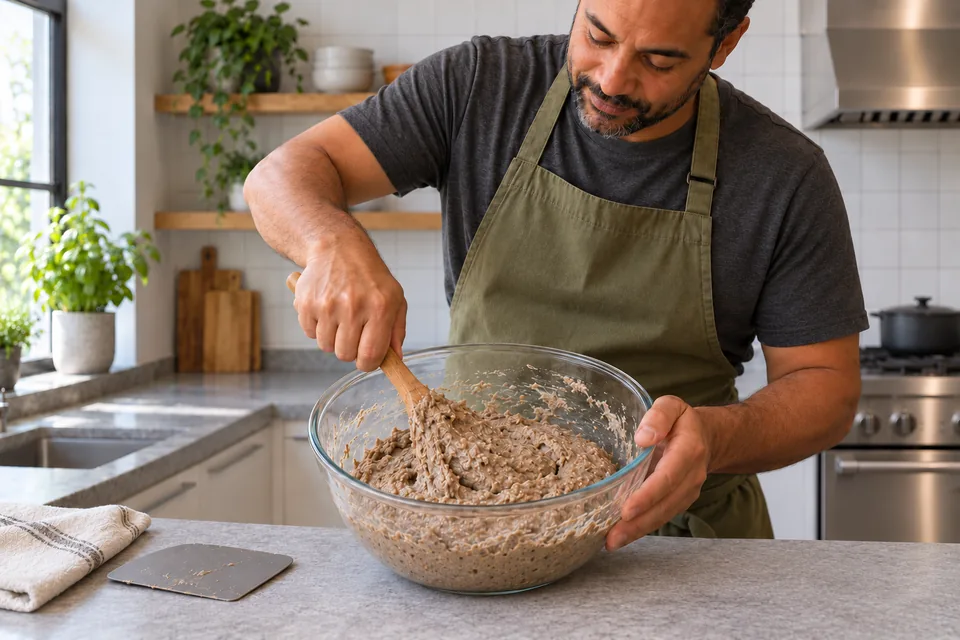
    Cook presses sticky gray-brown rye dough with a wooden spoon while holding a glass bowl.
    02 Dark rye bread — step 2Mix and press until all the flour is damp.
  3. 03 · Let the dough rise

    60–90 min

    Use:

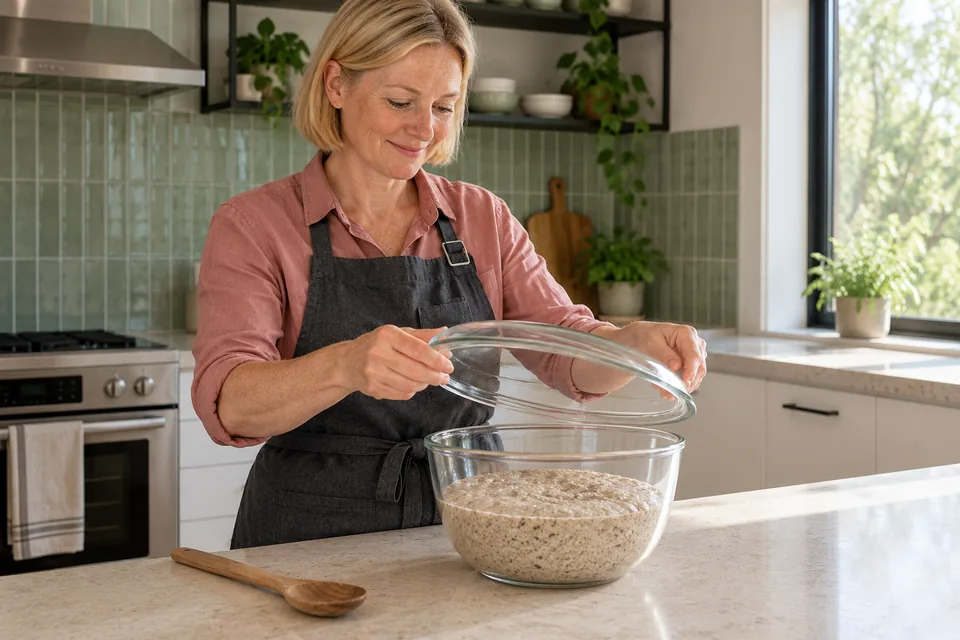
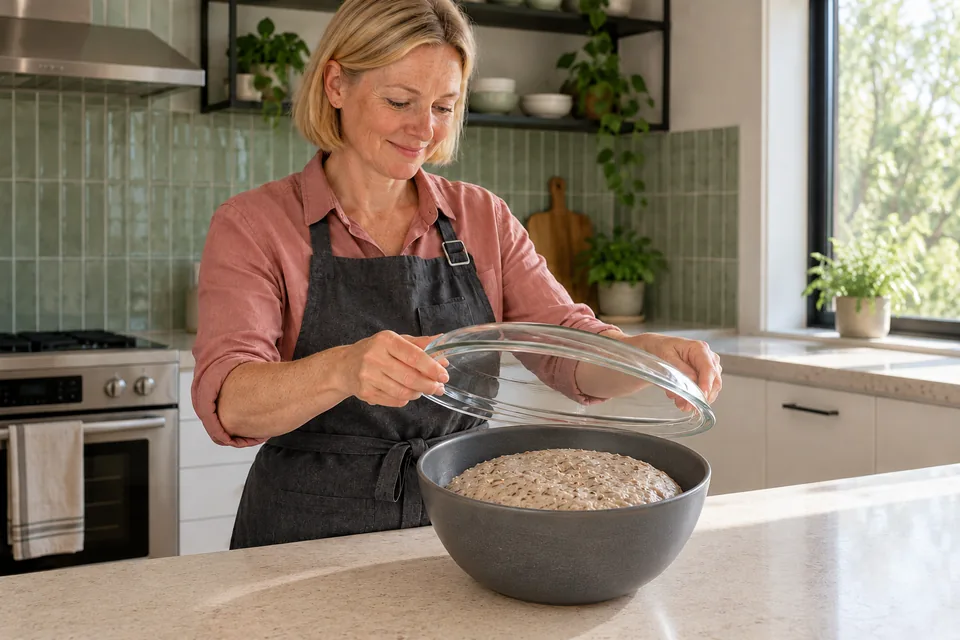
    Cover the bowl and leave at about 24–26°C for 60–90 minutes.

    Ready when: The dough has expanded substantially, approaching twice its starting volume, with small bubbles under the surface.
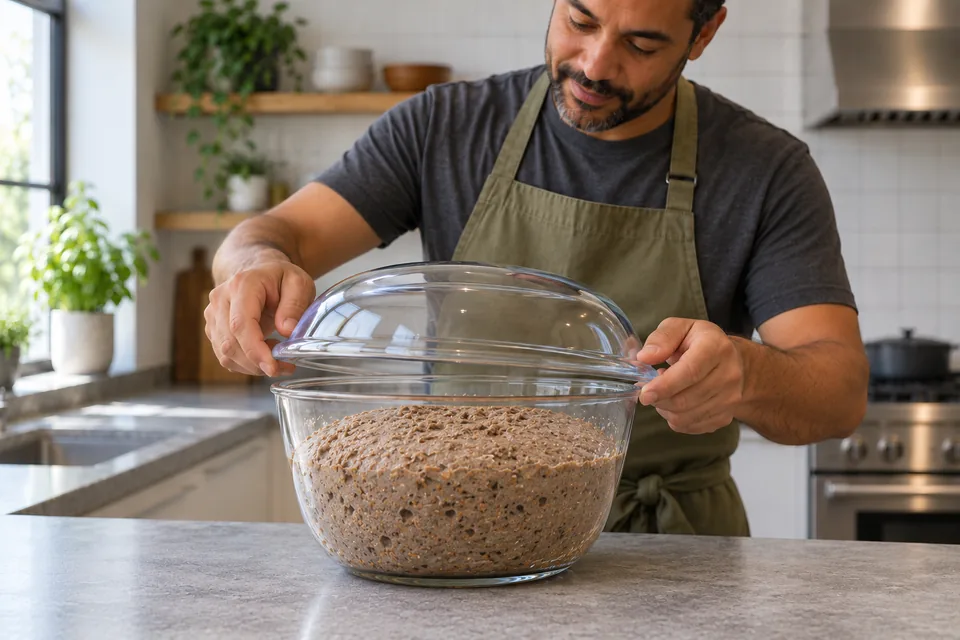
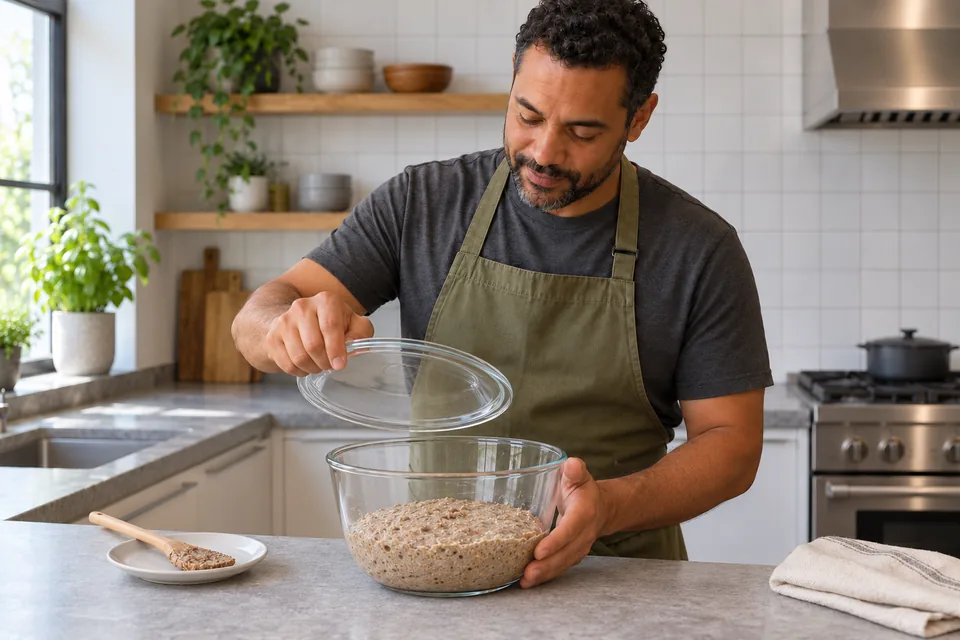
    Cook lowers a clear dome cover over aerated rye dough with bubbles visible through the glass bowl.
    03 Dark rye bread — step 3Cover and let the dough expand substantially.
  4. 04 · Fill the loaf tin

    5–8 min

    Use: Sunflower oil

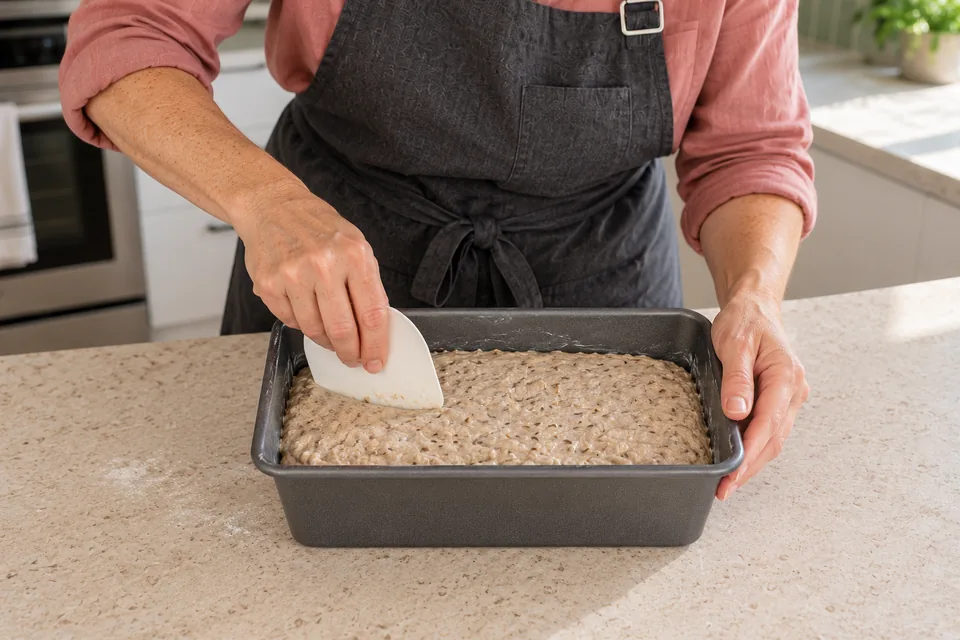
    Use the tin oil to coat a 1 kg/2 lb loaf tin and the back of a sturdy spoon. Press the dough several times in its bowl to remove large air pockets, then scrape it into the tin. Use the oiled spoon to push it into the corners and smooth the top into a shallow dome.

    Ready when: The tin is evenly filled, with no deep gaps or folded pockets.
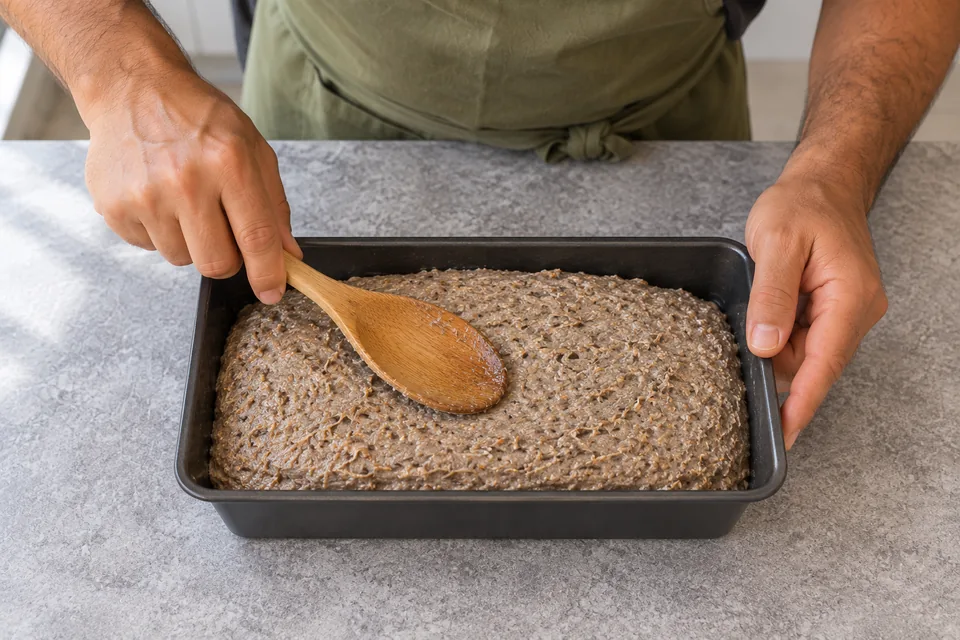
    Cook uses the back of a wooden spoon to smooth gray-brown rye dough in one rectangular loaf tin.
    04 Dark rye bread — step 4Press the dough into the tin and smooth a shallow dome.
  5. 05 · Proof the loaf and heat the oven

    45–75 min

    Use:

    Cover the tin loosely and leave at about 24–26°C for 45–75 minutes. Heat a conventional oven to 220°C during the last 20 minutes.

    Ready when: The loaf has risen by roughly half its starting height and feels aerated. A few tiny holes or fine cracks may appear on top; bake before the surface sinks.
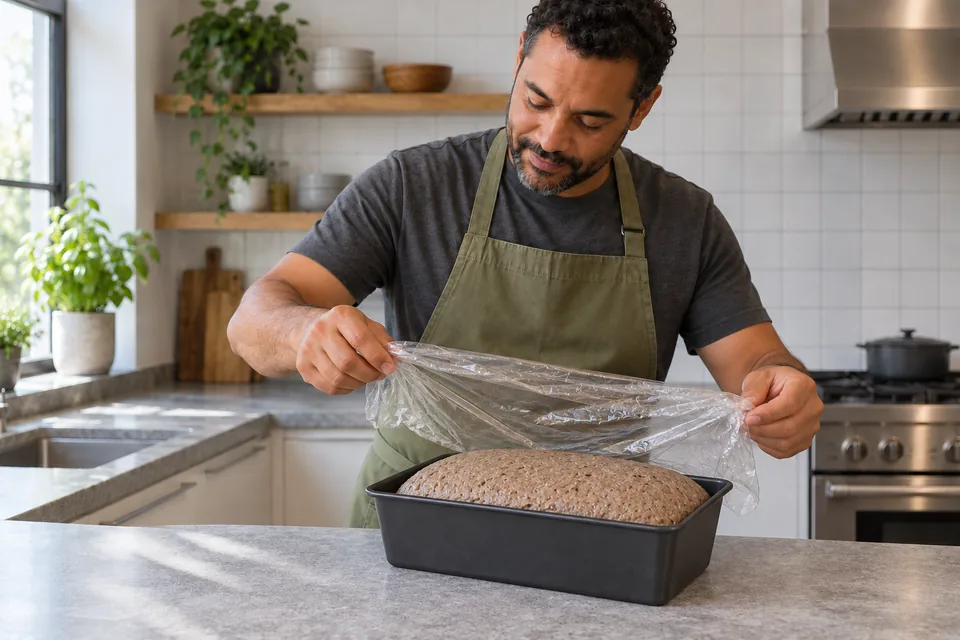
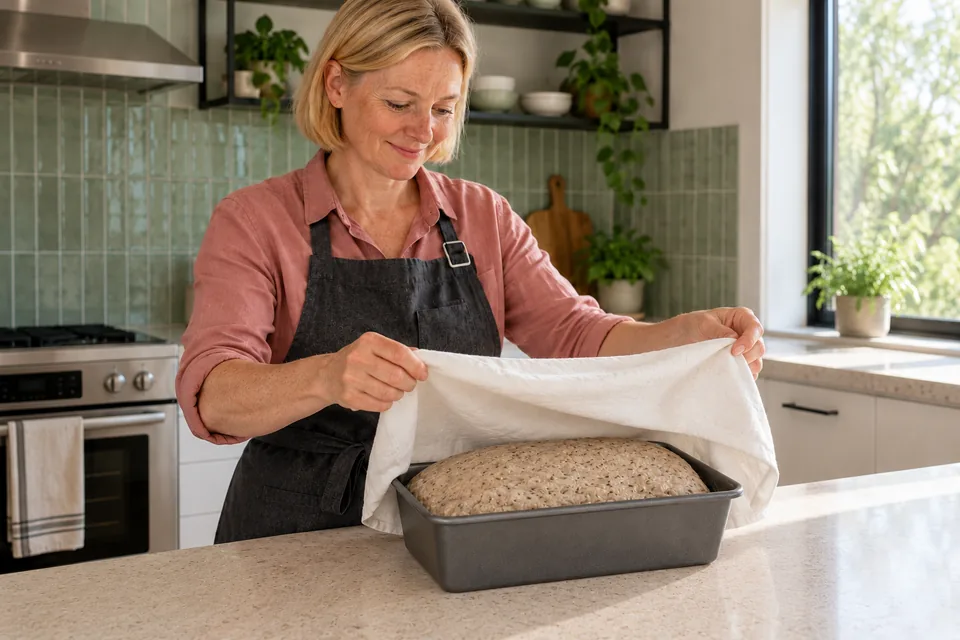
    Cook lifts a loose cover above the risen gray-brown rye loaf, showing small pores across its domed surface.
    05 Dark rye bread — step 5Let the loaf rise by roughly half before baking.
  6. 06 · Bake the loaf

    45–55 min

    Use:

    Bake on the middle rack at 220°C conventional for 45–50 minutes. Check from 40 minutes; cover the top loosely with foil if it darkens too quickly. If the sides are still soft when the loaf is tipped out, return it to the oven without the tin for another 5 minutes.

    Ready when: The crust is firm and the sides hold their shape. A probe through the side into the centre should read about 96–97°C; use this together with crust and structure checks.
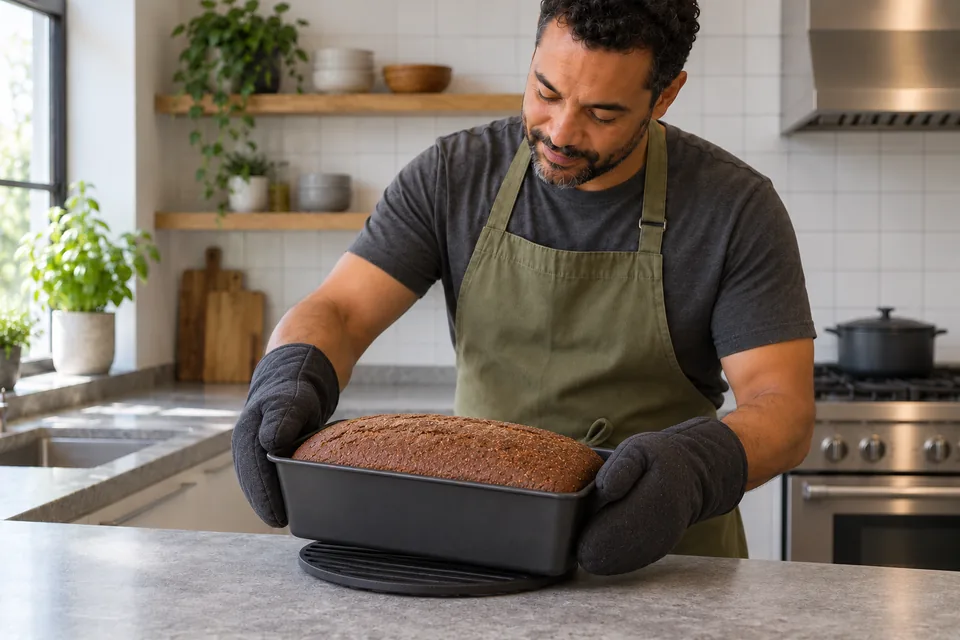
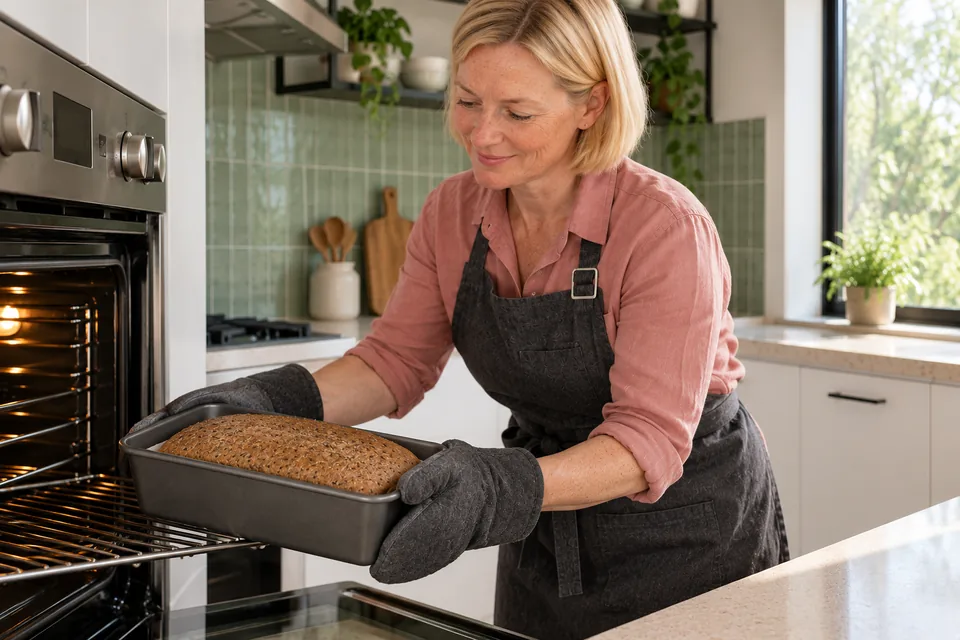
    Cook wearing oven mitts lowers a tin holding one dark-brown rye loaf onto a trivet.
    06 Dark rye bread — step 6Bake until the crust is firm and the loaf holds its shape.
  7. 07 · Cool and rest overnight

    720–1440 min

    Use:

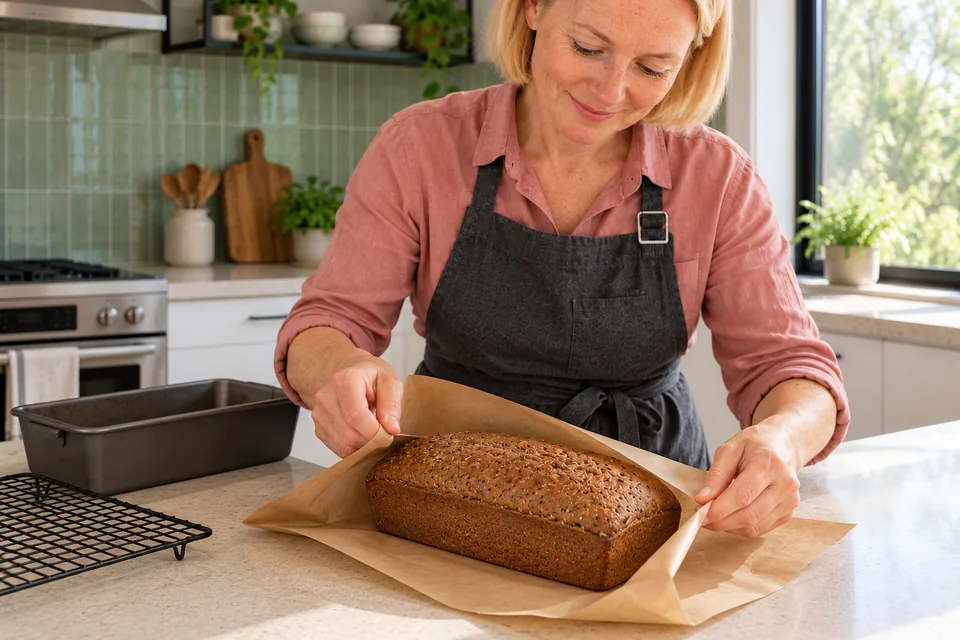
    Leave the loaf in the tin for 10 minutes, then turn it onto a rack. Let it become completely cold, then wrap it in a clean cloth or paper and rest it at room temperature until the next day, at least 12 hours after baking. Slice thinly with a serrated knife.

    Ready when: The loaf is cool throughout and the crumb cuts cleanly rather than smearing on the knife.
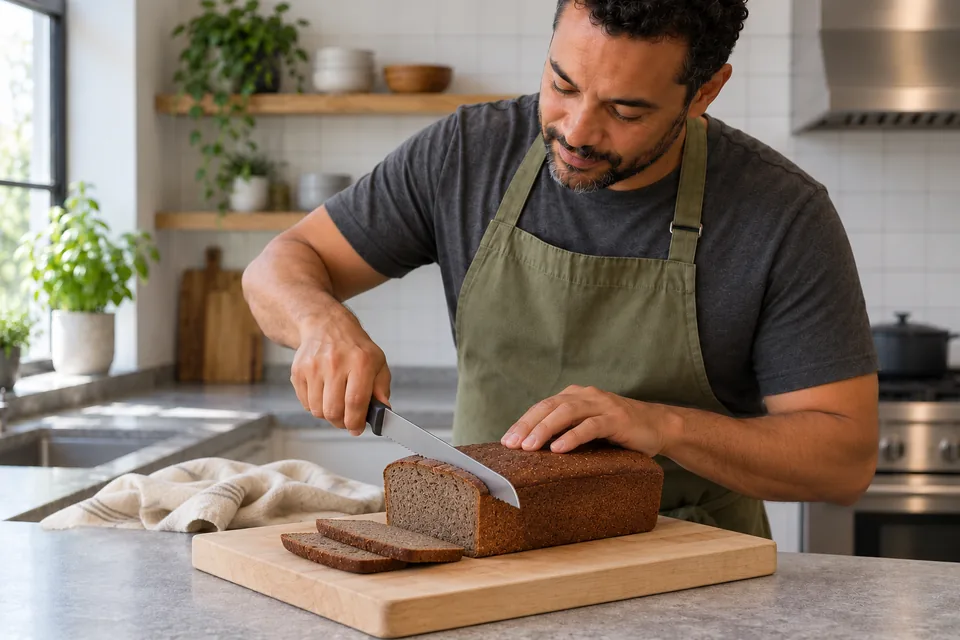
    Cook slices the dark rye loaf on a wooden board beside two thin slices showing its close brown crumb.
    07 Dark rye bread — step 7Cool completely, rest until the next day, then slice thinly.

What to look for

StageLook / feel forNeeds attention
Dissolve the treacleNo thick treacle remains at the bottom, and the liquid is comfortably warm rather than hot.
Mix the rye doughThe dough is sticky and heavy, with no dry pockets. It will not become smooth and stretchy like white bread dough.
Let the dough riseThe dough has expanded substantially, approaching twice its starting volume, with small bubbles under the surface.
Fill the loaf tinThe tin is evenly filled, with no deep gaps or folded pockets.
Proof the loaf and heat the ovenThe loaf has risen by roughly half its starting height and feels aerated. A few tiny holes or fine cracks may appear on top; bake before the surface sinks.
Bake the loafThe crust is firm and the sides hold their shape. A probe through the side into the centre should read about 96–97°C; use this together with crust and structure checks.
Cool and rest overnightThe loaf is cool throughout and the crumb cuts cleanly rather than smearing on the knife.

Troubleshooting

If you see thisLikely causeWhat to do nowNext time
The dough sticks to hands and will not form a stretchy ball.That texture is expected with a majority of wholemeal rye.Use a spoon or scraper and put the dough in the tin as directed.Keep the measured flour blend; do not add flour to imitate white bread dough.
The loaf collapses or has a sunken top.The final rise may have gone too far, or the dough was too wet for the flour.Bake promptly if still unbaked; a collapsed loaf will have a denser crumb.Watch the rise and surface pores rather than waiting for doubling in the tin.
A wet band remains under the crust after an overnight rest.Possible causes include underbaking, excess fermentation or unusually active rye-flour enzymes; acid balance can also matter.Record the flour brand, proof conditions and centre temperature before changing the next batch. More resting alone may not fix it.Check doneness and keep the short schedule. Evaluate a separately tested sourdough version if it recurs.
The crumb smears on the knife soon after baking.The rye crumb has not finished cooling and setting.Leave the remaining loaf intact and wait until the next day.Allow the full rest even when the crust feels cool.

Storage: After the overnight rest, keep wrapped at room temperature for up to 3 days from baking. For longer storage, freeze slices in a sealed bag for up to 2 months. Toast slices from frozen, or thaw them while wrapped.; Contains: wheat, rye, gluten.; This Nepedia version has not been kitchen-tested.

Ingredient choices & substitutions

No brand is specified.

Match the ingredient’s function and weight. See the flour, gluten, yeast and salt guide.

Other approaches to this recipe
Cook / recipeUseWhat differs

The working ingredients and method form one recipe. Different formulas are compared without averaging their quantities or rise schedules.
Nepedia

Recipe

Dark rye bread

A compact pan loaf made with two-thirds wholemeal rye flour and a little treacle. Rest the baked bread overnight before cutting thin slices.

How do I make it?

  1. Dissolve the treacle

    3–10 min

    Stir the treacle into the hot water until it dissolves. Add all the cold water, then leave the liquid until it feels lukewarm, about 25–30°C.

    Cook stirs translucent amber-brown treacle liquid in a clear measuring jug.
    Dissolve the treacle, then add the cold water.

    Ready when: No thick treacle remains at the bottom, and the liquid is comfortably warm rather than hot.

  2. Mix the rye dough

    3–5 min

    Combine both flours, the yeast, sugar and salt in a large bowl. Stir in the treacle liquid with a sturdy spoon, then work in the dough oil. Mix and press the mass together for 3–5 minutes, scraping the bowl, until all the flour is damp.

    Cook presses sticky gray-brown rye dough with a wooden spoon while holding a glass bowl.
    Mix and press until all the flour is damp.

    Ready when: The dough is sticky and heavy, with no dry pockets. It will not become smooth and stretchy like white bread dough.

  3. Let the dough rise

    60–90 min

    Cover the bowl and leave at about 24–26°C for 60–90 minutes.

    Cook lowers a clear dome cover over aerated rye dough with bubbles visible through the glass bowl.
    Cover and let the dough expand substantially.

    Ready when: The dough has expanded substantially, approaching twice its starting volume, with small bubbles under the surface.

  4. Fill the loaf tin

    5–8 min

    Use the tin oil to coat a 1 kg/2 lb loaf tin and the back of a sturdy spoon. Press the dough several times in its bowl to remove large air pockets, then scrape it into the tin. Use the oiled spoon to push it into the corners and smooth the top into a shallow dome.

    Cook uses the back of a wooden spoon to smooth gray-brown rye dough in one rectangular loaf tin.
    Press the dough into the tin and smooth a shallow dome.

    Ready when: The tin is evenly filled, with no deep gaps or folded pockets.

  5. Proof the loaf and heat the oven

    45–75 min

    Cover the tin loosely and leave at about 24–26°C for 45–75 minutes. Heat a conventional oven to 220°C during the last 20 minutes.

    Cook lifts a loose cover above the risen gray-brown rye loaf, showing small pores across its domed surface.
    Let the loaf rise by roughly half before baking.

    Ready when: The loaf has risen by roughly half its starting height and feels aerated. A few tiny holes or fine cracks may appear on top; bake before the surface sinks.

  6. Bake the loaf

    45–55 min

    Bake on the middle rack at 220°C conventional for 45–50 minutes. Check from 40 minutes; cover the top loosely with foil if it darkens too quickly. If the sides are still soft when the loaf is tipped out, return it to the oven without the tin for another 5 minutes.

    Cook wearing oven mitts lowers a tin holding one dark-brown rye loaf onto a trivet.
    Bake until the crust is firm and the loaf holds its shape.

    Ready when: The crust is firm and the sides hold their shape. A probe through the side into the centre should read about 96–97°C; use this together with crust and structure checks.

  7. Cool and rest overnight

    720–1440 min

    Leave the loaf in the tin for 10 minutes, then turn it onto a rack. Let it become completely cold, then wrap it in a clean cloth or paper and rest it at room temperature until the next day, at least 12 hours after baking. Slice thinly with a serrated knife.

    Cook slices the dark rye loaf on a wooden board beside two thin slices showing its close brown crumb.
    Cool completely, rest until the next day, then slice thinly.

    Ready when: The loaf is cool throughout and the crumb cuts cleanly rather than smearing on the knife.

What can go wrong, and how can I fix it?

What you noticeLikely causeWhat to do
The dough sticks to hands and will not form a stretchy ball.That texture is expected with a majority of wholemeal rye.Use a spoon or scraper and put the dough in the tin as directed. Keep the measured flour blend; do not add flour to imitate white bread dough.
The loaf collapses or has a sunken top.The final rise may have gone too far, or the dough was too wet for the flour.Bake promptly if still unbaked; a collapsed loaf will have a denser crumb. Watch the rise and surface pores rather than waiting for doubling in the tin.
A wet band remains under the crust after an overnight rest.Possible causes include underbaking, excess fermentation or unusually active rye-flour enzymes; acid balance can also matter.Record the flour brand, proof conditions and centre temperature before changing the next batch. More resting alone may not fix it. Check doneness and keep the short schedule. Evaluate a separately tested sourdough version if it recurs.
The crumb smears on the knife soon after baking.The rye crumb has not finished cooling and setting.Leave the remaining loaf intact and wait until the next day. Allow the full rest even when the crust feels cool.
Useful recipe notes

Storage: After the overnight rest, keep wrapped at room temperature for up to 3 days from baking. For longer storage, freeze slices in a sealed bag for up to 2 months. Toast slices from frozen, or thaw them while wrapped.

Contains: wheat, rye, gluten.

This Nepedia version has not been kitchen-tested.

See the detailed method and ratios in , or follow ingredients through the .

Ingredient proportions & recipe details

Dark rye bread at a glance

Makes
1 large loaf, about 16 thin slices
Heat
220°C conventional
Baking time
45–55 min
Cuisine / style
International
Leavening
Yeast
How do the ingredient proportions compare?

Percentages compare each listed weight with the combined flour weight (100%). These are ingredient ratios, not dough hydration; milk, eggs and fillings contain other ingredients as well as water.

Formula componentGramsFlour = 100%
Wholemeal rye flour400 g66.7%
Strong white bread flour200 g33.3%
Black treacle30 g5%
Instant dried yeast5 g0.8%
Granulated sugar4 g0.7%
Fine salt10 g1.7%

Caraway rye loaf

Makes
1 loaf, about 16 slices
Heat
220°C conventional
Baking time
45–55 min
Cuisine / style
International

Start at 220°C conventional for 15 minutes,then reduce to 200°C for 30–40 minutes.

International · Rye bread

Caraway rye loaf

A dense rye-and-wheat loaf scented with caraway. An overnight preferment starts the dough, and a long rest after baking helps the crumb set.

Method

  1. 01 · Mix and mature the preferment

    600–720 min

    Use: Wholemeal rye flour; Strong white bread flour; Water; Instant dried yeast

    Mix the preferment rye flour, white flour, 175 g water and 0.6 g yeast into a thick paste. Cover with room for expansion and leave at 18–21°C for 10–12 hours.

    Ready when: The paste has expanded and contains many small bubbles.

    The cook lifts a clear cover over a thick, bubbly brown-grey rye-and-wheat preferment.
    01 PrefermentLet the covered preferment expand and become bubbly.
  2. 02 · Develop the final rye dough

    5–7 min

    Use: Wholemeal rye flour; Strong white bread flour; Water; Instant dried yeast; Fine salt; Unsalted butter

    Add the final rye flour, white flour, 175 g water, 4.4 g yeast, salt and softened dough butter. Mix firmly with a sturdy spoon or dough hook for 4–5 minutes, until evenly combined.

    Ready when: The dough is cohesive and sticky. It will not form the thin elastic sheet of a white-flour dough.

    The cook works a wooden spoon through a compact, sticky brown-grey dough before adding caraway.
    02 MixMix into a cohesive, sticky rye dough.
  3. 03 · Fold in the caraway

    2–3 min

    Use: Caraway seeds

    Mix the caraway seeds through the dough until they are evenly distributed.

    Ready when: There are no large pockets of unmixed filling. Keep the dough soft rather than adding flour to remove all stickiness.

    Slender brown caraway seeds are spread through the sticky grey-brown rye dough as the cook turns it with a spoon.
    03 Add InclusionMix the caraway evenly through the dough.
  4. 04 · Let the rye dough rise

    60–90 min

    Use:

    Cover and leave at 22–24°C for 60–90 minutes.

    Ready when: The dough is visibly aerated and has increased in volume by roughly half; it need not double.

    The cook lowers a clear cover above a softly expanded, caraway-speckled rye dough.
    04 Bulk RiseLet the dough become aerated and increase by about half.
  5. 05 · Shape and fill the loaf tin

    8–12 min

    Use: Butter for the tin; Flour for shaping

    Butter a 23×13×8 cm loaf tin and line its base with baking paper. Use the shaping flour sparingly on the worktop and scraper. Form the dough into a short log and place it in the tin, then press it gently into the corners and smooth the surface.

    Ready when: One evenly filled tin has a level dough surface and no large empty corners.

    The cook smooths one level, caraway-speckled rye loaf into the corners of a dark tin.
    05 TinFill the tin evenly and smooth the surface.
  6. 06 · Proof and heat the oven

    45–90 min

    Use:

    Cover loosely and leave at 22–24°C for 45–90 minutes. Heat the oven to 220°C conventional during the final 20 minutes.

    Ready when: The loaf is puffy and rises toward the top of the tin. Fine surface cracks may begin to appear; bake before the surface sinks.

    The cook lifts a loose cloth above one puffy rye loaf with fine surface cracks near the tin rim.
    06 ProofLet the loaf become puffy, then bake before it sinks.
  7. 07 · Bake at two oven settings

    45–55 min

    Use:

    Bake for 15 minutes at 220°C, then reduce the oven to 200°C and bake for another 30–40 minutes. Cover loosely with foil if the top darkens early. Probe the bread near the centre.

    Ready when: The bread reaches 96–97°C and the sides and base are set.

    Using two mitts, the cook holds one brown rye loaf in a dark tin at the oven rack.
    07 BakeBake until the sides and base are set.
  8. 08 · Rest for twelve hours before slicing

    720 min

    Use:

    Leave in the tin for 10 minutes, then turn out onto a rack. Once fully cool, wrap in a clean cloth or paper. Wait at least 12 hours from the end of baking before slicing.

    Ready when: The loaf is completely cool and the dense crumb cuts cleanly rather than smearing.

    The cook folds clean paper around one whole rye loaf.
    08 RestOnce cool, wrap and wait before slicing.

What to look for

StageLook / feel forNeeds attention
Mix and mature the prefermentThe paste has expanded and contains many small bubbles.
Develop the final rye doughThe dough is cohesive and sticky. It will not form the thin elastic sheet of a white-flour dough.
Fold in the carawayThere are no large pockets of unmixed filling. Keep the dough soft rather than adding flour to remove all stickiness.
Let the rye dough riseThe dough is visibly aerated and has increased in volume by roughly half; it need not double.
Shape and fill the loaf tinOne evenly filled tin has a level dough surface and no large empty corners.
Proof and heat the ovenThe loaf is puffy and rises toward the top of the tin. Fine surface cracks may begin to appear; bake before the surface sinks.
Bake at two oven settingsThe bread reaches 96–97°C and the sides and base are set.
Rest for twelve hours before slicingThe loaf is completely cool and the dense crumb cuts cleanly rather than smearing.

Troubleshooting

If you see thisLikely causeWhat to do nowNext time
The dough is sticky.Rye forms a paste-like dough rather than a stretchy white-flour dough.Use a scraper and the measured dusting flour without trying to make it dry.Measure the water and use the stated tin for support.
The crumb smears on the knife.The loaf may have been sliced too soon or baked too briefly.If fully baked, finish the stated rest before trying another slice.Check the bread centre and keep the full 12-hour baked rest.
The top sinks before baking.The final rise went beyond the dough’s capacity.Bake promptly; expect a denser loaf.Use the surface and volume cues rather than extending the timer automatically.

Storage: After the full rest, wrap and keep in a cool dry place for up to 3 days. Freeze wrapped slices for up to 2 months. Toast thawed slices if the crumb has firmed.; Contains: rye, wheat, milk.; This Nepedia version has not been kitchen-tested.

Ingredient choices & substitutions

No brand is specified.

Match the ingredient’s function and weight. See the flour, gluten, yeast and salt guide.

Other approaches to this recipe
Cook / recipeUseWhat differs

The working ingredients and method form one recipe. Different formulas are compared without averaging their quantities or rise schedules.
Nepedia
Four thin caraway-flecked rye slices fan beside the shortened rectangular loaf on a wooden board, viewed from above.
Four thin slices and the remaining caraway rye loaf.

Recipe

Caraway rye loaf

A dense rye-and-wheat loaf scented with caraway. An overnight preferment starts the dough, and a long rest after baking helps the crumb set.

How do I make it?

  1. Mix and mature the preferment

    600–720 min

    Mix the preferment rye flour, white flour, 175 g water and 0.6 g yeast into a thick paste. Cover with room for expansion and leave at 18–21°C for 10–12 hours.

    The cook lifts a clear cover over a thick, bubbly brown-grey rye-and-wheat preferment.
    Let the covered preferment expand and become bubbly.

    Ready when: The paste has expanded and contains many small bubbles.

  2. Develop the final rye dough

    5–7 min

    Add the final rye flour, white flour, 175 g water, 4.4 g yeast, salt and softened dough butter. Mix firmly with a sturdy spoon or dough hook for 4–5 minutes, until evenly combined.

    The cook works a wooden spoon through a compact, sticky brown-grey dough before adding caraway.
    Mix into a cohesive, sticky rye dough.

    Ready when: The dough is cohesive and sticky. It will not form the thin elastic sheet of a white-flour dough.

  3. Fold in the caraway

    2–3 min

    Mix the caraway seeds through the dough until they are evenly distributed.

    Slender brown caraway seeds are spread through the sticky grey-brown rye dough as the cook turns it with a spoon.
    Mix the caraway evenly through the dough.

    Ready when: There are no large pockets of unmixed filling. Keep the dough soft rather than adding flour to remove all stickiness.

  4. Let the rye dough rise

    60–90 min

    Cover and leave at 22–24°C for 60–90 minutes.

    The cook lowers a clear cover above a softly expanded, caraway-speckled rye dough.
    Let the dough become aerated and increase by about half.

    Ready when: The dough is visibly aerated and has increased in volume by roughly half; it need not double.

  5. Shape and fill the loaf tin

    8–12 min

    Butter a 23×13×8 cm loaf tin and line its base with baking paper. Use the shaping flour sparingly on the worktop and scraper. Form the dough into a short log and place it in the tin, then press it gently into the corners and smooth the surface.

    The cook smooths one level, caraway-speckled rye loaf into the corners of a dark tin.
    Fill the tin evenly and smooth the surface.

    Ready when: One evenly filled tin has a level dough surface and no large empty corners.

  6. Proof and heat the oven

    45–90 min

    Cover loosely and leave at 22–24°C for 45–90 minutes. Heat the oven to 220°C conventional during the final 20 minutes.

    The cook lifts a loose cloth above one puffy rye loaf with fine surface cracks near the tin rim.
    Let the loaf become puffy, then bake before it sinks.

    Ready when: The loaf is puffy and rises toward the top of the tin. Fine surface cracks may begin to appear; bake before the surface sinks.

  7. Bake at two oven settings

    45–55 min

    Bake for 15 minutes at 220°C, then reduce the oven to 200°C and bake for another 30–40 minutes. Cover loosely with foil if the top darkens early. Probe the bread near the centre.

    Using two mitts, the cook holds one brown rye loaf in a dark tin at the oven rack.
    Bake until the sides and base are set.

    Ready when: The bread reaches 96–97°C and the sides and base are set.

  8. Rest for twelve hours before slicing

    720 min

    Leave in the tin for 10 minutes, then turn out onto a rack. Once fully cool, wrap in a clean cloth or paper. Wait at least 12 hours from the end of baking before slicing.

    The cook folds clean paper around one whole rye loaf.
    Once cool, wrap and wait before slicing.

    Ready when: The loaf is completely cool and the dense crumb cuts cleanly rather than smearing.

What can go wrong, and how can I fix it?

What you noticeLikely causeWhat to do
The dough is sticky.Rye forms a paste-like dough rather than a stretchy white-flour dough.Use a scraper and the measured dusting flour without trying to make it dry. Measure the water and use the stated tin for support.
The crumb smears on the knife.The loaf may have been sliced too soon or baked too briefly.If fully baked, finish the stated rest before trying another slice. Check the bread centre and keep the full 12-hour baked rest.
The top sinks before baking.The final rise went beyond the dough’s capacity.Bake promptly; expect a denser loaf. Use the surface and volume cues rather than extending the timer automatically.
Useful recipe notes

Storage: After the full rest, wrap and keep in a cool dry place for up to 3 days. Freeze wrapped slices for up to 2 months. Toast thawed slices if the crumb has firmed.

Contains: rye, wheat, milk.

This Nepedia version has not been kitchen-tested.

See the detailed method and ratios in , or follow ingredients through the .

Ingredient proportions & recipe details

Caraway rye loaf at a glance

Makes
1 loaf, about 16 slices
Heat
220°C conventional
Baking time
45–55 min
Cuisine / style
International
Leavening
Yeast
Bulk fermentation (including folding)
60–90 min · The dough is visibly aerated and has increased in volume by roughly half; it need not double.
How do the ingredient proportions compare?

Percentages compare each listed weight with the combined flour weight (100%). These are ingredient ratios, not dough hydration; milk, eggs and fillings contain other ingredients as well as water.

Formula componentGramsFlour = 100%
Wholemeal rye flour150 g30%
Strong white bread flour100 g20%
Water175 g35%
Instant dried yeast0.6 g0.1%
Wholemeal rye flour150 g30%
Strong white bread flour100 g20%
Water175 g35%
Instant dried yeast4.4 g0.9%
Fine salt10 g2%
Unsalted butter60 g12%
Caraway seeds10 g2%

Apricot rye loaf

Makes
1 loaf, about 16 slices
Heat
220°C conventional
Baking time
45–55 min
Cuisine / style
International

Start at 220°C conventional for 15 minutes,then reduce to 200°C for 30–40 minutes.

International · Rye bread

Apricot rye loaf

A dense rye-and-wheat loaf with small pieces of soft dried apricot. Make the preferment the night before, and allow a long rest after baking for clean slices.

Method

  1. 01 · Mix and mature the preferment

    600–720 min

    Use: Wholemeal rye flour; Strong white bread flour; Water; Instant dried yeast

    Mix the preferment rye flour, white flour, 175 g water and 0.6 g yeast into a thick paste. Cover with room for expansion and leave at 18–21°C for 10–12 hours.

    Ready when: The paste has expanded and contains many small bubbles.

    Cook lifts a cover above a modest bubbly rye-and-wheat preferment.
    01 Ferment the overnight pasteLet the overnight preferment become bubbly.
  2. 02 · Develop the final rye dough

    5–7 min

    Use: Wholemeal rye flour; Strong white bread flour; Water; Instant dried yeast; Fine salt; Unsalted butter

    Add the final rye flour, white flour, 175 g water, 4.4 g yeast, salt and softened dough butter. Mix firmly with a sturdy spoon or dough hook for 4–5 minutes, until evenly combined.

    Ready when: The dough is cohesive and sticky. It will not form the thin elastic sheet of a white-flour dough.

    A sturdy wooden spoon presses sticky rye dough in a clear bowl.
    02 Mix the final rye doughMix the final dough until evenly combined.
  3. 03 · Fold in the apricots

    2–3 min

    Use: Soft dried apricots

    Fold the chopped soft apricots into the dough with a scraper until they are evenly spread.

    Ready when: There are no large pockets of unmixed filling. Keep the dough soft rather than adding flour to remove all stickiness.

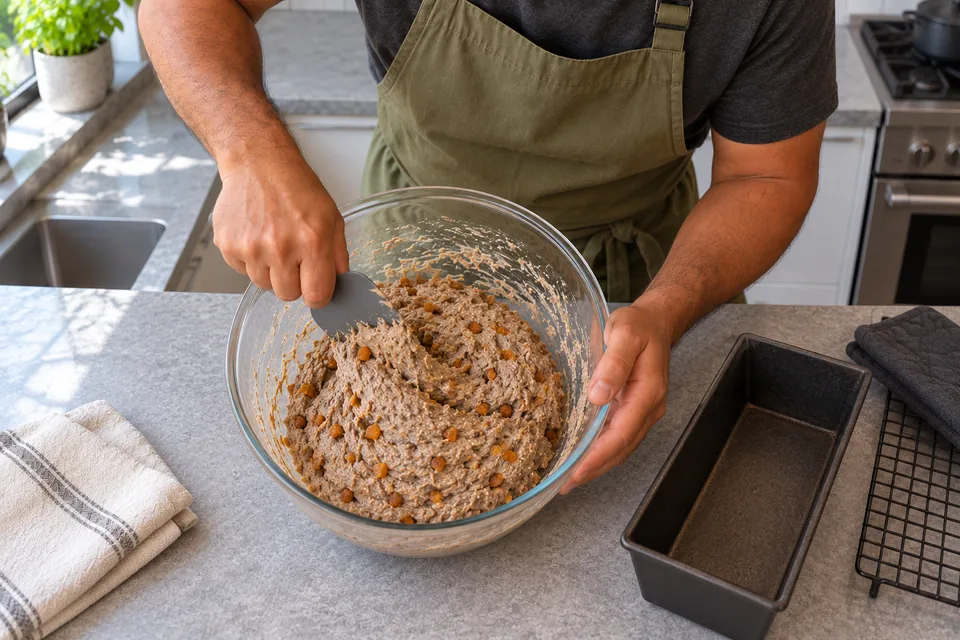
    Hands use a grey scraper to fold small dried apricot pieces into sticky rye dough.
    03 Fold in the soft dried apricotsFold the chopped soft dried apricots through the dough.
  4. 04 · Let the rye dough rise

    60–90 min

    Use:

    Cover and leave at 22–24°C for 60–90 minutes.

    Ready when: The dough is visibly aerated and has increased in volume by roughly half; it need not double.

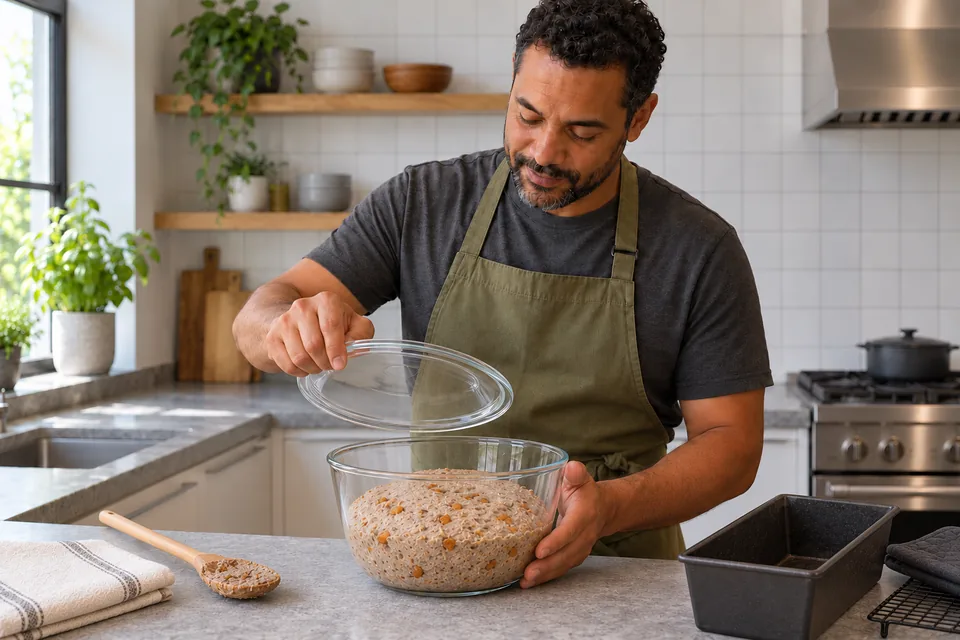
    Cook lifts the cover above aerated rye dough with small apricot pieces.
    04 Let the fruit dough riseLet the covered fruit dough become visibly aerated.
  5. 05 · Shape and fill the loaf tin

    8–12 min

    Use: Butter for the tin; Flour for shaping

    Butter a 23×13×8 cm loaf tin and line its base with baking paper. Use the shaping flour sparingly on the worktop and scraper. Form the dough into a short log and place it in the tin, then press it gently into the corners and smooth the surface.

    Ready when: One evenly filled tin has a level dough surface and no large empty corners.

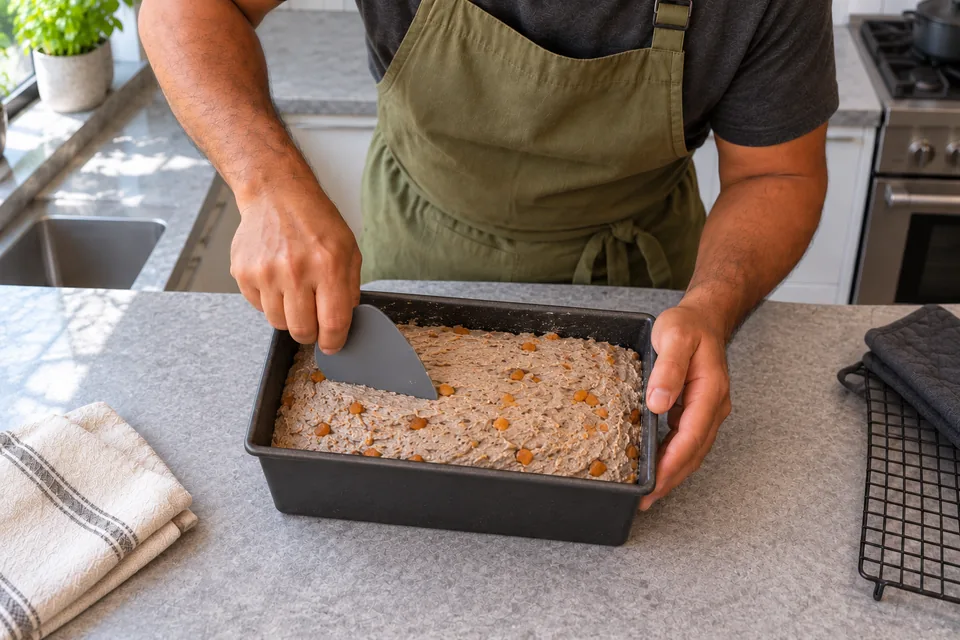
    Hands use a scraper to level sticky apricot rye dough in one loaf tin.
    05 Fill and level the tinFill the tin evenly and smooth the surface.
  6. 06 · Proof and heat the oven

    45–90 min

    Use:

    Cover loosely and leave at 22–24°C for 45–90 minutes. Heat the oven to 220°C conventional during the final 20 minutes.

    Ready when: The loaf is puffy and rises toward the top of the tin. Fine surface cracks may begin to appear; bake before the surface sinks.

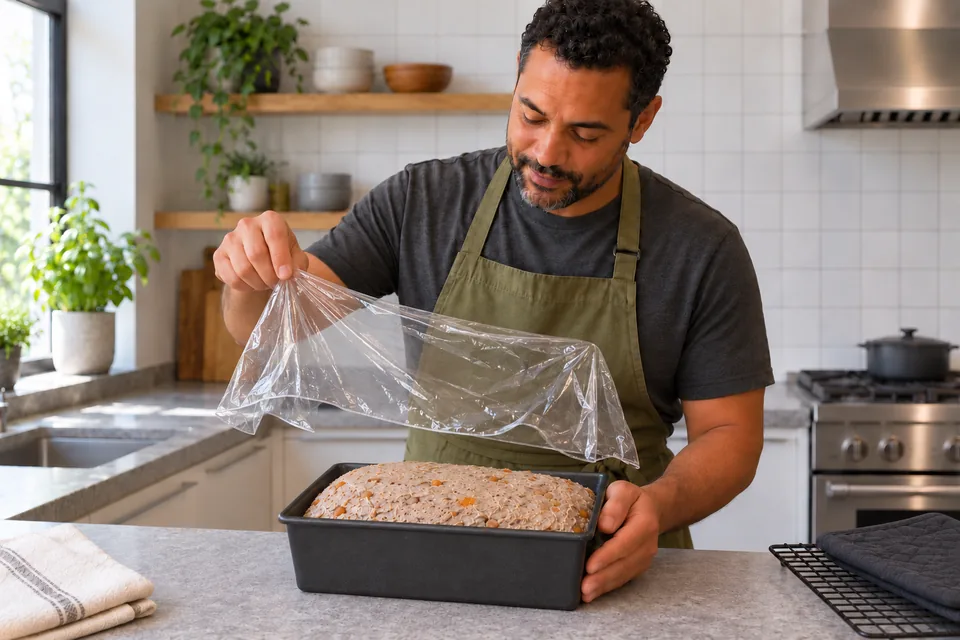
    Cook lifts a loose cover from a risen rye loaf before baking.
    06 Proof the tin loafLet the loaf rise toward the top of the tin.
  7. 07 · Bake at two oven settings

    45–55 min

    Use:

    Bake for 15 minutes at 220°C, then reduce the oven to 200°C and bake for another 30–40 minutes. Cover loosely with foil if the top darkens early. Probe the bread near the centre, avoiding a piece of fruit.

    Ready when: The bread reaches 96–97°C and the sides and base are set.

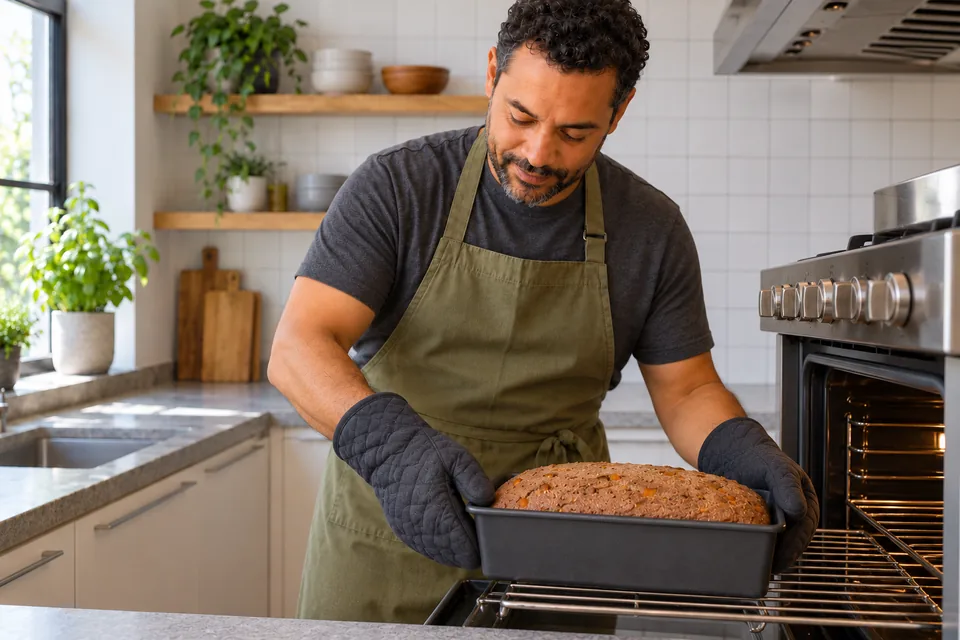
    Cook uses two oven mitts to support one brown rye loaf in its tin.
    07 Bake until firm and fully setBake until the centre and loaf structure are set.
  8. 08 · Rest for twelve hours before slicing

    720 min

    Use:

    Leave in the tin for 10 minutes, then turn out onto a rack. Once fully cool, wrap in a clean cloth or paper. Wait at least 12 hours from the end of baking before slicing.

    Ready when: The loaf is completely cool and the dense crumb cuts cleanly rather than smearing.

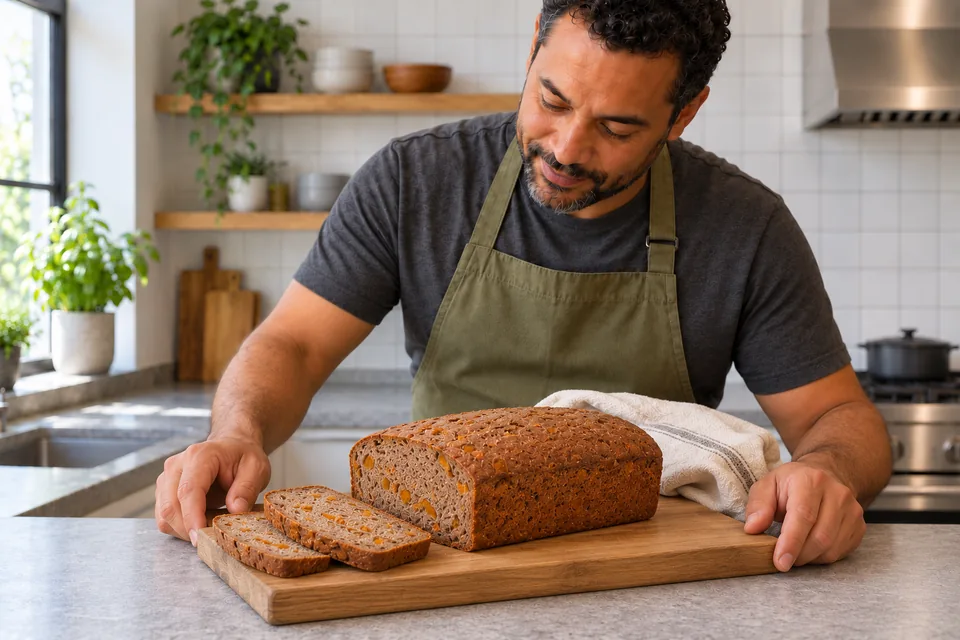
    Cook beside a rested rye loaf and two thin slices showing set crumb with small apricot pieces.
    08 Rest fully before slicingRest for at least twelve hours before slicing.

What to look for

StageLook / feel forNeeds attention
Mix and mature the prefermentThe paste has expanded and contains many small bubbles.
Develop the final rye doughThe dough is cohesive and sticky. It will not form the thin elastic sheet of a white-flour dough.
Fold in the apricotsThere are no large pockets of unmixed filling. Keep the dough soft rather than adding flour to remove all stickiness.
Let the rye dough riseThe dough is visibly aerated and has increased in volume by roughly half; it need not double.
Shape and fill the loaf tinOne evenly filled tin has a level dough surface and no large empty corners.
Proof and heat the ovenThe loaf is puffy and rises toward the top of the tin. Fine surface cracks may begin to appear; bake before the surface sinks.
Bake at two oven settingsThe bread reaches 96–97°C and the sides and base are set.
Rest for twelve hours before slicingThe loaf is completely cool and the dense crumb cuts cleanly rather than smearing.

Troubleshooting

If you see thisLikely causeWhat to do nowNext time
The dough is sticky.Rye forms a paste-like dough rather than a stretchy white-flour dough.Use a scraper and the measured dusting flour without trying to make it dry.Measure the water and use the stated tin for support.
The crumb smears on the knife.The loaf may have been sliced too soon or baked too briefly.If fully baked, finish the stated rest before trying another slice.Check the bread centre and keep the full 12-hour baked rest.
The top sinks before baking.The final rise went beyond the dough’s capacity.Bake promptly; expect a denser loaf.Use the surface and volume cues rather than extending the timer automatically.

Storage: After the full rest, wrap and keep in a cool dry place for up to 3 days. Freeze wrapped slices for up to 2 months. Toast thawed slices if the crumb has firmed.; Contains: rye, wheat, milk, sulphites if present in the dried apricots.; This Nepedia version has not been kitchen-tested.

Ingredient choices & substitutions

No brand is specified.

Match the ingredient’s function and weight. See the flour, gluten, yeast and salt guide.

Other approaches to this recipe
Cook / recipeUseWhat differs

The working ingredients and method form one recipe. Different formulas are compared without averaging their quantities or rise schedules.
Nepedia
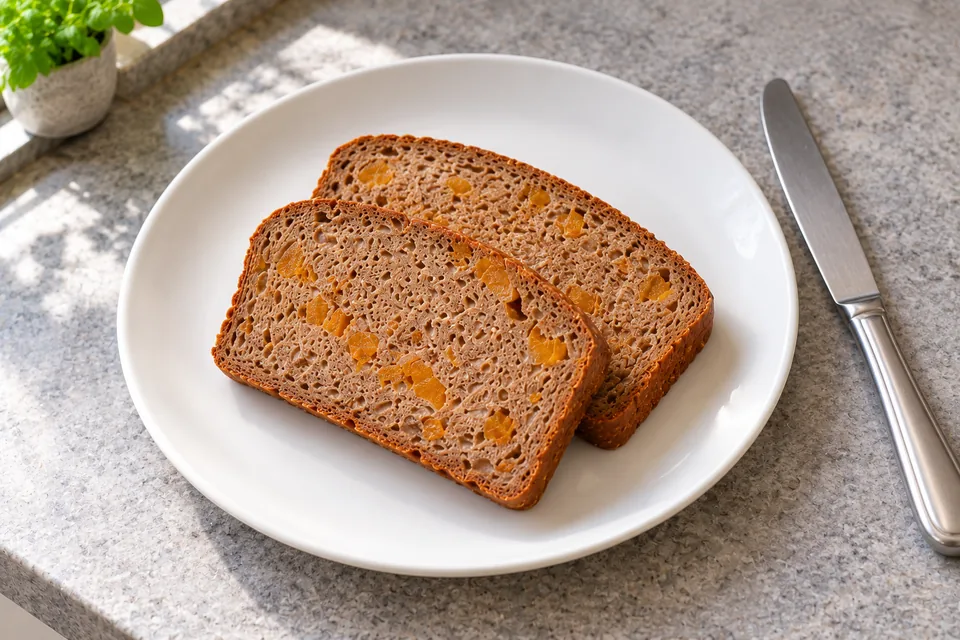
Two overlapping brown rye slices with small amber apricot pieces sit on a plain white plate beside a table knife.
Two thin slices of apricot rye bread.

Recipe

Apricot rye loaf

A dense rye-and-wheat loaf with small pieces of soft dried apricot. Make the preferment the night before, and allow a long rest after baking for clean slices.

How do I make it?

  1. Mix and mature the preferment

    600–720 min

    Mix the preferment rye flour, white flour, 175 g water and 0.6 g yeast into a thick paste. Cover with room for expansion and leave at 18–21°C for 10–12 hours.

    Cook lifts a cover above a modest bubbly rye-and-wheat preferment.
    Let the overnight preferment become bubbly.

    Ready when: The paste has expanded and contains many small bubbles.

  2. Develop the final rye dough

    5–7 min

    Add the final rye flour, white flour, 175 g water, 4.4 g yeast, salt and softened dough butter. Mix firmly with a sturdy spoon or dough hook for 4–5 minutes, until evenly combined.

    A sturdy wooden spoon presses sticky rye dough in a clear bowl.
    Mix the final dough until evenly combined.

    Ready when: The dough is cohesive and sticky. It will not form the thin elastic sheet of a white-flour dough.

  3. Fold in the apricots

    2–3 min

    Fold the chopped soft apricots into the dough with a scraper until they are evenly spread.

    Hands use a grey scraper to fold small dried apricot pieces into sticky rye dough.
    Fold the chopped soft dried apricots through the dough.

    Ready when: There are no large pockets of unmixed filling. Keep the dough soft rather than adding flour to remove all stickiness.

  4. Let the rye dough rise

    60–90 min

    Cover and leave at 22–24°C for 60–90 minutes.

    Cook lifts the cover above aerated rye dough with small apricot pieces.
    Let the covered fruit dough become visibly aerated.

    Ready when: The dough is visibly aerated and has increased in volume by roughly half; it need not double.

  5. Shape and fill the loaf tin

    8–12 min

    Butter a 23×13×8 cm loaf tin and line its base with baking paper. Use the shaping flour sparingly on the worktop and scraper. Form the dough into a short log and place it in the tin, then press it gently into the corners and smooth the surface.

    Hands use a scraper to level sticky apricot rye dough in one loaf tin.
    Fill the tin evenly and smooth the surface.

    Ready when: One evenly filled tin has a level dough surface and no large empty corners.

  6. Proof and heat the oven

    45–90 min

    Cover loosely and leave at 22–24°C for 45–90 minutes. Heat the oven to 220°C conventional during the final 20 minutes.

    Cook lifts a loose cover from a risen rye loaf before baking.
    Let the loaf rise toward the top of the tin.

    Ready when: The loaf is puffy and rises toward the top of the tin. Fine surface cracks may begin to appear; bake before the surface sinks.

  7. Bake at two oven settings

    45–55 min

    Bake for 15 minutes at 220°C, then reduce the oven to 200°C and bake for another 30–40 minutes. Cover loosely with foil if the top darkens early. Probe the bread near the centre, avoiding a piece of fruit.

    Cook uses two oven mitts to support one brown rye loaf in its tin.
    Bake until the centre and loaf structure are set.

    Ready when: The bread reaches 96–97°C and the sides and base are set.

  8. Rest for twelve hours before slicing

    720 min

    Leave in the tin for 10 minutes, then turn out onto a rack. Once fully cool, wrap in a clean cloth or paper. Wait at least 12 hours from the end of baking before slicing.

    Cook beside a rested rye loaf and two thin slices showing set crumb with small apricot pieces.
    Rest for at least twelve hours before slicing.

    Ready when: The loaf is completely cool and the dense crumb cuts cleanly rather than smearing.

What can go wrong, and how can I fix it?

What you noticeLikely causeWhat to do
The dough is sticky.Rye forms a paste-like dough rather than a stretchy white-flour dough.Use a scraper and the measured dusting flour without trying to make it dry. Measure the water and use the stated tin for support.
The crumb smears on the knife.The loaf may have been sliced too soon or baked too briefly.If fully baked, finish the stated rest before trying another slice. Check the bread centre and keep the full 12-hour baked rest.
The top sinks before baking.The final rise went beyond the dough’s capacity.Bake promptly; expect a denser loaf. Use the surface and volume cues rather than extending the timer automatically.
Useful recipe notes

Storage: After the full rest, wrap and keep in a cool dry place for up to 3 days. Freeze wrapped slices for up to 2 months. Toast thawed slices if the crumb has firmed.

Contains: rye, wheat, milk, sulphites if present in the dried apricots.

This Nepedia version has not been kitchen-tested.

See the detailed method and ratios in , or follow ingredients through the .

Ingredient proportions & recipe details

Apricot rye loaf at a glance

Makes
1 loaf, about 16 slices
Heat
220°C conventional
Baking time
45–55 min
Cuisine / style
International
Leavening
Yeast
Bulk fermentation (including folding)
60–90 min · The dough is visibly aerated and has increased in volume by roughly half; it need not double.
How do the ingredient proportions compare?

Percentages compare each listed weight with the combined flour weight (100%). These are ingredient ratios, not dough hydration; milk, eggs and fillings contain other ingredients as well as water.

Formula componentGramsFlour = 100%
Wholemeal rye flour150 g30%
Strong white bread flour100 g20%
Water175 g35%
Instant dried yeast0.6 g0.1%
Wholemeal rye flour150 g30%
Strong white bread flour100 g20%
Water175 g35%
Instant dried yeast4.4 g0.9%
Fine salt10 g2%
Unsalted butter60 g12%
Soft dried apricots125 g25%

Seeded rye loaves

Makes
2 small loaves, about 24 thin slices total
Heat
220°C conventional
Baking time
40–50 min
Cuisine / style
International

Start at 220°C conventional for 15 minutes,then reduce to 200°C for 25–35 minutes.

International · Rye bread

Seeded rye loaves

Two dense rye loaves with sunflower, sesame, poppy and caraway seeds. A measured seed soak keeps the additions hydrated, and the baked loaves rest overnight before slicing.

Method

  1. 01 · Soak the measured seeds and cool

    120 min

    Use: Shelled sunflower seeds; Sesame seeds; Poppy seeds; Water for the seeds

    Put the sunflower, sesame and poppy seeds in a heatproof bowl. Stir in the 135 g just-boiled water, cover and leave for 2 hours. Keep all the water with the seeds.

    Ready when: The seeds are hydrated and the mixture has cooled to room temperature.

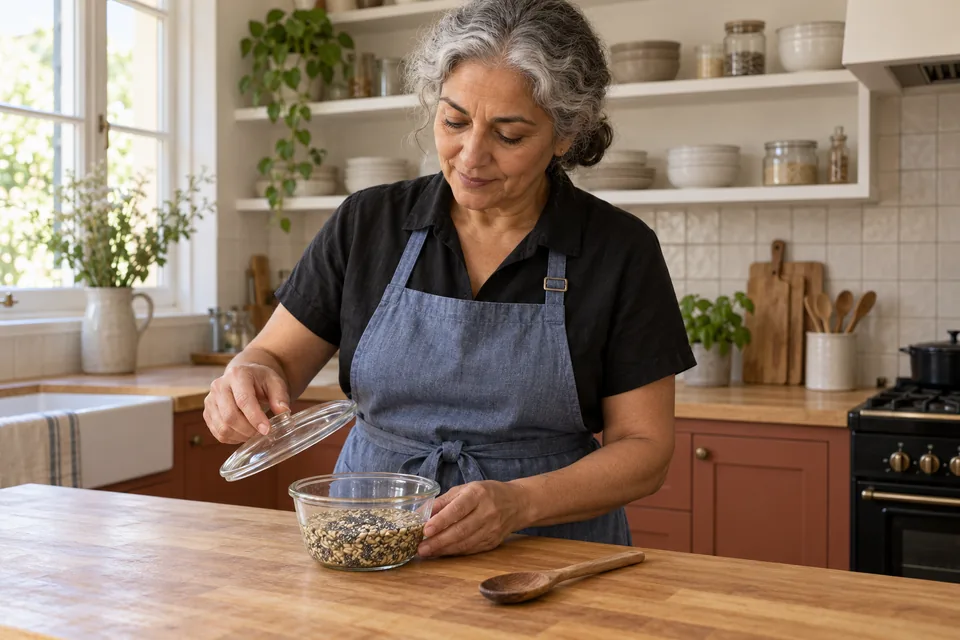
    The cook lifts a cover from a small bowl of wet mixed seeds.
    01 SoakSoak the sunflower, sesame and poppy seeds.
  2. 02 · Combine the soaker and final rye dough

    7–10 min

    Use: Water; Non-diastatic barley malt syrup; Wholemeal rye flour; Strong white bread flour; Fine salt; Instant dried yeast; Caraway seeds

    Stir the 335 g dough water with the malt syrup. Mix in the rye flour, white flour, salt and yeast until there are no dry patches. Add the caraway and all the cooled seed soaker, including any remaining liquid, and mix firmly for 3–4 minutes.

    Ready when: A thick, sticky, evenly seeded paste forms; it will not stretch like white bread dough.

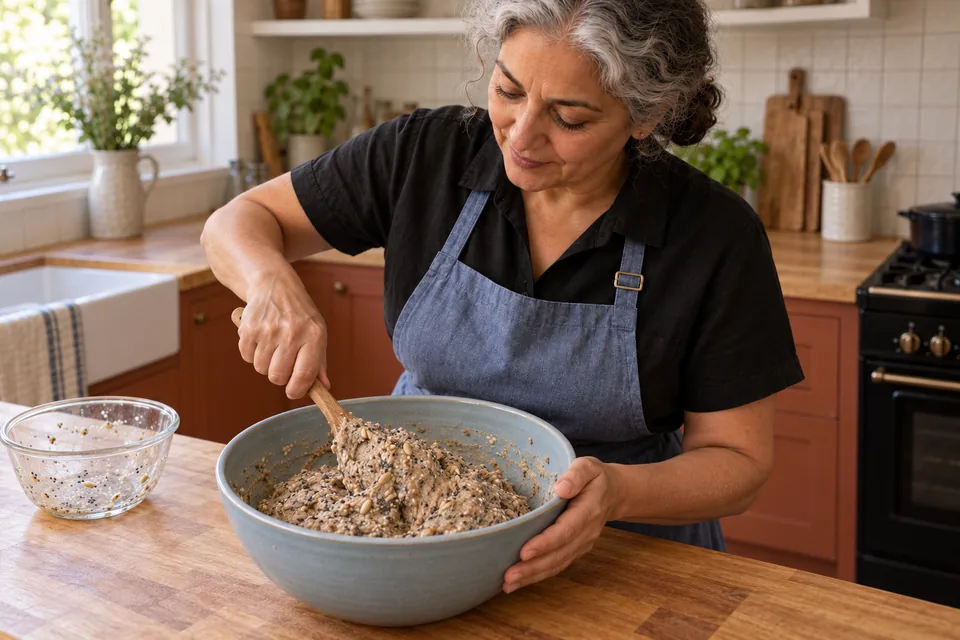
    A wooden spoon turns sticky brown rye dough containing sunflower, sesame, poppy and caraway seeds.
    02 MixMix a thick, evenly seeded rye paste.
  3. 03 · Let the dough rise

    60–90 min

    Use:

    Cover the bowl and leave at 22–24°C for 60–90 minutes.

    Ready when: The mixture is aerated and has increased in volume by roughly half; do not wait for a very light white-bread texture.

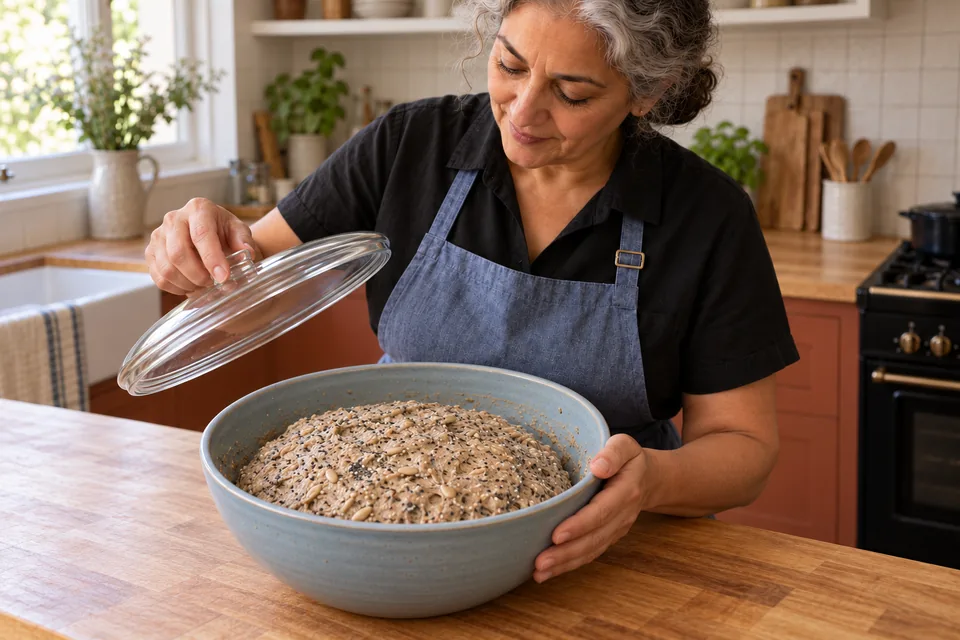
    The cook uncovers an aerated mound of seeded rye dough in the blue bowl.
    03 Bulk RiseLet the mixture rise by roughly half.
  4. 04 · Divide between the two tins

    8–12 min

    Use: Sunflower oil for the tins

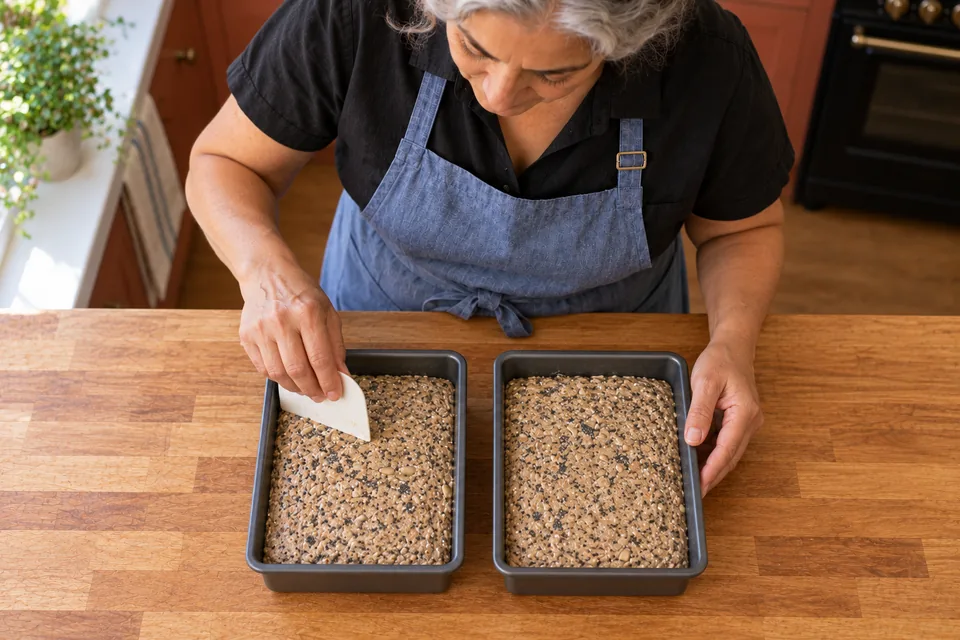
    Oil two 20×10×7 cm loaf tins and line their bases with baking paper. Divide the mixture equally, about 578 g per tin. Use an oiled scraper to spread it into the corners and smooth the tops.

    Ready when: Both tins contain the same amount, with level surfaces and no large gaps.

    Two small loaf tins hold equal amounts of levelled seeded rye dough.
    04 Fill TinsDivide equally between the two small tins.
  5. 05 · Proof and heat the oven

    45–75 min

    Use:

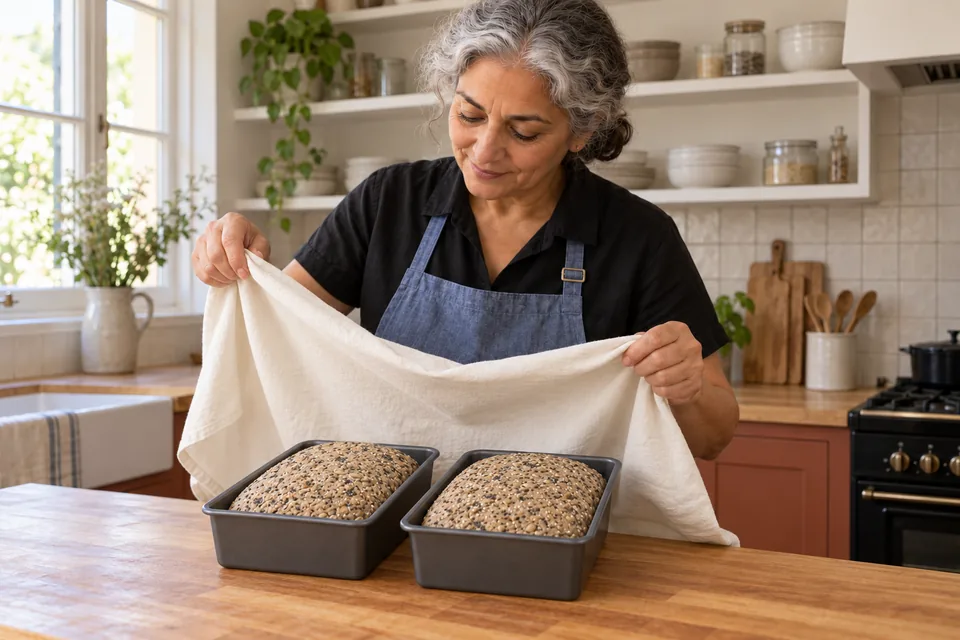
    Cover loosely and leave at 22–24°C for 45–75 minutes. Heat the oven to 220°C conventional during the final 20 minutes.

    Ready when: The surfaces are puffy and slightly domed, with small pinholes beginning to appear. Bake before they flatten or sink.

    The cook uncovers two small tins of risen seeded rye dough.
    05 ProofProof until puffy and lightly domed.
  6. 06 · Bake both loaves at two oven settings

    40–50 min

    Use:

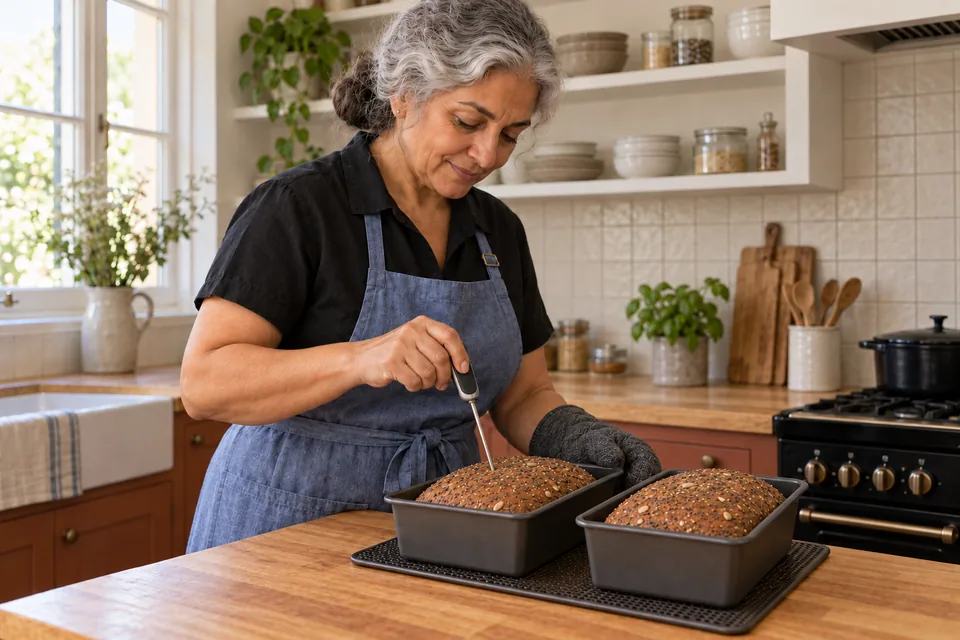
    Bake both tins on the middle rack for 15 minutes. Reduce the oven to 200°C and continue for 25–35 minutes. If the tops darken too quickly, cover loosely with foil. Check each loaf in the centre with a probe.

    Ready when: Each centre reaches 96–97°C, and the sides and bases feel firm.

    Beside two baked seeded rye loaves, the cook inserts a probe into one loaf.
    06 BakeBake both loaves and check each centre.
  7. 07 · Rest for twelve hours before slicing

    720 min

    Use:

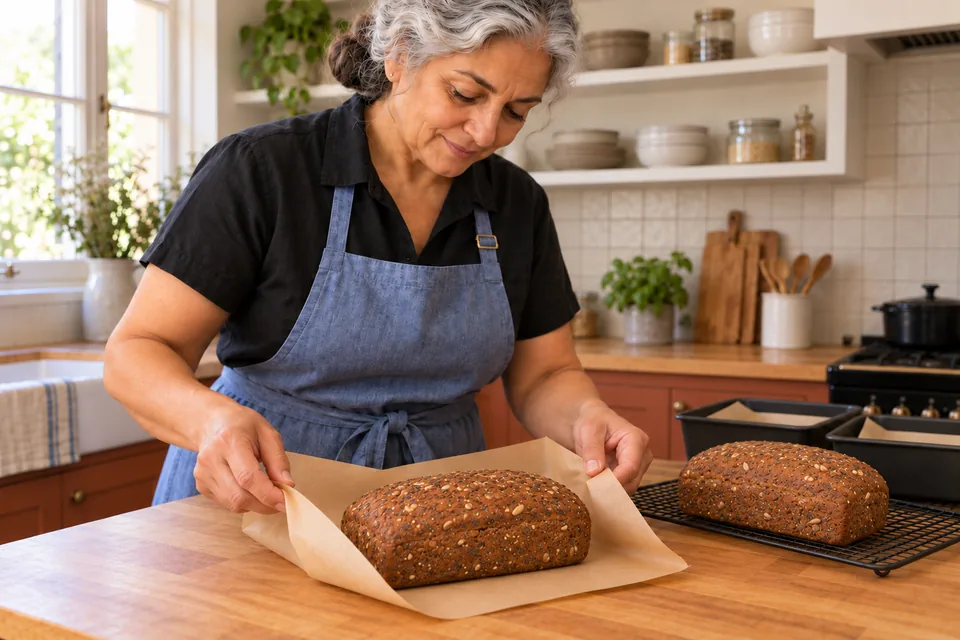
    Leave in the tins for 10 minutes, then turn out onto a rack. Once fully cool, wrap in a clean cloth or paper. Wait at least 12 hours from the end of baking before cutting thin slices.

    Ready when: The dense seed-filled crumb is cool and set enough to slice without smearing.

    Two whole seeded rye loaves are cool, and the cook begins wrapping one in clean paper.
    07 RestCool, wrap and wait before slicing.

What to look for

StageLook / feel forNeeds attention
Soak the measured seeds and coolThe seeds are hydrated and the mixture has cooled to room temperature.
Combine the soaker and final rye doughA thick, sticky, evenly seeded paste forms; it will not stretch like white bread dough.
Let the dough riseThe mixture is aerated and has increased in volume by roughly half; do not wait for a very light white-bread texture.
Divide between the two tinsBoth tins contain the same amount, with level surfaces and no large gaps.
Proof and heat the ovenThe surfaces are puffy and slightly domed, with small pinholes beginning to appear. Bake before they flatten or sink.
Bake both loaves at two oven settingsEach centre reaches 96–97°C, and the sides and bases feel firm.
Rest for twelve hours before slicingThe dense seed-filled crumb is cool and set enough to slice without smearing.

Troubleshooting

If you see thisLikely causeWhat to do nowNext time
The dough is a sticky paste.Most flour is rye and the seeds hold substantial water.Spread it into the tins with a scraper rather than adding unmeasured flour.Weigh both water portions and keep the seed soaker allocation separate.
The crumb smears when sliced.It may be underbaked or insufficiently rested.If the bread was fully baked, allow the complete overnight rest before slicing again.Check both centres and wait the stated 12 hours.

Storage: After the full rest, wrap and keep in a cool dry place for up to 3 days. Freeze wrapped slices for up to 2 months. Toast directly from frozen or thaw while wrapped.; Contains: rye, wheat, barley, sesame.; This Nepedia version has not been kitchen-tested.

Ingredient choices & substitutions

No brand is specified.

Match the ingredient’s function and weight. See the flour, gluten, yeast and salt guide.

Other approaches to this recipe
Cook / recipeUseWhat differs

The working ingredients and method form one recipe. Different formulas are compared without averaging their quantities or rise schedules.
Nepedia
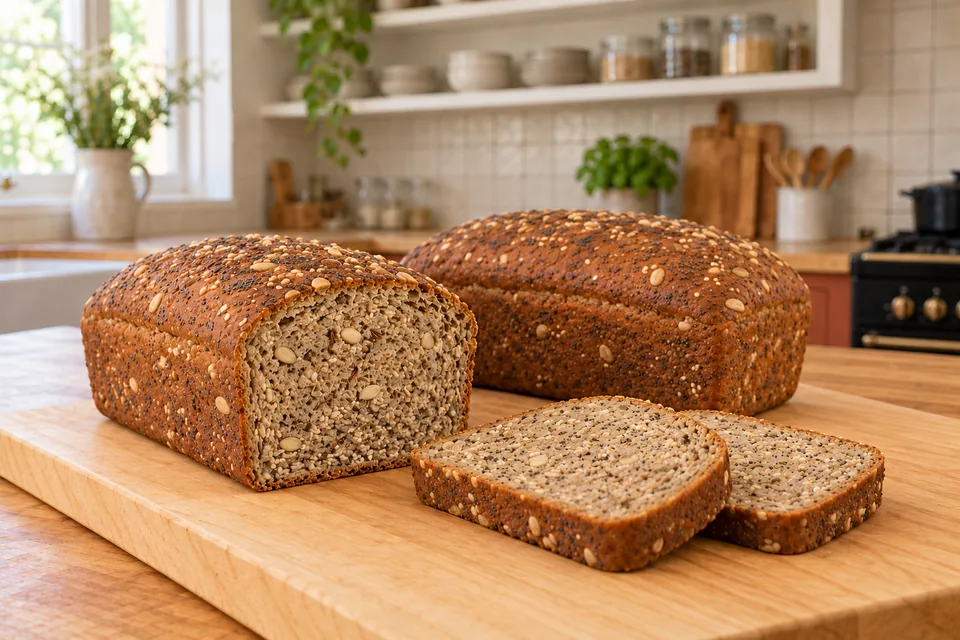
One whole small rye loaf and two thin slices beside a shortened loaf show a dense crumb filled with seeds.
Seeded rye loaves, sliced after their rest.

Recipe

Seeded rye loaves

Two dense rye loaves with sunflower, sesame, poppy and caraway seeds. A measured seed soak keeps the additions hydrated, and the baked loaves rest overnight before slicing.

How do I make it?

  1. Soak the measured seeds and cool

    120 min

    Put the sunflower, sesame and poppy seeds in a heatproof bowl. Stir in the 135 g just-boiled water, cover and leave for 2 hours. Keep all the water with the seeds.

    The cook lifts a cover from a small bowl of wet mixed seeds.
    Soak the sunflower, sesame and poppy seeds.

    Ready when: The seeds are hydrated and the mixture has cooled to room temperature.

  2. Combine the soaker and final rye dough

    7–10 min

    Stir the 335 g dough water with the malt syrup. Mix in the rye flour, white flour, salt and yeast until there are no dry patches. Add the caraway and all the cooled seed soaker, including any remaining liquid, and mix firmly for 3–4 minutes.

    A wooden spoon turns sticky brown rye dough containing sunflower, sesame, poppy and caraway seeds.
    Mix a thick, evenly seeded rye paste.

    Ready when: A thick, sticky, evenly seeded paste forms; it will not stretch like white bread dough.

  3. Let the dough rise

    60–90 min

    Cover the bowl and leave at 22–24°C for 60–90 minutes.

    The cook uncovers an aerated mound of seeded rye dough in the blue bowl.
    Let the mixture rise by roughly half.

    Ready when: The mixture is aerated and has increased in volume by roughly half; do not wait for a very light white-bread texture.

  4. Divide between the two tins

    8–12 min

    Oil two 20×10×7 cm loaf tins and line their bases with baking paper. Divide the mixture equally, about 578 g per tin. Use an oiled scraper to spread it into the corners and smooth the tops.

    Two small loaf tins hold equal amounts of levelled seeded rye dough.
    Divide equally between the two small tins.

    Ready when: Both tins contain the same amount, with level surfaces and no large gaps.

  5. Proof and heat the oven

    45–75 min

    Cover loosely and leave at 22–24°C for 45–75 minutes. Heat the oven to 220°C conventional during the final 20 minutes.

    The cook uncovers two small tins of risen seeded rye dough.
    Proof until puffy and lightly domed.

    Ready when: The surfaces are puffy and slightly domed, with small pinholes beginning to appear. Bake before they flatten or sink.

  6. Bake both loaves at two oven settings

    40–50 min

    Bake both tins on the middle rack for 15 minutes. Reduce the oven to 200°C and continue for 25–35 minutes. If the tops darken too quickly, cover loosely with foil. Check each loaf in the centre with a probe.

    Beside two baked seeded rye loaves, the cook inserts a probe into one loaf.
    Bake both loaves and check each centre.

    Ready when: Each centre reaches 96–97°C, and the sides and bases feel firm.

  7. Rest for twelve hours before slicing

    720 min

    Leave in the tins for 10 minutes, then turn out onto a rack. Once fully cool, wrap in a clean cloth or paper. Wait at least 12 hours from the end of baking before cutting thin slices.

    Two whole seeded rye loaves are cool, and the cook begins wrapping one in clean paper.
    Cool, wrap and wait before slicing.

    Ready when: The dense seed-filled crumb is cool and set enough to slice without smearing.

What can go wrong, and how can I fix it?

What you noticeLikely causeWhat to do
The dough is a sticky paste.Most flour is rye and the seeds hold substantial water.Spread it into the tins with a scraper rather than adding unmeasured flour. Weigh both water portions and keep the seed soaker allocation separate.
The crumb smears when sliced.It may be underbaked or insufficiently rested.If the bread was fully baked, allow the complete overnight rest before slicing again. Check both centres and wait the stated 12 hours.
Useful recipe notes

Storage: After the full rest, wrap and keep in a cool dry place for up to 3 days. Freeze wrapped slices for up to 2 months. Toast directly from frozen or thaw while wrapped.

Contains: rye, wheat, barley, sesame.

This Nepedia version has not been kitchen-tested.

See the detailed method and ratios in , or follow ingredients through the .

Ingredient proportions & recipe details

Seeded rye loaves at a glance

Makes
2 small loaves, about 24 thin slices total
Heat
220°C conventional
Baking time
40–50 min
Cuisine / style
International
Leavening
Yeast
Bulk fermentation (including folding)
60–90 min · The mixture is aerated and has increased in volume by roughly half; do not wait for a very light white-bread texture.
How do the ingredient proportions compare?

Percentages compare each listed weight with the combined flour weight (100%). These are ingredient ratios, not dough hydration; milk, eggs and fillings contain other ingredients as well as water.

Formula componentGramsFlour = 100%
Shelled sunflower seeds75 g15%
Sesame seeds50 g10%
Poppy seeds10 g2%
Water for the seeds135 g27%
Wholemeal rye flour350 g70%
Strong white bread flour150 g30%
Water335 g67%
Non-diastatic barley malt syrup30 g6%
Fine salt10 g2%
Instant dried yeast5 g1%
Caraway seeds5 g1%