Nepedia

British scones

Small, lightly sweet scones with a tender crumb and a browned top. This plain version uses buttermilk and one whole egg; serve them while they are still slightly warm.

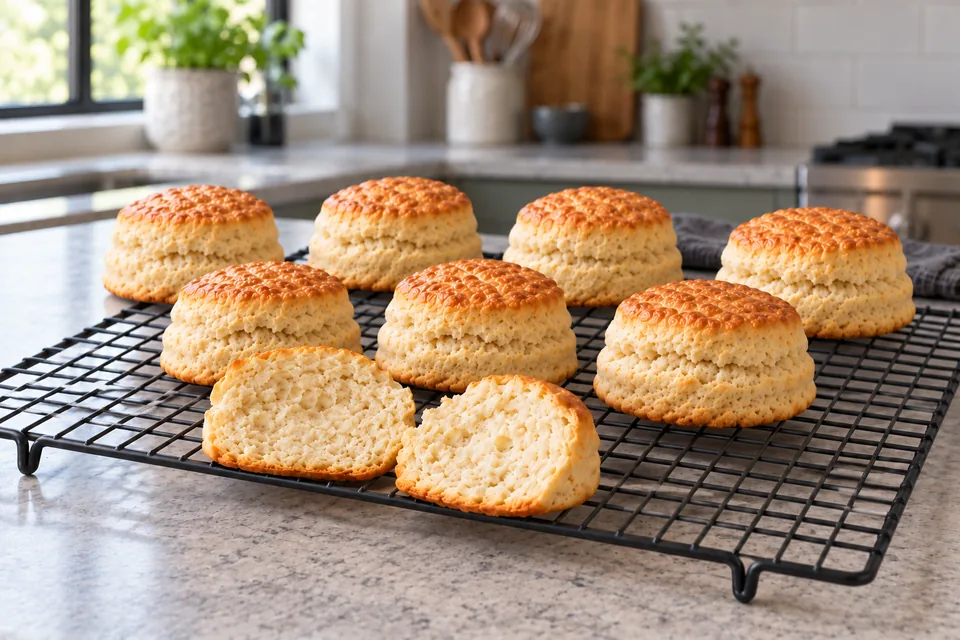
Eight plain golden scones on a rack, one split to show its crumb.
Makes
8 scones
Heat
220°C conventional
Baking time
12–15 min
Cuisine / style
United Kingdom
View

Classic British Scones

Makes
8 scones
Heat
220°C conventional
Baking time
12–15 min
Cuisine / style
United Kingdom
United Kingdom · British scones

Classic British Scones

Small, lightly sweet scones with a tender crumb and a browned top. This plain version uses buttermilk and one whole egg; serve them while they are still slightly warm.

Method

  1. 01 · Prepare the tray and dry ingredients

    3–5 min

    Use: Plain flour; Baking powder; Fine salt; Superfine sugar

    Set the oven to 220°C conventional. Put a rack in the middle and line a 30 × 40cm baking tray with baking paper. Whisk the dough flour, baking powder, salt and sugar in a large bowl.

    Ready when: The dry mixture has an even colour, without pockets of baking powder.
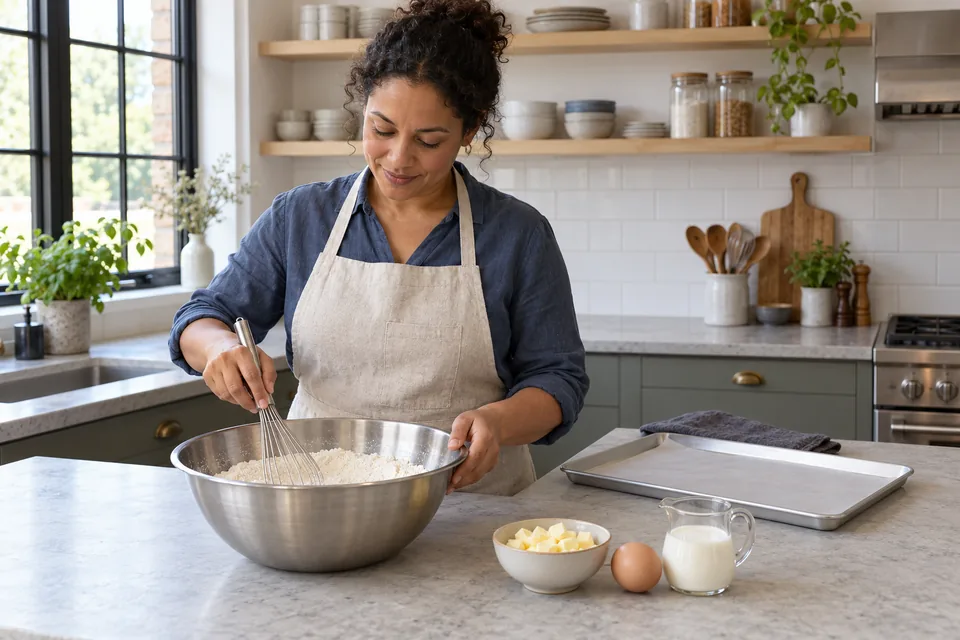
    Cook whisking the dry scone ingredients in a stainless steel bowl.
    01 Prepare the dry ingredientsWhisk the dry ingredients until evenly blended.
  2. 02 · Rub in the butter

    3–5 min

    Use: Unsalted butter

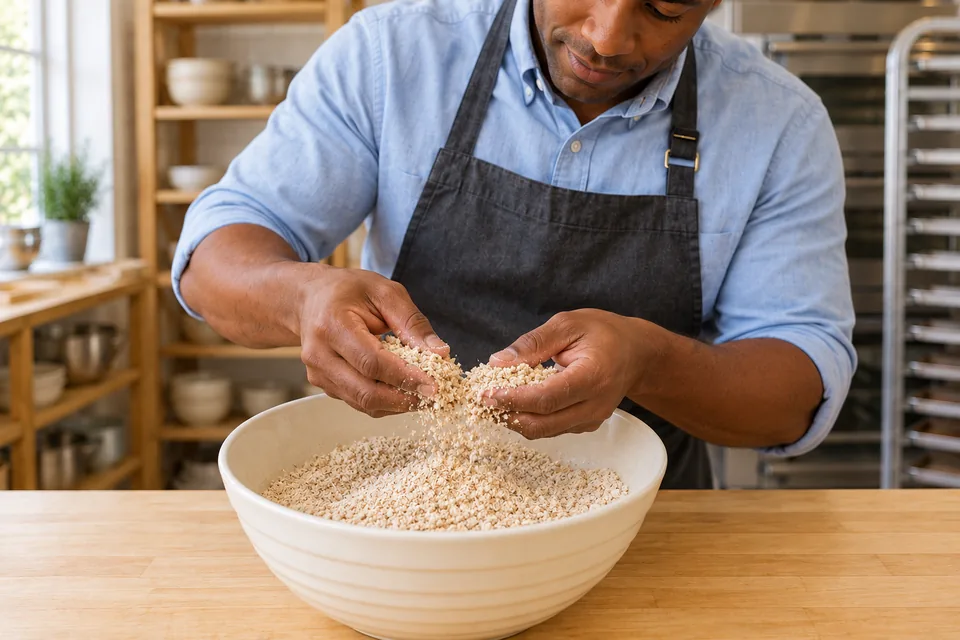
    Add the cold butter. Rub it into the dry mixture with your fingertips, stopping once the large lumps have broken down. Keep the mixture loose rather than pressing it into a paste.

    Ready when: Most of the mixture resembles coarse sand, with only a few tiny butter flakes.
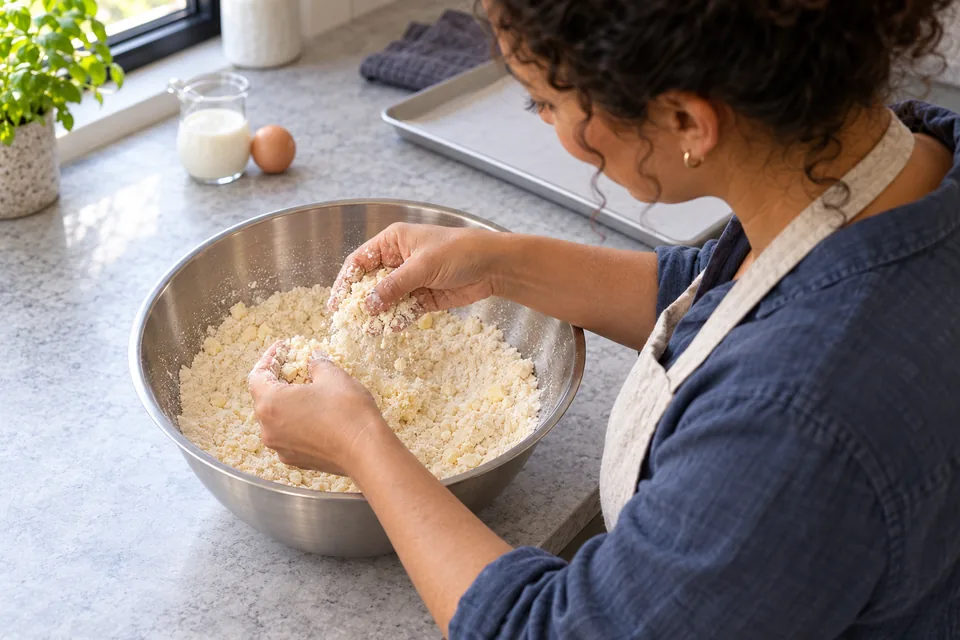
    Fingertips rubbing cold butter into a loose flour mixture in the steel bowl.
    02 Rub in the butterRub the cold butter into the flour with your fingertips.
  3. 03 · Bring the dough together

    2–3 min

    Use: Medium egg; Cultured buttermilk

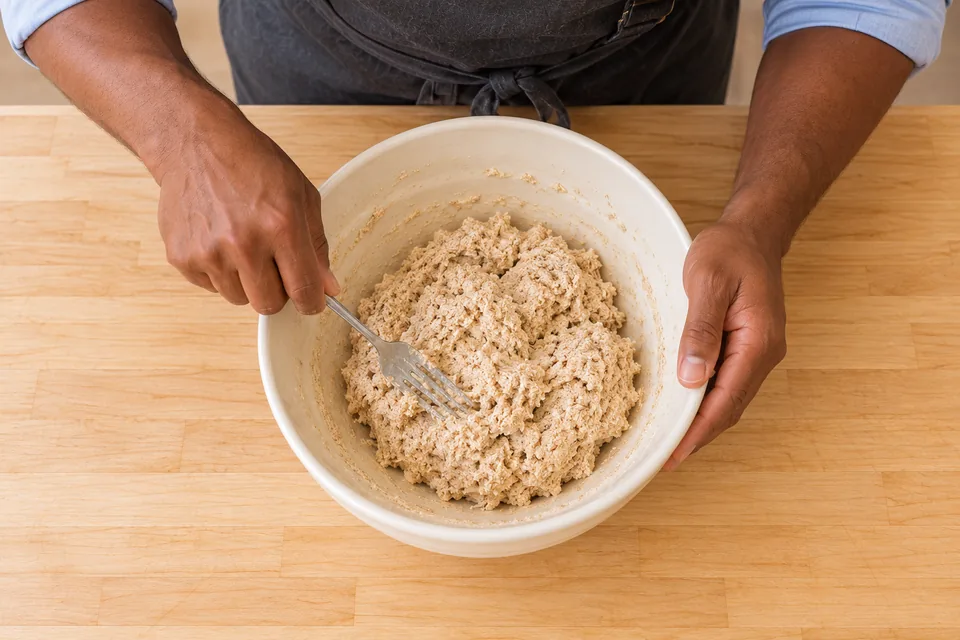
    Beat the whole egg with the 70ml buttermilk for the dough. Pour it into the bowl and use a table knife to lift and turn the crumbs until they form a soft mass. Stop when loose dry flour has been incorporated.

    Ready when: The dough holds together when pressed, but its surface is still slightly rough.
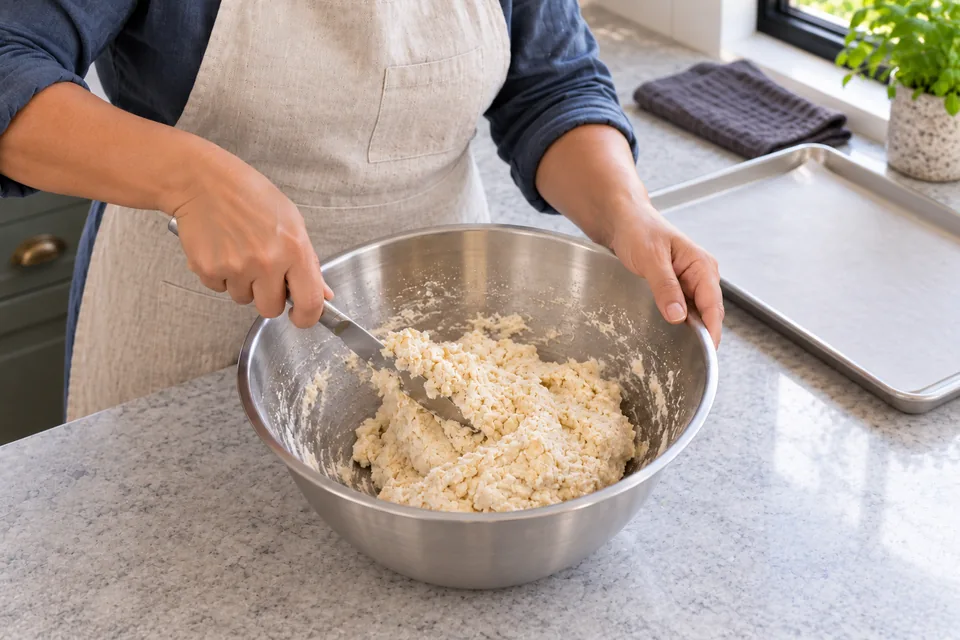
    A blunt table knife lifting rough, cohesive scone dough in the steel bowl.
    03 Bring the dough togetherLift and turn the crumbs into a soft dough, then stop mixing.
  4. 04 · Cut the scones

    5–7 min

    Use: Plain flour for shaping

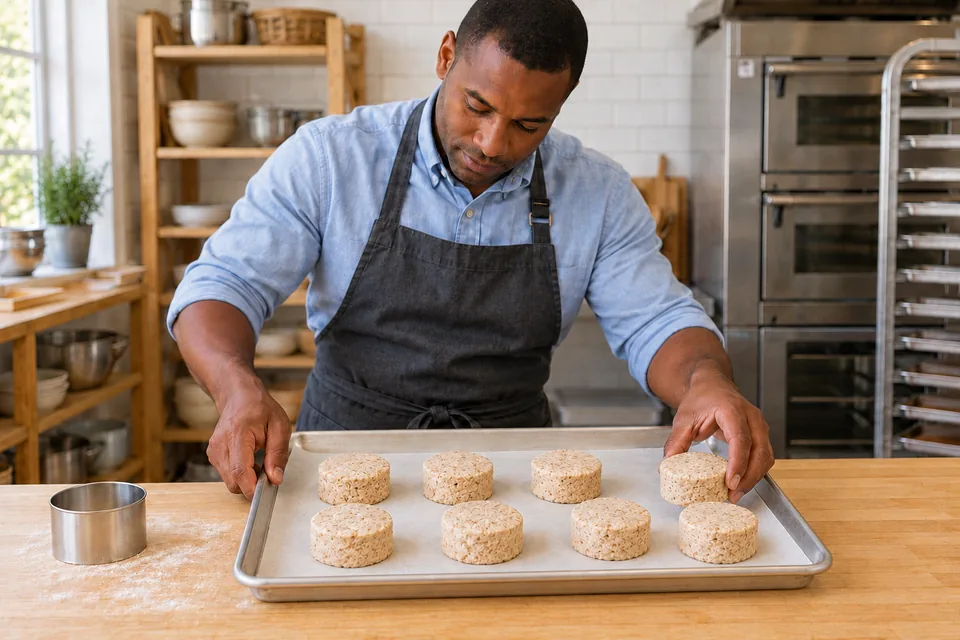
    Use the shaping flour to lightly dust the worktop, your hands and a 5cm round cutter. Press the dough to about 3cm thick. Cut straight down without turning the cutter. Gently gather the scraps once and cut again, aiming for 8 scones. Space them at least 3cm apart on the lined tray.

    Ready when: The rounds stand upright with clean edges; the dough has not been rolled thin.
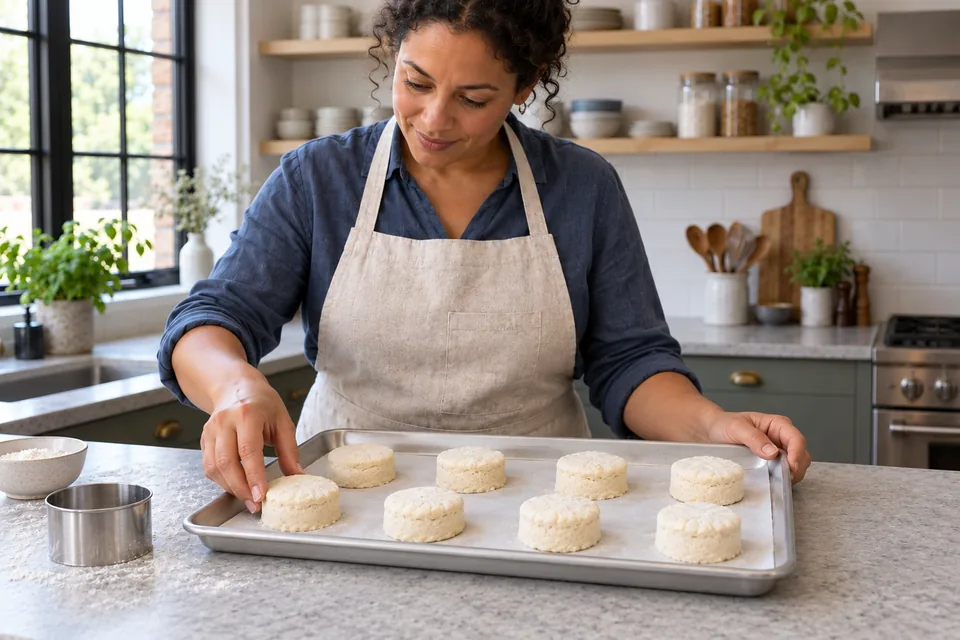
    Eight thick raw scone rounds spaced apart on a parchment-lined baking tray.
    04 Cut and space the roundsCut thick rounds straight down and space them on the lined tray.
  5. 05 · Brush and bake

    12–15 min

    Use: Cultured buttermilk for brushing

    Brush the tops with the separate 20ml buttermilk, keeping it off the cut sides. Bake on the middle rack for 12–15 minutes. Turn the tray once near the end only if one side colours faster.

    Ready when: The scones have risen, their tops are golden, and the sides feel set rather than wet.
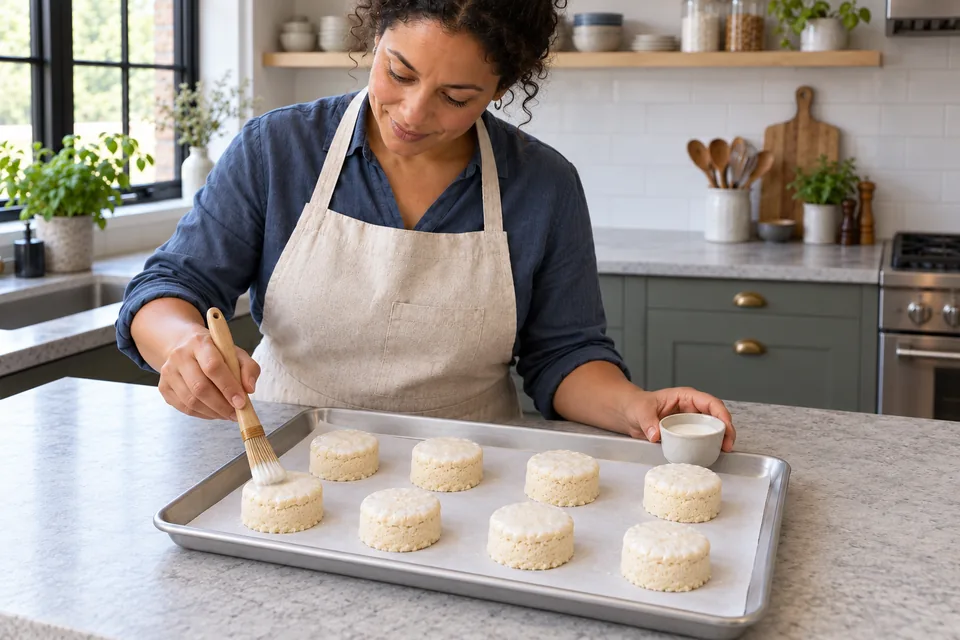
    A pastry brush applying white buttermilk to the top of one of eight raw scones.
    05 Brush the tops and bakeBrush only the tops with the separate buttermilk, then bake.
  6. 06 · Cool briefly

    10 min

    Use:

    Move the scones to a rack and leave them for about 10 minutes. Split one gently with your hands or a knife when ready to serve.

    Ready when: The centre is set and tender, without a wet line of dough. The scones remain pleasantly warm.
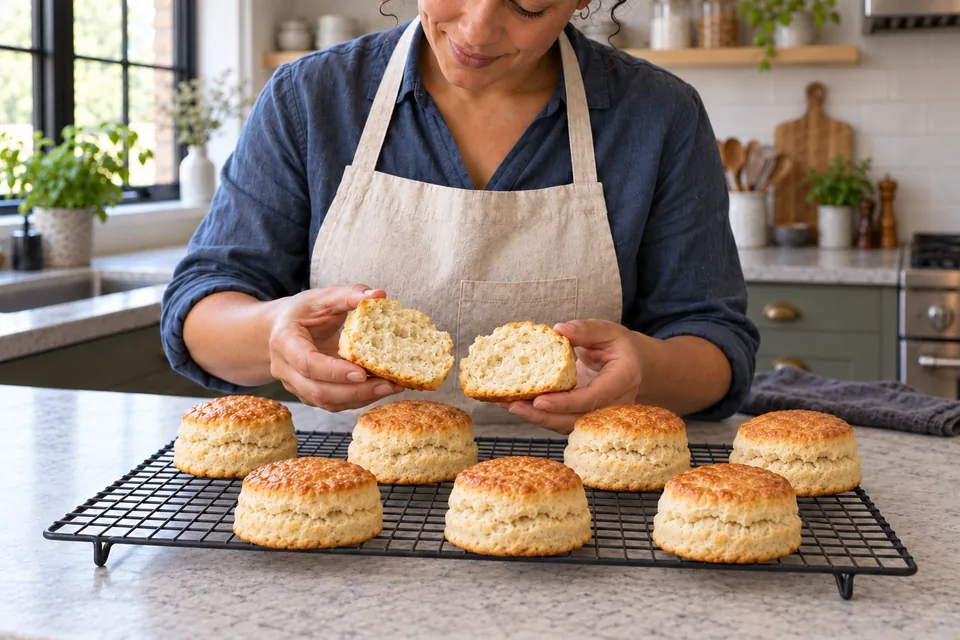
    Seven whole golden scones and one split scone with tender crumb above a cooling rack.
    06 Cool and split a sconeCool the scones on a rack before gently splitting one.

What to look for

StageLook / feel forNeeds attention
Prepare the tray and dry ingredientsThe dry mixture has an even colour, without pockets of baking powder.
Rub in the butterMost of the mixture resembles coarse sand, with only a few tiny butter flakes.
Bring the dough togetherThe dough holds together when pressed, but its surface is still slightly rough.
Cut the sconesThe rounds stand upright with clean edges; the dough has not been rolled thin.
Brush and bakeThe scones have risen, their tops are golden, and the sides feel set rather than wet.
Cool brieflyThe centre is set and tender, without a wet line of dough. The scones remain pleasantly warm.

Troubleshooting

If you see thisLikely causeWhat to do nowNext time
The dough will not hold together.The flour has absorbed more liquid, or the egg is smaller than expected.Fold in an extra 5ml buttermilk at a time, stopping as soon as the dry crumbs bind.Weigh the flour and use a medium egg; record any liquid adjustment for that flour.
The scones rise unevenly.The dough was pressed unevenly, the cutter was twisted, or wash coated the sides.Finish baking until the centres are set; trim only after cooling if needed.Keep an even 3cm thickness, cut vertically and brush only the tops.
The crumb is firm or heavy.The dough was overworked, rolled too thin or lifted by weak baking powder.Serve warm; additional baking will not make a fully baked dense scone lighter.Use fresh baking powder, ordinary plain flour and brief mixing.

Storage: Best eaten the day they are baked. Let unfilled scones cool completely, then keep them in an airtight container for up to 2 days, or freeze for up to 1 month. Rewarm thawed scones at 160°C conventional for 5–8 minutes. Add any cream or jam only when serving.; Contains: wheat, milk, egg.; This Nepedia version has not been kitchen-tested.

Ingredient choices & substitutions

No brand is specified.

Match the ingredient’s function and weight. See the flour, gluten, yeast and salt guide.

Other approaches to this recipe
Cook / recipeUseWhat differs

The working ingredients and method form one recipe. Different formulas are compared without averaging their quantities or rise schedules.

Nepedia

Recipe

Classic British Scones

Small, lightly sweet scones with a tender crumb and a browned top. This plain version uses buttermilk and one whole egg; serve them while they are still slightly warm.

How do I make it?

  1. Prepare the tray and dry ingredients

    3–5 min

    Set the oven to 220°C conventional. Put a rack in the middle and line a 30 × 40cm baking tray with baking paper. Whisk the dough flour, baking powder, salt and sugar in a large bowl.

    Cook whisking the dry scone ingredients in a stainless steel bowl.
    Whisk the dry ingredients until evenly blended.

    Ready when: The dry mixture has an even colour, without pockets of baking powder.

  2. Rub in the butter

    3–5 min

    Add the cold butter. Rub it into the dry mixture with your fingertips, stopping once the large lumps have broken down. Keep the mixture loose rather than pressing it into a paste.

    Fingertips rubbing cold butter into a loose flour mixture in the steel bowl.
    Rub the cold butter into the flour with your fingertips.

    Ready when: Most of the mixture resembles coarse sand, with only a few tiny butter flakes.

  3. Bring the dough together

    2–3 min

    Beat the whole egg with the 70ml buttermilk for the dough. Pour it into the bowl and use a table knife to lift and turn the crumbs until they form a soft mass. Stop when loose dry flour has been incorporated.

    A blunt table knife lifting rough, cohesive scone dough in the steel bowl.
    Lift and turn the crumbs into a soft dough, then stop mixing.

    Ready when: The dough holds together when pressed, but its surface is still slightly rough.

  4. Cut the scones

    5–7 min

    Use the shaping flour to lightly dust the worktop, your hands and a 5cm round cutter. Press the dough to about 3cm thick. Cut straight down without turning the cutter. Gently gather the scraps once and cut again, aiming for 8 scones. Space them at least 3cm apart on the lined tray.

    Eight thick raw scone rounds spaced apart on a parchment-lined baking tray.
    Cut thick rounds straight down and space them on the lined tray.

    Ready when: The rounds stand upright with clean edges; the dough has not been rolled thin.

  5. Brush and bake

    12–15 min

    Brush the tops with the separate 20ml buttermilk, keeping it off the cut sides. Bake on the middle rack for 12–15 minutes. Turn the tray once near the end only if one side colours faster.

    A pastry brush applying white buttermilk to the top of one of eight raw scones.
    Brush only the tops with the separate buttermilk, then bake.

    Ready when: The scones have risen, their tops are golden, and the sides feel set rather than wet.

  6. Cool briefly

    10 min

    Move the scones to a rack and leave them for about 10 minutes. Split one gently with your hands or a knife when ready to serve.

    Seven whole golden scones and one split scone with tender crumb above a cooling rack.
    Cool the scones on a rack before gently splitting one.

    Ready when: The centre is set and tender, without a wet line of dough. The scones remain pleasantly warm.

What can go wrong, and how can I fix it?

What you noticeLikely causeWhat to do
The dough will not hold together.The flour has absorbed more liquid, or the egg is smaller than expected.Fold in an extra 5ml buttermilk at a time, stopping as soon as the dry crumbs bind. Weigh the flour and use a medium egg; record any liquid adjustment for that flour.
The scones rise unevenly.The dough was pressed unevenly, the cutter was twisted, or wash coated the sides.Finish baking until the centres are set; trim only after cooling if needed. Keep an even 3cm thickness, cut vertically and brush only the tops.
The crumb is firm or heavy.The dough was overworked, rolled too thin or lifted by weak baking powder.Serve warm; additional baking will not make a fully baked dense scone lighter. Use fresh baking powder, ordinary plain flour and brief mixing.
Useful recipe notes

Storage: Best eaten the day they are baked. Let unfilled scones cool completely, then keep them in an airtight container for up to 2 days, or freeze for up to 1 month. Rewarm thawed scones at 160°C conventional for 5–8 minutes. Add any cream or jam only when serving.

Contains: wheat, milk, egg.

This Nepedia version has not been kitchen-tested.

See the detailed method and ratios in , or follow ingredients through the .

Ingredient proportions & recipe details

Classic British Scones at a glance

Makes
8 scones
Heat
220°C conventional
Baking time
12–15 min
Cuisine / style
United Kingdom
How do the ingredient proportions compare?

Percentages compare each listed weight with the combined flour weight (100%). These are ingredient ratios, not dough hydration; milk, eggs and fillings contain other ingredients as well as water.

Formula componentGramsFlour = 100%
Plain flour250 g100%
Baking powder12 g4.8%
Fine salt2 g0.8%
Superfine sugar45 g18%
Unsalted butter50 g20%

Wholemeal scones

Makes
8 scones, approximately
Heat
200°C conventional
Baking time
15–20 min
Cuisine / style
United Kingdom
United Kingdom · British scones

Wholemeal scones

Lightly sweet scones made with equal parts white and wholemeal flour. Their crumb is a little denser than the plain version, with a nutty flavour from the bran.

Method

  1. 01 · Mix the dry ingredients and heat the oven

    3–5 min

    Use: Plain flour; Fine wholemeal wheat flour; Baking powder; Fine salt; Caster sugar

    Heat the oven to 200°C conventional and line a 30×40 cm tray with baking paper. Whisk both flours with the baking powder, salt and sugar. Break up lumps while keeping all the bran in the bowl.

    Ready when: The dry ingredients are evenly mixed, with bran distributed throughout.

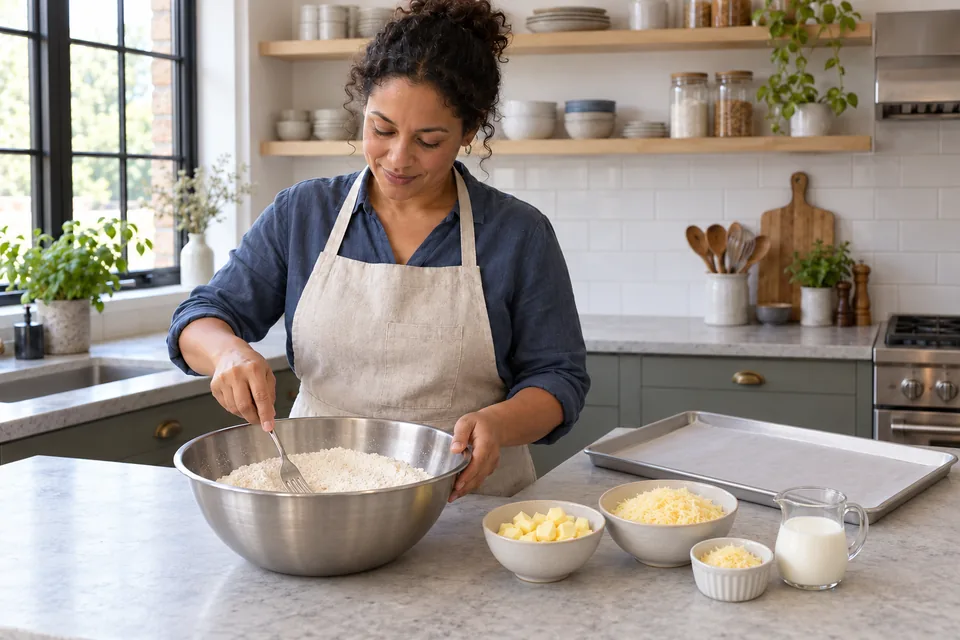
    Baker whisks an evenly bran-speckled dry mixture in a cream bowl beside a lined tray.
    01 Wholemeal scones — step 1Mix the dry ingredients and retain the bran.
  2. 02 · Rub in the butter

    3–5 min

    Use: Unsalted butter

    Rub the cold butter into the dry mixture with your fingertips. Stop when most of the mixture resembles coarse crumbs; small butter flecks are fine.

    Ready when: There are no large butter cubes or greasy smears.

    Fingertips rub butter through a coarse bran-speckled mixture above the cream bowl.
    02 Wholemeal scones — step 2Rub in the cold butter until coarse crumbs form.
  3. 03 · Add egg and buttermilk; rest briefly

    5–7 min

    Use: Medium egg; Cultured buttermilk

    Beat the egg with the 100 ml buttermilk. Stir it through the crumbs with a fork or blunt knife, then press gently until a soft dough forms. Cover and wait 3 minutes so the bran can absorb moisture. If dry flour remains, add another 5 ml buttermilk at a time.

    Ready when: The dough holds together and feels soft, with only slight tackiness. Do not knead it smooth.

    Baker gathers a lightly textured wholemeal dough with a fork in the cream bowl.
    03 Wholemeal scones — step 3Bring together a soft dough and let the bran absorb moisture.
  4. 04 · Cut eight thick rounds

    5–8 min

    Use: Plain flour for shaping

    Lightly dust the worktop and a 5 cm round cutter. Pat the dough to 3 cm thick. Cut straight down without twisting. Bring the offcuts together once and cut again, aiming for about 8 scones. Space them on the tray.

    Ready when: The rounds have upright cut sides and similar thickness; the dough still looks lightly textured.

    Baker places the eighth thick raw wholemeal scone round on a lined tray beside the round cutter.
    04 Wholemeal scones — step 4Cut upright rounds and space them on the tray.
  5. 05 · Brush and bake

    16–22 min

    Use: Buttermilk for brushing

    Brush a little of the separate buttermilk wash over the tops, keeping it off the cut sides. Bake for 15–20 minutes.

    Ready when: The tops are browned, the sides feel set and a scone split through its centre has no damp dough line.

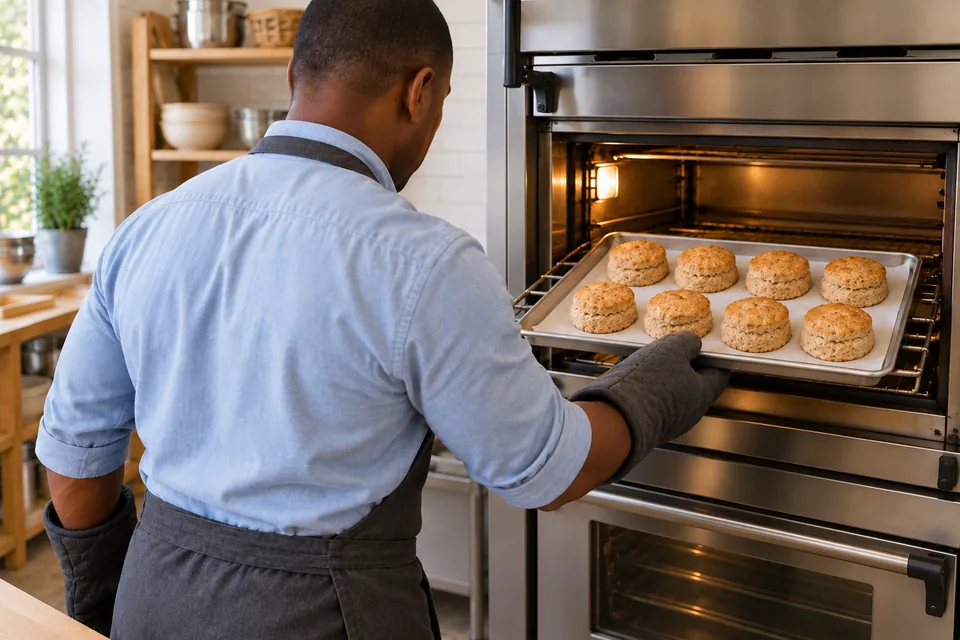
    Baker wearing oven mitts draws out a tray of eight browned wholemeal scones.
    05 Wholemeal scones — step 5Brush the tops and bake until browned and set.
  6. 06 · Cool briefly before serving

    10 min

    Use:

    Move the scones to a rack and leave for 10 minutes before splitting and serving.

    Ready when: The scones are warm rather than steaming, and the crumb separates without becoming gummy.

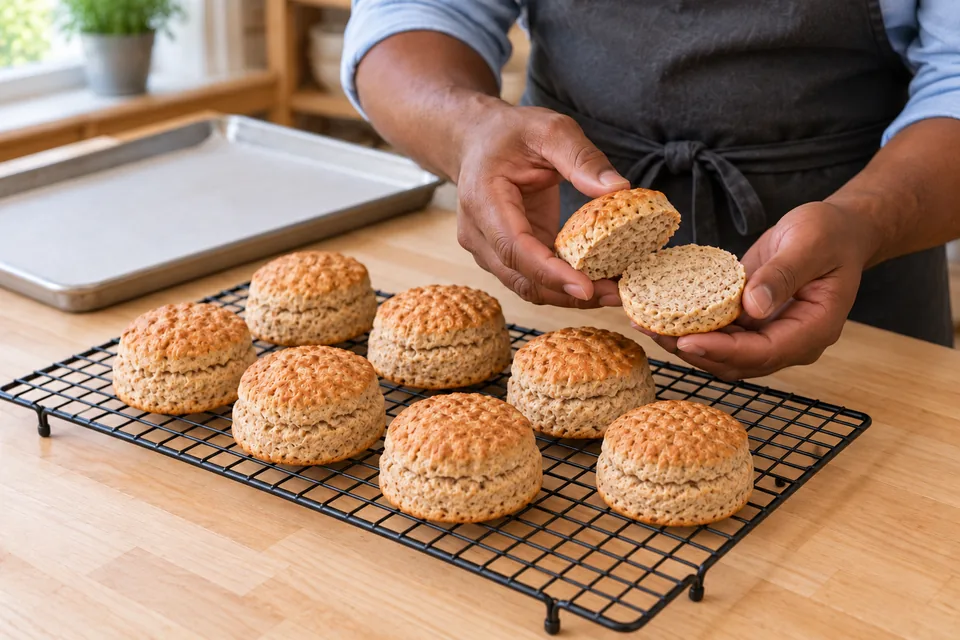
    Baker splits one wholemeal scone into two halves beside seven whole scones on a cooling rack.
    06 Wholemeal scones — step 6Cool briefly before splitting and serving.

What to look for

StageLook / feel forNeeds attention
Mix the dry ingredients and heat the ovenThe dry ingredients are evenly mixed, with bran distributed throughout.
Rub in the butterThere are no large butter cubes or greasy smears.
Add egg and buttermilk; rest brieflyThe dough holds together and feels soft, with only slight tackiness. Do not knead it smooth.
Cut eight thick roundsThe rounds have upright cut sides and similar thickness; the dough still looks lightly textured.
Brush and bakeThe tops are browned, the sides feel set and a scone split through its centre has no damp dough line.
Cool briefly before servingThe scones are warm rather than steaming, and the crumb separates without becoming gummy.

Troubleshooting

If you see thisLikely causeWhat to do nowNext time
The dough feels dry after resting.The wholemeal flour absorbs more liquid than expected.Fold in 5 ml buttermilk at a time until the dough holds softly.Use fine wholemeal and weigh the flour; keep the dusting allowance out of the bowl.
The scones are squat and tough.The dough was overworked or the baking powder is old.Split and toast them for serving.Mix briefly, use fresh baking powder and cut straight down.
The outside is brown but the middle is damp.The rounds are thicker than planned or the oven runs hot.Cover loosely with foil and bake a few minutes longer.Keep the dough around 3 cm thick and check one centre before removing the batch.

Storage: Best on the day. Cool fully and keep in an airtight container for up to 2 days, or freeze for up to 1 month. Thaw covered and warm at 160°C conventional for 5–8 minutes.; Contains: wheat, milk, egg.; This Nepedia version has not been kitchen-tested.

Ingredient choices & substitutions

No brand is specified.

Match the ingredient’s function and weight. See the flour, gluten, yeast and salt guide.

Other approaches to this recipe
Cook / recipeUseWhat differs

The working ingredients and method form one recipe. Different formulas are compared without averaging their quantities or rise schedules.
Nepedia
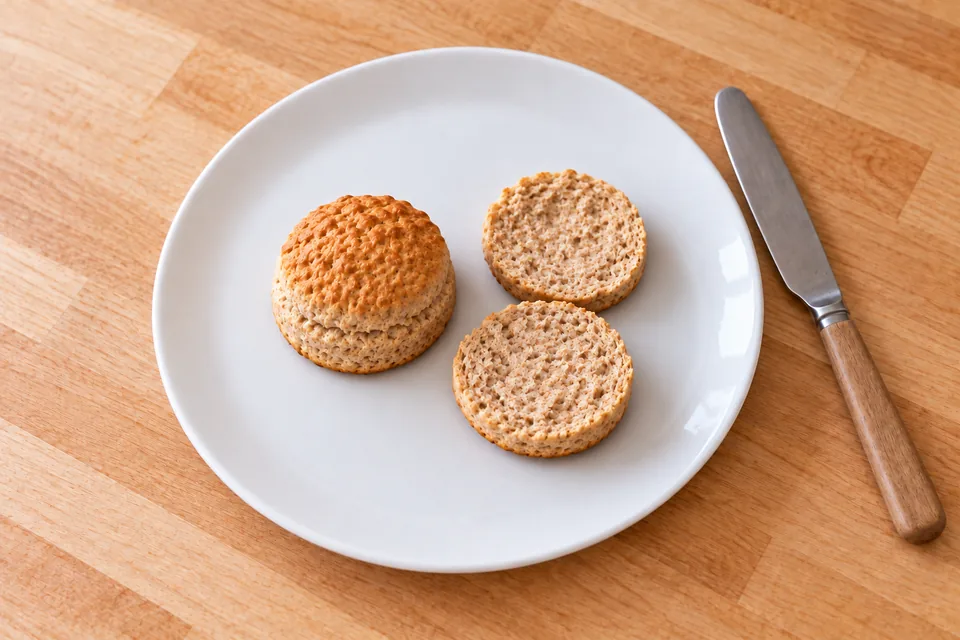
One small wholemeal scone and the two halves of a second sit on a white side plate beside a table knife.
Two wholemeal scones, one split to show its crumb.

Recipe

Wholemeal scones

Lightly sweet scones made with equal parts white and wholemeal flour. Their crumb is a little denser than the plain version, with a nutty flavour from the bran.

How do I make it?

  1. Mix the dry ingredients and heat the oven

    3–5 min

    Heat the oven to 200°C conventional and line a 30×40 cm tray with baking paper. Whisk both flours with the baking powder, salt and sugar. Break up lumps while keeping all the bran in the bowl.

    Baker whisks an evenly bran-speckled dry mixture in a cream bowl beside a lined tray.
    Mix the dry ingredients and retain the bran.

    Ready when: The dry ingredients are evenly mixed, with bran distributed throughout.

  2. Rub in the butter

    3–5 min

    Rub the cold butter into the dry mixture with your fingertips. Stop when most of the mixture resembles coarse crumbs; small butter flecks are fine.

    Fingertips rub butter through a coarse bran-speckled mixture above the cream bowl.
    Rub in the cold butter until coarse crumbs form.

    Ready when: There are no large butter cubes or greasy smears.

  3. Add egg and buttermilk; rest briefly

    5–7 min

    Beat the egg with the 100 ml buttermilk. Stir it through the crumbs with a fork or blunt knife, then press gently until a soft dough forms. Cover and wait 3 minutes so the bran can absorb moisture. If dry flour remains, add another 5 ml buttermilk at a time.

    Baker gathers a lightly textured wholemeal dough with a fork in the cream bowl.
    Bring together a soft dough and let the bran absorb moisture.

    Ready when: The dough holds together and feels soft, with only slight tackiness. Do not knead it smooth.

  4. Cut eight thick rounds

    5–8 min

    Lightly dust the worktop and a 5 cm round cutter. Pat the dough to 3 cm thick. Cut straight down without twisting. Bring the offcuts together once and cut again, aiming for about 8 scones. Space them on the tray.

    Baker places the eighth thick raw wholemeal scone round on a lined tray beside the round cutter.
    Cut upright rounds and space them on the tray.

    Ready when: The rounds have upright cut sides and similar thickness; the dough still looks lightly textured.

  5. Brush and bake

    16–22 min

    Brush a little of the separate buttermilk wash over the tops, keeping it off the cut sides. Bake for 15–20 minutes.

    Baker wearing oven mitts draws out a tray of eight browned wholemeal scones.
    Brush the tops and bake until browned and set.

    Ready when: The tops are browned, the sides feel set and a scone split through its centre has no damp dough line.

  6. Cool briefly before serving

    10 min

    Move the scones to a rack and leave for 10 minutes before splitting and serving.

    Baker splits one wholemeal scone into two halves beside seven whole scones on a cooling rack.
    Cool briefly before splitting and serving.

    Ready when: The scones are warm rather than steaming, and the crumb separates without becoming gummy.

What can go wrong, and how can I fix it?

What you noticeLikely causeWhat to do
The dough feels dry after resting.The wholemeal flour absorbs more liquid than expected.Fold in 5 ml buttermilk at a time until the dough holds softly. Use fine wholemeal and weigh the flour; keep the dusting allowance out of the bowl.
The scones are squat and tough.The dough was overworked or the baking powder is old.Split and toast them for serving. Mix briefly, use fresh baking powder and cut straight down.
The outside is brown but the middle is damp.The rounds are thicker than planned or the oven runs hot.Cover loosely with foil and bake a few minutes longer. Keep the dough around 3 cm thick and check one centre before removing the batch.
Useful recipe notes

Storage: Best on the day. Cool fully and keep in an airtight container for up to 2 days, or freeze for up to 1 month. Thaw covered and warm at 160°C conventional for 5–8 minutes.

Contains: wheat, milk, egg.

This Nepedia version has not been kitchen-tested.

See the detailed method and ratios in , or follow ingredients through the .

Ingredient proportions & recipe details

Wholemeal scones at a glance

Makes
8 scones, approximately
Heat
200°C conventional
Baking time
15–20 min
Cuisine / style
United Kingdom
How do the ingredient proportions compare?

Percentages compare each listed weight with the combined flour weight (100%). These are ingredient ratios, not dough hydration; milk, eggs and fillings contain other ingredients as well as water.

Formula componentGramsFlour = 100%
Plain flour125 g50%
Fine wholemeal wheat flour125 g50%
Baking powder12 g4.8%
Fine salt2 g0.8%
Caster sugar45 g18%
Unsalted butter50 g20%

Cheese scones

Makes
8 scones, approximately
Heat
200°C conventional
Baking time
15–20 min
Cuisine / style
United Kingdom
United Kingdom · British scones

Cheese scones

Savoury scones with mature Cheddar mixed into the dough and melted over the tops. This version uses milk and butter without egg or added sugar.

Method

  1. 01 · Mix the dry ingredients and heat the oven

    3–5 min

    Use: Self-raising wheat flour; Baking powder; Fine salt; Cayenne pepper

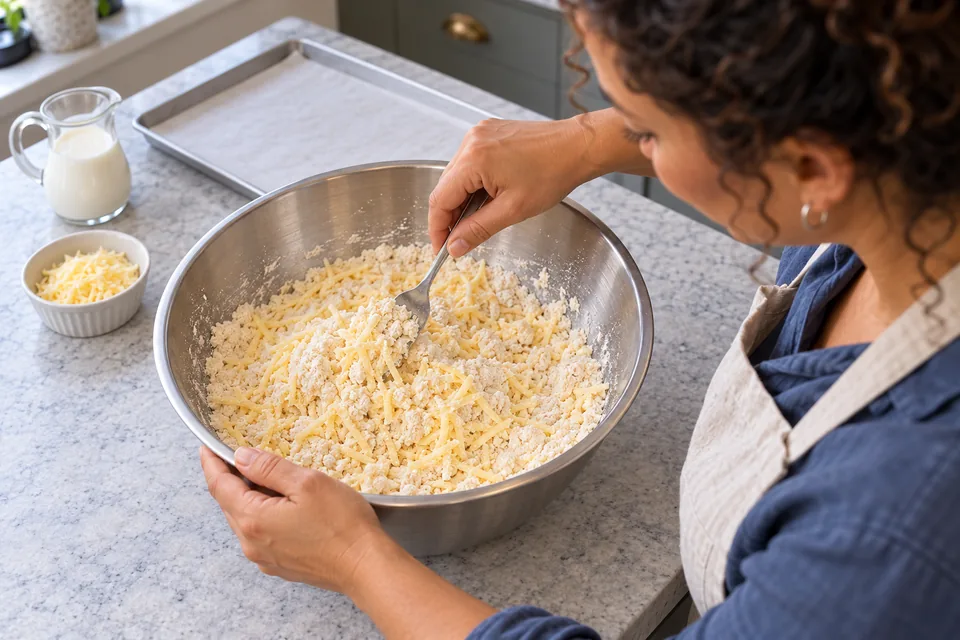
    Heat the oven to 200°C conventional and line a 30×40 cm tray with baking paper. Stir the self-raising flour, extra baking powder, salt and cayenne together thoroughly.

    Ready when: The raising agents and seasoning are evenly dispersed.

    Cook stirring the dry cheese-scone ingredients with a fork in a steel bowl.
    01 Combine the dry ingredientsCombine the flour, raising agents and seasoning.
  2. 02 · Rub in butter and add dough cheese

    4–6 min

    Use: Unsalted butter; Mature Cheddar for the dough

    Rub in the cold butter with your fingertips until the mixture is crumbly. Stir in the 100 g Cheddar allocated to the dough; keep the separate 20 g for topping.

    Ready when: Fine cheese shreds are distributed through the crumbs, with no large butter lumps.

    A fork mixing fine Cheddar shreds through loose flour-and-butter crumbs.
    02 Rub in butter and mix the cheeseRub in the butter, then stir in the dough cheese.
  3. 03 · Add the milk

    2–4 min

    Use: Whole milk

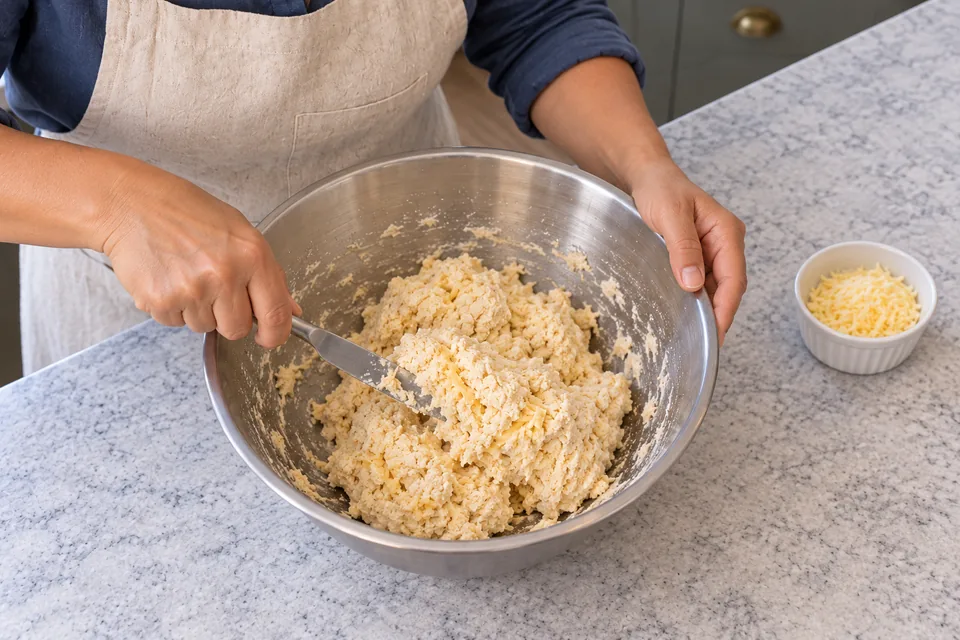
    Pour in 90 ml of the dough milk and stir briefly with a blunt knife. Add the reserved 10 ml only as needed, then press the mixture into a soft dough.

    Ready when: The dough holds together without dry pockets and feels soft but not wet. Stop mixing as soon as it binds.

    A blunt knife lifting soft cheese-scone dough in the steel bowl.
    03 Bind the cheese doughBind with the milk and stop as soon as the dough holds.
  4. 04 · Cut eight rounds

    5–8 min

    Use: Plain flour for shaping

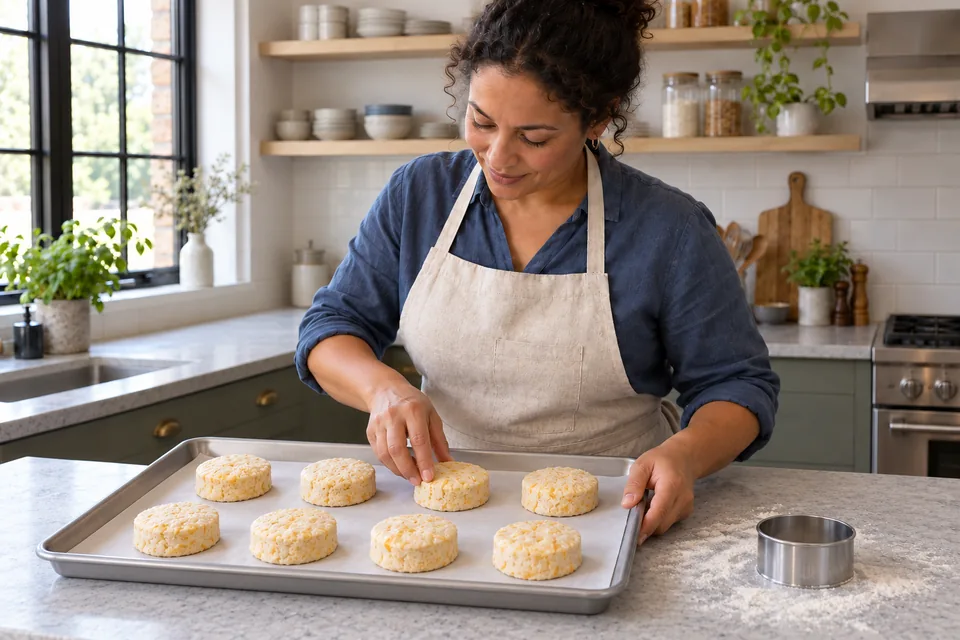
    Lightly flour the worktop and a 6 cm round cutter. Pat the dough to 2.5 cm thick and cut straight down. Press the scraps together once to cut more, aiming for about 8 rounds. Place them on the tray with space between.

    Ready when: The rounds have even thickness and clean sides; the dough has not been kneaded smooth.

    Eight wide raw cheese-scone rounds spaced on a lined tray.
    04 Cut the thick roundsPat thickly, cut straight down and space the rounds.
  5. 05 · Brush, add topping cheese and bake

    17–23 min

    Use: Milk for brushing; Mature Cheddar for topping

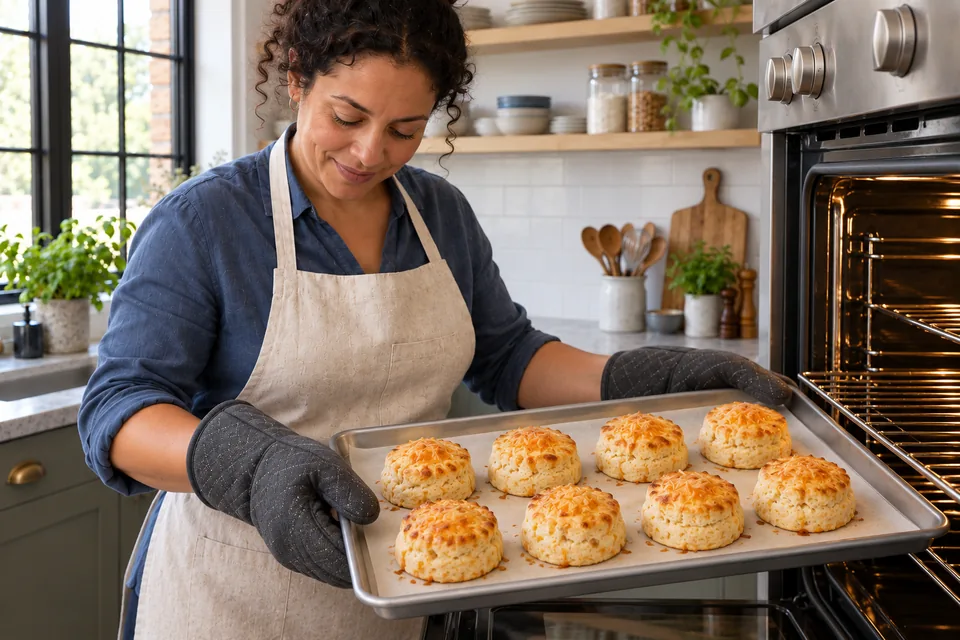
    Brush the tops lightly with the separate milk wash and divide the 20 g reserved Cheddar over them. Bake for 15–20 minutes.

    Ready when: The scones have risen, the cheese is golden and the centres are set without a wet dough line.

    Cook holding a tray of eight risen scones with golden melted-cheese tops.
    05 Top and bakeBrush with milk, add the reserved cheese and bake until golden.
  6. 06 · Cool briefly before serving

    10 min

    Use:

    Transfer to a rack and leave for 10 minutes before splitting.

    Ready when: The cheese topping has set and the warm crumb breaks apart without sticking together.

    Eight golden cheese scones spaced on a black cooling rack.
    06 Cool on a rackLet the cheese scones cool on a rack before splitting.

What to look for

StageLook / feel forNeeds attention
Mix the dry ingredients and heat the ovenThe raising agents and seasoning are evenly dispersed.
Rub in butter and add dough cheeseFine cheese shreds are distributed through the crumbs, with no large butter lumps.
Add the milkThe dough holds together without dry pockets and feels soft but not wet. Stop mixing as soon as it binds.
Cut eight roundsThe rounds have even thickness and clean sides; the dough has not been kneaded smooth.
Brush, add topping cheese and bakeThe scones have risen, the cheese is golden and the centres are set without a wet dough line.
Cool briefly before servingThe cheese topping has set and the warm crumb breaks apart without sticking together.

Troubleshooting

If you see thisLikely causeWhat to do nowNext time
The dough is sticky and spreads.Too much milk was added or the butter warmed.Dust lightly with flour and chill for 10 minutes before cutting.Add the last 10 ml milk only if the dough needs it and work with cold butter.
The scones are dense.The dough was overmixed or the raising agents are old.Split and toast them for serving.Use fresh flour and baking powder and stop as soon as the dough binds.
The topping browns before the middle cooks.The scones are too thick or the oven runs hot.Cover loosely with foil and bake a few minutes longer.Pat to the stated thickness and check a centre before removing the batch.

Storage: Best warm on the day. Cool fully and keep in an airtight container for up to 2 days, or freeze for up to 1 month. Thaw covered and refresh at 160°C conventional for 5–8 minutes.; Contains: wheat, milk.; This Nepedia version has not been kitchen-tested.

Ingredient choices & substitutions

No brand is specified.

Match the ingredient’s function and weight. See the flour, gluten, yeast and salt guide.

Other approaches to this recipe
Cook / recipeUseWhat differs

The working ingredients and method form one recipe. Different formulas are compared without averaging their quantities or rise schedules.
Nepedia
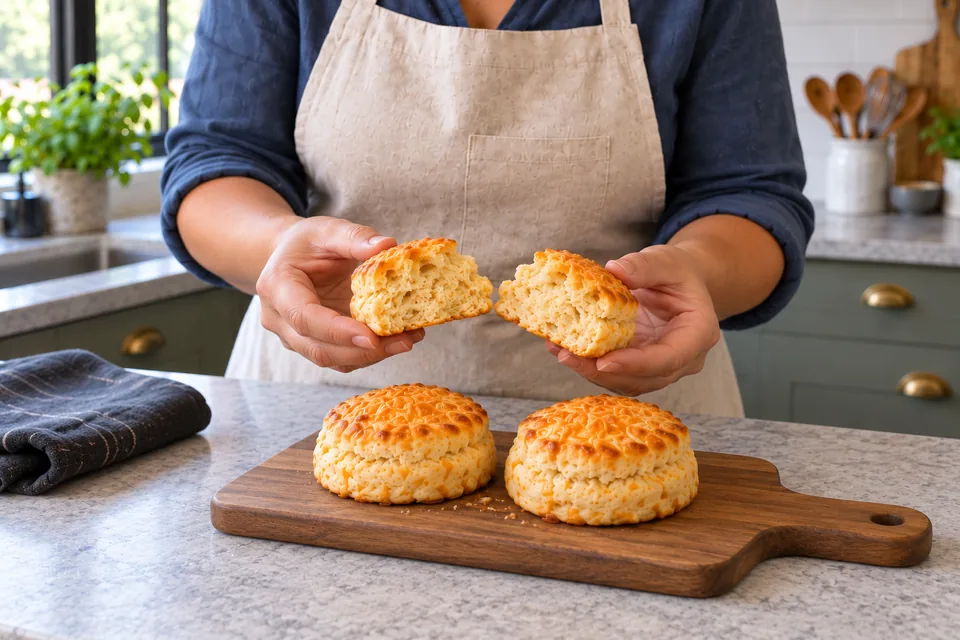
The cook holds the two halves of a cheese scone above two whole scones on a small wooden board.
Three cheese scones, with one broken open.

Recipe

Cheese scones

Savoury scones with mature Cheddar mixed into the dough and melted over the tops. This version uses milk and butter without egg or added sugar.

How do I make it?

  1. Mix the dry ingredients and heat the oven

    3–5 min

    Heat the oven to 200°C conventional and line a 30×40 cm tray with baking paper. Stir the self-raising flour, extra baking powder, salt and cayenne together thoroughly.

    Cook stirring the dry cheese-scone ingredients with a fork in a steel bowl.
    Combine the flour, raising agents and seasoning.

    Ready when: The raising agents and seasoning are evenly dispersed.

  2. Rub in butter and add dough cheese

    4–6 min

    Rub in the cold butter with your fingertips until the mixture is crumbly. Stir in the 100 g Cheddar allocated to the dough; keep the separate 20 g for topping.

    A fork mixing fine Cheddar shreds through loose flour-and-butter crumbs.
    Rub in the butter, then stir in the dough cheese.

    Ready when: Fine cheese shreds are distributed through the crumbs, with no large butter lumps.

  3. Add the milk

    2–4 min

    Pour in 90 ml of the dough milk and stir briefly with a blunt knife. Add the reserved 10 ml only as needed, then press the mixture into a soft dough.

    A blunt knife lifting soft cheese-scone dough in the steel bowl.
    Bind with the milk and stop as soon as the dough holds.

    Ready when: The dough holds together without dry pockets and feels soft but not wet. Stop mixing as soon as it binds.

  4. Cut eight rounds

    5–8 min

    Lightly flour the worktop and a 6 cm round cutter. Pat the dough to 2.5 cm thick and cut straight down. Press the scraps together once to cut more, aiming for about 8 rounds. Place them on the tray with space between.

    Eight wide raw cheese-scone rounds spaced on a lined tray.
    Pat thickly, cut straight down and space the rounds.

    Ready when: The rounds have even thickness and clean sides; the dough has not been kneaded smooth.

  5. Brush, add topping cheese and bake

    17–23 min

    Brush the tops lightly with the separate milk wash and divide the 20 g reserved Cheddar over them. Bake for 15–20 minutes.

    Cook holding a tray of eight risen scones with golden melted-cheese tops.
    Brush with milk, add the reserved cheese and bake until golden.

    Ready when: The scones have risen, the cheese is golden and the centres are set without a wet dough line.

  6. Cool briefly before serving

    10 min

    Transfer to a rack and leave for 10 minutes before splitting.

    Eight golden cheese scones spaced on a black cooling rack.
    Let the cheese scones cool on a rack before splitting.

    Ready when: The cheese topping has set and the warm crumb breaks apart without sticking together.

What can go wrong, and how can I fix it?

What you noticeLikely causeWhat to do
The dough is sticky and spreads.Too much milk was added or the butter warmed.Dust lightly with flour and chill for 10 minutes before cutting. Add the last 10 ml milk only if the dough needs it and work with cold butter.
The scones are dense.The dough was overmixed or the raising agents are old.Split and toast them for serving. Use fresh flour and baking powder and stop as soon as the dough binds.
The topping browns before the middle cooks.The scones are too thick or the oven runs hot.Cover loosely with foil and bake a few minutes longer. Pat to the stated thickness and check a centre before removing the batch.
Useful recipe notes

Storage: Best warm on the day. Cool fully and keep in an airtight container for up to 2 days, or freeze for up to 1 month. Thaw covered and refresh at 160°C conventional for 5–8 minutes.

Contains: wheat, milk.

This Nepedia version has not been kitchen-tested.

See the detailed method and ratios in , or follow ingredients through the .

Ingredient proportions & recipe details

Cheese scones at a glance

Makes
8 scones, approximately
Heat
200°C conventional
Baking time
15–20 min
Cuisine / style
United Kingdom
How do the ingredient proportions compare?

Percentages compare each listed weight with the combined flour weight (100%). These are ingredient ratios, not dough hydration; milk, eggs and fillings contain other ingredients as well as water.

Formula componentGramsFlour = 100%
Self-raising wheat flour225 g100%
Baking powder4 g1.8%
Fine salt1 g0.4%
Cayenne pepper0.2 g0.1%
Unsalted butter55 g24.4%
Mature Cheddar for the dough100 g44.4%