All Bubbles
🔢

Mathematics

math Ages 7-9+ Vital Level 1

Math is the study of numbers and shapes. You use math when you count your toys or look at a round ball.

Arithmetic symbols.svg
It helps us build tall buildings and understand the stars. Math is like a puzzle that helps us learn about our world!
Rubik's cube.svg
Rubik's cube.svg

48 words

Mathematics is the study of numbers, shapes, and patterns. Long ago, people in Ancient Egypt used math to build pyramids and count food.
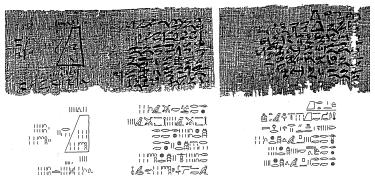
Moskou-papyrus.jpg
Moskou-papyrus.jpg
Today, we use it for everything from video games to medicine. One amazing "wow" fact is that the symbols we use for numbers today were developed in India a long time ago!
Arithmetic symbols.svg
Math isn't just about counting; it’s about using rules to prove that something is true. This is called a proof. Whether you are measuring a triangle or adding up your allowance, you are doing math.
Rubik's cube.svg
Rubik's cube.svg

95 words

Mathematics is a field of study that helps us organize and understand the world through numbers and logic. It is divided into several main areas. Geometry is the study of shapes and space, while Algebra

Quadratic formula.svg
uses variables, which are letters that stand for numbers, to solve equations. Another area called Calculus studies how things change over time.

Ancient Greeks like Euclid were the first to use "proofs." A proof is a way to show a mathematical idea is 100% true using logic instead of just measuring things.

Woman teaching geometry.jpg
Math is essential for many jobs, including engineering, computer science, and even medicine! Did you know that some math problems are so hard they take hundreds of years to solve? For example, Fermat’s Last Theorem was written down in 1637 but wasn't proven until 1994!
Bakhshali numerals 2.jpg
Today, mathematicians use computers to help solve huge problems, but the basic rules of math stay the same.
Venn A intersect B.svg

162 words

Mathematics is the study of abstract objects, such as numbers and shapes, and the relationships between them. It began with basic counting in Ancient Egypt and Mesopotamia for needs like taxation and construction.

Plimpton 322.jpg
Plimpton 322.jpg
However, the Ancient Greeks, specifically Euclid, transformed it into a rigorous discipline by introducing the "axiomatic method." This means starting with simple truths called axioms and using logic to prove more complex ideas called theorems.
Woman teaching geometry.jpg

Modern math is divided into many fields. Number theory focuses on integers, while algebra involves manipulating formulas.

Quadratic formula.svg
Geometry has evolved from simple shapes to "non-Euclidean" geometry, which describes curved spaces. Calculus, developed independently by Isaac Newton and Gottfried Leibniz in the 17th century, allows us to model continuous change, which is vital for physics and engineering.
Gottfried Wilhelm Leibniz, Bernhard Christoph Francke.jpg

Math is often called the "language of science." It is used in biology to model population growth and in economics to study how markets work.

Supply-demand-equilibrium.svg
A fascinating concept is the "unreasonable effectiveness of mathematics." This is the idea that math theories created just for fun often end up perfectly describing the physical world years later. For example, the study of prime numbers from 2,000 years ago is now the basis for internet security and cryptography.
Lock-green.svg
Lock-green.svg

Because math is a global language, it has prestigious awards like the Fields Medal, which is often called the "Nobel Prize of Mathematics."

FieldsMedalFront.jpg
Beyond its use in science, math has an aesthetic side. Many mathematicians find beauty in the "elegance" of a simple, perfect proof. This creativity makes math feel like an art form to those who study it deeply.

275 words

Mathematics is a formal system of thought focused on the discovery and organization of methods, theories, and theorems. Unlike the empirical sciences, which rely on observation and experimentation, mathematical truths are established through deductive reasoning and proofs.

Sigma summation notation.svg
This process begins with axioms—statements accepted as true without proof—and proceeds through logical steps to reach a conclusion. This creates a foundation of absolute certainty. Philosophically, some view math as "Platonism," suggesting that mathematical objects exist in a reality outside of space and time, while others see it as a human-created tool.

The history of mathematics is as old as civilization itself. Early records from Mesopotamia and Egypt show math being used for practical needs like land surveying and finance.

Moskou-papyrus.jpg
Moskou-papyrus.jpg
The Babylonians used a sexagesimal (base-60) system, which is why we still have 60 minutes in an hour. The Greeks, however, introduced mathematical rigor. Euclid’s Elements (c. 300 BC) became the most influential textbook in history, establishing the standard for geometry and number theory.
Woman teaching geometry.jpg
Later, during the Islamic Golden Age, scholars like Al-Khwarizmi developed systematic methods for solving equations, giving us the word "algebra."

The 17th century was a turning point for the field. René Descartes linked algebra and geometry through coordinates, creating analytic geometry.

Triangles (spherical geometry).jpg
Simultaneously, Isaac Newton and Gottfried Leibniz independently invented calculus.
GodfreyKneller-IsaacNewton-1689.jpg
Gottfried Wilhelm Leibniz, Bernhard Christoph Francke.jpg
This allowed for the mathematical modeling of motion and change, which fueled the Scientific Revolution. Newton’s reflecting telescope and his laws of motion were deeply rooted in these mathematical breakthroughs.
Newton's reflecting telescope.jpg

Today, the Mathematics Subject Classification lists over sixty areas of study. These include "Pure Mathematics," studied for its own sake, and "Applied Mathematics," which focuses on real-world problems. Key areas include Analysis (the advanced study of calculus), Topology (the study of properties preserved through deformation), and Discrete Mathematics, which is the foundation of computer science.

Markovkate 01.svg
Markovkate 01.svg
Mathematical logic and set theory, which emerged in the late 19th century, helped solve a "foundational crisis" by providing a rigorous basis for all mathematical concepts.
Venn A intersect B.svg

One of the most profound aspects of mathematics is its "unreasonable effectiveness" in the natural sciences. Theories developed purely as abstract concepts often find critical applications centuries later. For instance, non-Euclidean geometry, which seemed to contradict physical reality in the 1800s, became the essential framework for Albert Einstein’s General Theory of Relativity. Similarly, prime number theory is now the backbone of modern cryptography, protecting everything from bank accounts to private messages.

Lock-green.svg
Lock-green.svg

Beyond physics, math is vital in the social sciences and biology. Statistics uses probability theory to analyze data and make predictions.

IllustrationCentralTheorem.png
In economics, the "Homo economicus" model uses math to simulate how rational individuals make choices. Even in art and music, math plays a role through symmetry groups and frequency ratios.
Julia set (highres 01).jpg

Mathematics continues to evolve, with thousands of new theorems proved every year. The field recognizes its highest achievers with the Fields Medal and the Abel Prize.

FieldsMedalFront.jpg
Whether viewed as a science, an art, or a language, mathematics remains the primary tool for human understanding of the universe's underlying structure.

526 words

🖼️ Images & Media (33)

File:Wikidata-logo.svg
Wikidata-logo.svg
File:Wikinews-logo.svg
Wikinews-logo.svg
File:Open Access logo PLoS transparent.svg
Open Access logo PLoS transparent.svg
File:Wikiversity logo 2017.svg
Wikiversity logo 2017.svg
File:Markovkate 01.svg
Markovkate 01.svg
File:Lock-green.svg
Lock-green.svg
File:Semi-protection-shackle.svg
Semi-protection-shackle.svg
File:Rubik's cube.svg
Rubik's cube.svg
File:Quadratic formula.svg
Quadratic formula.svg
File:Sigma summation notation.svg
Sigma summation notation.svg
File:Venn A intersect B.svg
Venn A intersect B.svg
File:Cauchy sequence illustration.svg
Cauchy sequence illustration.svg

+ 21 more

🔗 What's this?

Concepts mentioned in this article

🔬 Go deeper

More advanced topics to explore

🪜 Step back

Simpler topics to build understanding