Have you ever seen a shooting star? Sometimes big rocks from space hit planets. This is called an impact event. 
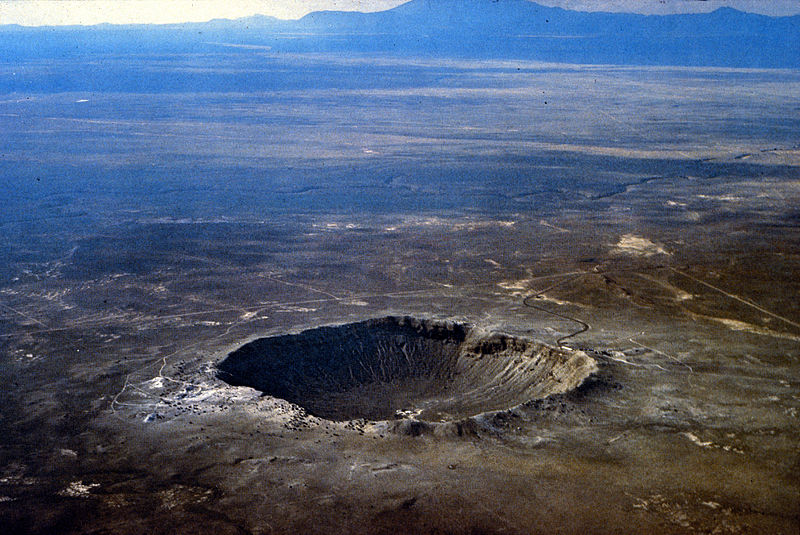
An impact event happens when a space rock, like an asteroid or comet, crashes into a planet. These rocks travel very fast! When they hit, they can make giant holes called craters. 

An impact event is a collision between objects in space, such as asteroids, comets, or meteoroids. When these objects enter Earth's atmosphere, they travel at least 11 kilometers per second! 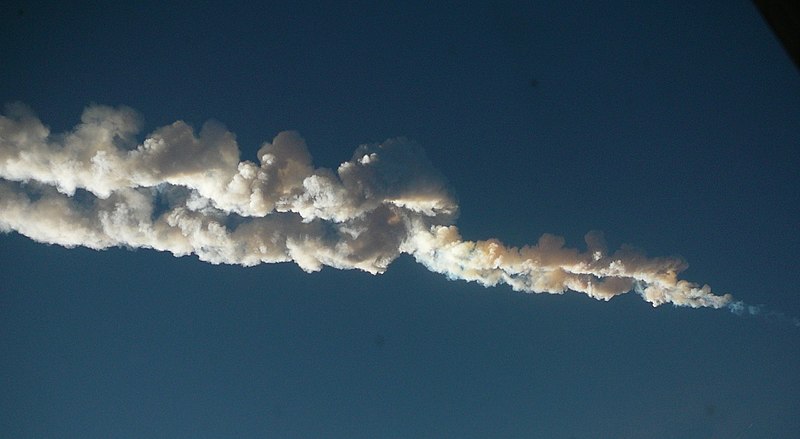
Impacts have shaped our world's history. Scientists think the Moon was formed when a planet-sized object crashed into the early Earth. 
Today, we use systems like NASA’s Sentry to track "Near-Earth Objects" (NEOs). In 2022, humans successfully changed the path of an asteroid for the first time using the DART mission. This proves we might be able to protect Earth from future hits. 
An impact event is a collision between astronomical objects, such as asteroids or comets, that causes measurable effects. These events have played a massive role in the history of our Solar System. For example, the leading theory for the origin of the Moon is the "giant-impact hypothesis," which suggests a Mars-sized object struck the early Earth.
When an object strikes Earth, it travels at a minimum speed of 11 km/s, which is the Earth's escape velocity. The damage caused depends on the object's size, speed, and density. Large objects can create massive impact structures. For a long time, people thought craters like the Barringer Crater in Arizona were volcanic. However, in 1963, scientist Eugene Shoemaker proved they were caused by meteorites. 
In modern history, we have recorded several significant events. In 1908, the Tunguska event in Siberia flattened 80 million trees over a huge area, likely caused by an asteroid exploding in the air. 
Scientists are now working hard on "planetary defense." We track Near-Earth Objects (NEOs) to predict future collisions. While small asteroids hit Earth frequently, large ones are rare. An asteroid 1 km wide strikes Earth roughly every 500,000 years. To prepare, NASA launched the Double Asteroid Redirection Test (DART) in 2022.
Impact events—collisions between astronomical bodies—are among the most powerful geological and biological drivers in the Solar System. These events occur when asteroids, comets, or meteoroids strike planets or moons at hypervelocity. Because Earth has an escape velocity of 11 km/s, any object striking our planet must be traveling at least that fast, resulting in the release of immense kinetic energy. This energy can trigger shock waves, tsunamis, earthquakes, and massive thermal radiation.
The history of Earth is defined by these collisions. The giant-impact hypothesis suggests that the Moon was formed when a Mars-sized planetoid struck the Earth four billion years ago. 
Geologically, impact cratering is the most widespread process in the Solar System. On Earth, many craters are hidden by erosion, but structures like the 2-billion-year-old Vredefort crater in South Africa and the Hiawatha crater buried under Greenland's ice provide evidence of massive prehistoric strikes.

The most famous biospheric effect of an impact is the Cretaceous–Paleogene extinction event 66 million years ago. Physicist Luis Alvarez and his team discovered a global layer of iridium—an element rare on Earth but common in asteroids—dating to this period. This led to the discovery of the 180 km-wide Chicxulub crater in Mexico.
In the modern era, the 1908 Tunguska event and the 2013 Chelyabinsk meteor serve as reminders of our vulnerability. The Chelyabinsk event involved a 20-meter object that exploded with 30 times the energy of the Hiroshima bomb, injuring 1,500 people. 
Humanity has recently moved from passive observation to active defense. In September 2022, the Double Asteroid Redirection Test (DART) successfully deflected the asteroid Dimorphos.
🖼️ Images & Media (14)

+ 2 more
✨ What else?
Related topics you might enjoy
🔬 Go deeper
More advanced topics to explore