Have you ever wondered why you look like your family? It is because of genetics! You get tiny instructions called genes from your parents. These genes tell your body how to grow. They decide your eye color and if your hair is curly or straight. 
Genetics is the study of how living things pass traits to their children. A long time ago, a man named Gregor Mendel studied pea plants to see how they grew. He found that plants get "units" of information from their parents. Today, we call these genes. 

Genetics is the science of heredity, which is how traits are passed down through generations. Inside your cells, there is a long molecule called DNA that looks like a twisted ladder. 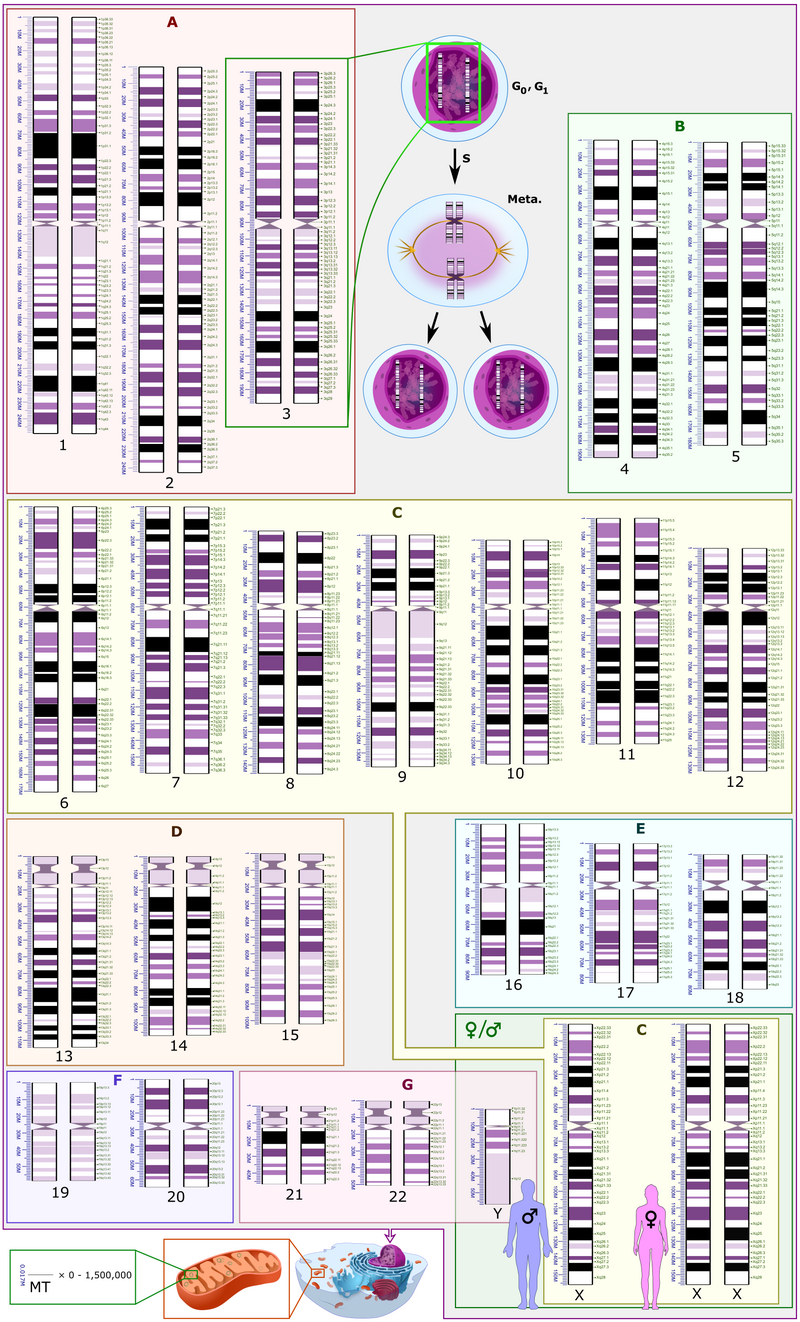

Genetics is the biological study of genes, heredity, and how organisms vary. It is a vital branch of science because it explains how life evolves over time. While people have used selective breeding for thousands of years, the scientific study of genetics began in the 19th century. 

In the 20th century, scientists discovered that these units are located on chromosomes. 
.jpg/800px-Drosophila_melanogaster_-_side_(aka).jpg)

Genes work by providing instructions to build proteins. This happens in two steps: transcription (copying DNA into RNA) and translation (using RNA to build a chain of amino acids). This "genetic code" is the language of life. 

Genetics is the scientific study of genes, heredity, and the variation of organisms. The term was coined by William Bateson in 1905, derived from the Greek word for "origin." It serves as a cornerstone of modern biology because inheritance is the fundamental mechanism driving evolution. While humans have practiced selective breeding since prehistoric times, the formal discipline began with 19th-century figures like Imre Festetics and Gregor Mendel.
At the molecular level, the blueprint for life is Deoxyribonucleic acid (DNA).
Inheritance follows specific patterns. Organisms like humans are diploid, meaning they possess two copies of every gene (alleles), one from each parent. The combination of these alleles is the genotype, while the physical expression is the phenotype. Mendel’s Law of Segregation explains how these alleles separate during the formation of gametes. We use Punnett squares to calculate the probability of offspring inheriting specific traits. 
The "Central Dogma" of molecular biology describes how genetic information flows from DNA to RNA (transcription) and then to proteins (translation). 
Genetic change occurs through mutations—errors in DNA replication or damage from external factors like UV radiation. While many mutations are neutral or harmful, some provide beneficial variations that drive natural selection. 

🖼️ Images & Media (21)


+ 9 more
✨ What else?
Related topics you might enjoy
🔬 Go deeper
More advanced topics to explore
🪜 Step back
Simpler topics to build understanding